
In modern industrial operations, the reliability and continuity of power supply are critical to production safety, operational efficiency, and economic stability. Diesel generator sets play a vital role as primary or standby power sources in sectors such as manufacturing, petrochemical processing, mining, data centers, hospitals, power plants, and infrastructure facilities. Among the many components that ensure the stable operation of a diesel generator, generator brushes, though relatively small, are of fundamental importance.
Generator brushes directly affect electrical transmission, commutation quality, heat generation, and overall operational stability. Improper brush selection, installation, or maintenance can lead to sparking, overheating, abnormal wear, reduced output efficiency, and even catastrophic failures. This article provides a comprehensive and systematic guide to diesel generator brushes, covering their functions, performance requirements, selection criteria, maintenance practices, common problems and solutions, and brush classifications. The aim is to help engineers, technicians, and maintenance managers achieve optimal generator performance and long-term reliability.
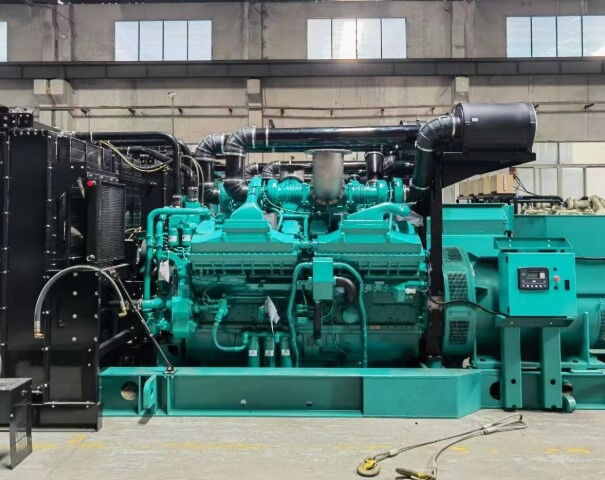
Generator brushes serve as the electrical interface between stationary and rotating components within a diesel generator. Their primary role is to maintain continuous electrical contact between fixed circuits and rotating rotor windings through slip rings or commutators.
- Excitation Current Transmission: Brushes transfer excitation current from the external power source to the rotating rotor winding via slip rings, enabling the formation of a stable electromagnetic field necessary for electricity generation.
- Static Electricity Discharge: During generator operation, static charges may accumulate on the main shaft or rotating components. Brushes safely conduct these charges to ground, preventing electrostatic buildup that could damage bearings, insulation, or electronic components.
- Commutation and Rectification: In generators or motors with commutators, brushes play a critical role in reversing current direction at the appropriate moment, ensuring proper commutation and smooth DC output.
The operational condition of brushes directly influences:
- Electrical efficiency
- Voltage stability
- Heat generation
- Mechanical wear of slip rings or commutators
- Overall system reliability
Issues such as excessive sparking, uneven wear, loose installation, or inappropriate brush material can lead to power loss, unstable voltage, accelerated component degradation, and unexpected shutdowns. In severe cases, brush-related failures may trigger flashover events, ring fires, or damage to the rotor winding insulation, resulting in costly repairs and downtime.
From both practical operation and engineering standards, high-quality generator brushes must meet strict requirements in terms of appearance, structure, operational behavior, and technical performance.
- Proper Edge Chamfering: Brush edges should be smoothly chamfered to prevent sharp corners that may cause localized arcing, uneven current distribution, or accelerated wear of the slip ring surface.
- Correct Brush Type and Dimensions: The brush model must match the generator design specifications, including cross-sectional size, length, curvature radius, and material composition.
- Standardized Construction Quality: Brushes should be free from defects such as cracks, chipped edges, loose leads, damaged braids, broken clamps, or deformed structures. The flexible lead wire must have adequate cross-sectional area and correct length to ensure secure and low-resistance electrical connection.
- Long Service Life: A properly selected and maintained brush should provide extended operational life without causing excessive wear to slip rings or commutators.
- Excellent Current Collection and Commutation: Brushes must transmit current smoothly and efficiently, maintaining sparking within permissible limits and minimizing electrical losses.
- Stable Thermal and Mechanical Performance: During continuous operation, brushes should not overheat, generate excessive noise, or suffer mechanical failure. They should maintain stable contact pressure and consistent current conduction.
- Formation of a Uniform Oxide Film: High-quality brushes rapidly form a thin, uniform, and stable oxide film on the slip ring or commutator surface. This film is essential for reducing friction, stabilizing contact resistance, and improving commutation performance.
- Ease of Inspection and Maintenance: Brushes should allow for convenient inspection, measurement, and performance evaluation using appropriate testing instruments.
From a technical standpoint, generator brushes should comply with applicable national or industry standards. Key parameters include:
- Electrical resistivity
- Rockwell hardness
- Bulk density
- Allowable current density
- Contact voltage drop
- Coefficient of friction
- Wear rate after 50 hours of operation
- Allowable peripheral speed
- Unit contact pressure
- Metal content (for metal-graphite brushes)
Each parameter directly affects conductivity, wear resistance, heat dissipation, and long-term operational stability.
Correct brush selection is essential to ensuring balanced current distribution and stable generator operation.
For a single diesel generator set, all brushes should be:
- Of the same model
- From the same manufacturer
- Preferably from the same production batch
Brush performance can vary significantly between manufacturers, and even between different production periods of the same manufacturer. Mixing brushes with different characteristics may lead to uneven current sharing among parallel brushes, increasing sparking and accelerating wear.
Certain generators require specialized brush solutions:
- Large and Medium Generators with Difficult Commutation: Split-braid brushes may be used to improve commutation by increasing internal short-circuit current within the brush.
- Generators with Unidirectional Rotation Issues: Composite brush arrangements can be applied. Typically: The leading edge uses low-resistance, graphite-based electrochemical graphite brushes with excellent lubrication and film-forming capability. The trailing edge uses high-resistance, carbon-black-based electrochemical graphite brushes with superior commutation performance.
- High-Sparking or Arc-Prone Applications: Carbon-fiber composite brushes may be used on the trailing edge due to their strong arc-extinguishing capability, achieving optimal operating results.
Routine and systematic maintenance is essential to ensuring brush performance and extending service life.
Brush pressure must be carefully controlled:
Carbon and carbon-graphite brushes: 0.01–0.025 MPa
Electrographite brushes: 0.01–0.04 MPa
Excessive pressure accelerates wear, while insufficient pressure causes sparking and unstable contact. Adjustments should be made based on observed wear rate and sparking behavior. The distance between the brush holder bottom and slip ring surface should not be less than 2–3 mm. Flexible leads must not be overly tight and should be securely connected.
New brushes or brushes with burned contact surfaces must be ground to ensure proper seating. Sandpaper is wrapped around the slip ring with the abrasive side facing the brush. With spring pressure applied, the rotor is rotated in the normal direction until more than 80% of the brush surface contacts the slip ring. After seating, brush orientation and holder positions must not be changed.
Generator brushes are typically housed in sealed enclosures equipped with axial-flow fans that remove graphite dust and dissipate heat. If cabinet doors are left open or improperly sealed, external dust may be drawn in, reducing insulation strength and increasing the risk of ring fire. Regular inspection of enclosure sealing and fan performance is essential.
Long-term operation, bearing fatigue, and auxiliary equipment may increase vibration levels. Excessive vibration causes uneven brush contact, loosening of leads and springs, and localized sparking. Routine bearing inspection, lubrication, and alignment adjustments help reduce vibration and protect brush integrity.
Sparking Issues: Common causes include uneven pressure, short or jammed brushes, weakened springs, or operational errors. Solutions involve pressure adjustment, brush replacement, spring inspection, and improved handling procedures.
Excessive Wear: Causes may include inappropriate brush material, excessive pressure, or harsh environmental conditions. Selecting correct brush grades, optimizing pressure, and improving cleanliness and cooling can significantly reduce wear.
Loose Brushes: Loose installation leads to poor contact and unstable current transmission. Solutions include tightening installations, replacing weakened springs, and ensuring brush holders are structurally sound.
Generator brushes are generally divided into natural graphite brushes and electrographite brushes, each with specific advantages.
Manufactured from natural graphite powder with resin or coal tar binders, these brushes offer:
Good electrical conductivity
High wear resistance
Relatively low cost, suitable for cost-sensitive applications
Electrographite brushes include standard electrographite and metal-graphite types:
Standard Electrographite Brushes are made from coke, charcoal, graphite powder, and coal tar, followed by electrochemical graphitization.
Metal-Graphite Brushes contain copper, silver, tin, or lead powders for enhanced conductivity.
These brushes provide:
High current-carrying capacity
Excellent wear resistance
Superior commutation performance for high-load and high-speed generators
Diesel generator brushes, though often overlooked, are critical to generator efficiency, reliability, and safety. Proper understanding of brush functions, performance requirements, selection principles, maintenance techniques, and troubleshooting methods enables engineers and technicians to significantly improve generator performance and extend equipment lifespan. By strictly adhering to technical standards, implementing systematic maintenance routines, and continuously optimizing operating practices, organizations can minimize failures, reduce downtime, and ensure stable power supply. This comprehensive guide is intended to serve as a valuable reference for professionals responsible for diesel generator operation and maintenance, supporting long-term, safe, and efficient power generation.
