
As a core component of modern industrial power backup systems, the scientific design and proper operation of the cooling system in a water-cooled diesel generator directly influence its operating efficiency and service life. This article provides a comprehensive analysis of the technical characteristics and operational considerations of water-cooled diesel generators from the perspectives of system structure, working principles, water drainage procedures, application scenarios, and maintenance practices.
The primary advantage of a water-cooled diesel generator lies in its precisely engineered cooling system, which enables stable operation under high-load conditions. Compared with air-cooled systems, liquid cooling offers higher heat dissipation efficiency and more accurate temperature control.
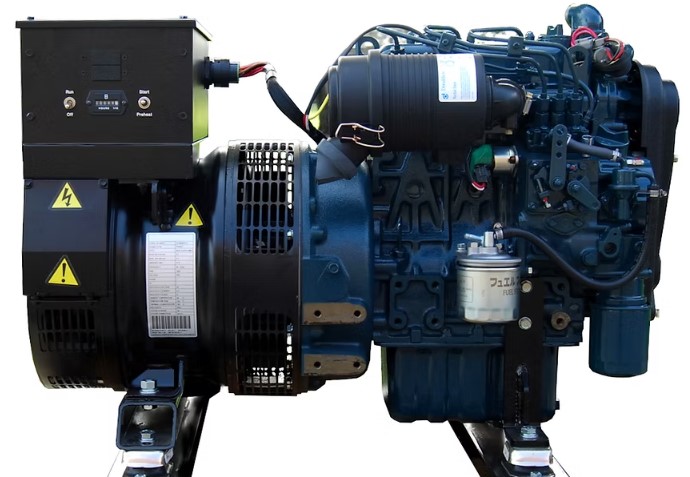
The cooling system of a water-cooled diesel generator uses coolant as the heat transfer medium. Through the circulation of coolant within the radiator and fan-assisted heat exchange, the diesel engine can be maintained within its normal operating temperature range. The system mainly consists of a water pump, radiator, cooling fan, thermostat, water jacket, and coolant pipes.
The coolant absorbs heat from the high-temperature engine block through the water jacket, raising the coolant temperature. The heated coolant then releases heat through the radiator with the assistance of airflow generated by the fan. After cooling, the coolant is pumped back into the water jacket by the water pump, forming a closed-loop circulation system that ensures continuous and stable heat transfer.
Water-cooling systems generally operate under two circulation modes, reflecting the precise thermal management requirements of modern engines.
- Small-Circulation (Fast Warm-Up Mode): When the coolant temperature is below approximately 70°C, the thermostat remains closed, and coolant circulates only among the water pump, water jacket, bypass heating pipe, and pump, without flowing through the radiator. This design helps the engine reach optimal operating temperature quickly after startup, reducing cold-start wear and improving fuel efficiency.
- Large-Circulation (High-Efficiency Heat Dissipation Mode): When the coolant temperature exceeds approximately 70°C, the thermostat automatically opens, allowing coolant to flow through the radiator, temperature control valve, and water jacket to enhance heat dissipation. This intelligent switching mechanism ensures stable engine temperature under varying operating conditions.
Softened water is typically used as coolant to minimize scale accumulation inside the radiator and water jacket, which could otherwise reduce heat transfer efficiency. In cold regions or winter operation, antifreeze additives should be added to improve frost resistance.
Water-cooled systems are usually equipped with an auxiliary expansion tank connected to the radiator. When the coolant expands due to heat and generates vapor, the steam valve on the radiator cap can store excess vapor and coolant. When the temperature drops, coolant can return to the radiator through the recovery valve.
The cylinder structure of a water-cooled engine usually adopts a complex cooling channel design, which may be formed as a dry-type cylinder liner water channel or a wet-type cylinder liner structure.
The piston moves inside the cylinder liner, and heat is transferred to the coolant through the cylinder wall and cooling passages, achieving effective heat dissipation. This cooling method is widely used in four-stroke diesel engines.
From a heat transfer perspective, water-cooled systems offer significant advantages. Water has a high specific heat capacity, allowing it to absorb more heat with relatively small temperature increases. Liquid circulation transfers heat away from the engine more efficiently, promoting uniform temperature distribution across engine components. By adjusting coolant flow and circulation paths, engine operating temperature can be precisely controlled.
Understanding the cooling principle is not enough; proper drainage operation is equally important, especially during cold seasons or long-term shutdowns.
Due to low external temperatures, water drainage should be performed approximately 15 minutes after shutdown. Immediate drainage after shutdown may cause excessive temperature differences between the engine body and the environment, potentially leading to component deformation such as cylinder head distortion.
High-temperature engines should not be drained immediately. If the engine temperature is still high before shutdown, the load should first be removed and the engine allowed to idle until the cylinder temperature drops to around 40–50°C before draining. This practice prevents sudden temperature contraction of cylinder blocks, cylinder heads, and water jacket surfaces, which could otherwise cause cracks due to large internal and external temperature differences.
During drainage, the water flow should be carefully observed to ensure it is smooth and continuous. If the water flow becomes weak or fluctuates irregularly, it may indicate the presence of impurities obstructing drainage. In such cases, the drain outlet should be disassembled to allow direct discharge of water from the engine body. If blockage persists, a thin steel wire or similar tool can be used to clear the passage.
The radiator cap should remain open during drainage. If the cap is closed, the sealed radiator may generate negative pressure as water volume decreases, slowing or stopping water discharge. In winter, incomplete drainage may lead to freezing and cracking of components. Keeping the radiator cap open ensures smooth and complete coolant discharge.
After draining, if the drain valve is not removed, it should be left in the open position to prevent residual coolant from remaining inside due to various operational factors.
After coolant stops flowing out, it is recommended to start the diesel generator and let it idle for several minutes. Engine vibration can help remove residual moisture that is difficult to drain, preventing freezing of cylinder head water plugs and reducing the risk of coolant leakage into the oil sump.
During winter, idle operation after drainage is particularly important. Residual moisture inside the water pump or related components may evaporate or discharge due to engine heat after restarting, preventing water pump freezing, seal damage, and subsequent leakage.
Compared with traditional air-cooled units, water-cooled diesel generators demonstrate significant advantages in industrial applications. These advantages are reflected not only in cooling performance but also in operational economy, space utilization, and long-term reliability.
When powering heavy industrial operations, the choice of generator directly affects production efficiency. Water-cooled diesel generators have become the preferred solution for enterprises requiring reliable and long-lasting power supply in complex environments. These robust machines are ideal for continuous operation scenarios and provide superior thermal management and operational stability compared to air-cooled systems.
Through liquid cooling circulation, water-cooled generators maintain optimal operating temperatures under extreme load conditions, significantly extending engine service life and reducing downtime risks. They are particularly suitable for industries such as manufacturing plants, data centers, and large construction projects that require uninterrupted power supply.
Additionally, water-cooled systems generally offer higher power output and better fuel efficiency. Over long-term operation, they help reduce operational costs.
Water-cooled generators also feature smaller volume, lighter weight, higher energy density, and better thermal conductivity under comparable technical parameters. These characteristics give them unique advantages in mobile power generation equipment and space-constrained installations.
Water-cooled diesel generators are specifically designed for 24-hour continuous operation. Their advanced cooling systems effectively prevent overheating under sustained high-load conditions, which is a common challenge for long-running generator sets.
The core advantage of continuous operation lies in advanced thermal management technology. Unlike air-cooled systems that rely on airflow, water-cooled engines circulate coolant between the engine block and radiator to dissipate heat more efficiently. This allows generators to maintain stable operating temperatures even under high load and high ambient temperature conditions.
Another advantage of water-cooled systems in continuous operation is improved fuel economy. Stable engine temperature ensures more uniform and complete combustion, reducing long-term fuel consumption and helping enterprises save operating costs.
Water-cooled diesel generators are widely used in several critical industries:
- Healthcare Industry: Hospitals and medical centers require uninterrupted power supply to maintain life-support systems, operate critical medical equipment, and ensure patient safety. Water-cooled generators provide reliable electricity support to ensure normal operation during grid failures or remote-area deployment.
- Data Centers: In the digital era, data centers are the core infrastructure of global communication and business operations. These facilities require stable power supply to ensure server operation and prevent voltage fluctuations from damaging sensitive equipment. Water-cooled generators provide highly stable power protection, ensuring data security and service continuity.
- Manufacturing Industry: Large manufacturing enterprises rely on water-cooled generators to power heavy machinery and maintain production schedules. These generators can withstand high-power industrial loads and provide reliable backup power during grid outages.
- Mining Industry: Remote mining areas often operate off-grid, making reliable electricity supply essential. Water-cooled diesel generators can adapt to harsh environments and provide stable power for drilling equipment, mining machinery, and mineral processing systems.
- Telecommunication Infrastructure: Communication base stations and network hubs require continuous power to maintain connectivity. Water-cooled generators ensure stable operation of critical communication infrastructure in remote areas or during prolonged power outages.
Although water-cooled diesel generators are known for reliability, proper maintenance is essential to ensure long-term stable operation.
The cooling system is the core of generator performance. Coolant level and quality should be inspected regularly, and coolant should be replaced according to the manufacturer’s recommended interval, typically every 12 to 24 months depending on operating intensity. This helps prevent scale buildup and maintains efficient heat exchange.
Regular engine oil replacement is essential for all diesel engines. For industrial-grade continuously operating generators, oil change intervals may be shorter than standby equipment. Only oil meeting manufacturer specifications should be used, and oil level should be monitored between maintenance cycles.
Fuel quality has a significant impact on diesel generator performance. Fuel filters should be replaced regularly, and fuel tanks should be cleaned to prevent contamination. For generators that remain unused for long periods, fuel stabilizers may be required to prevent diesel degradation.
Clean air is essential for efficient combustion. Air filters should be inspected regularly and replaced when contaminated to maintain optimal engine performance and reduce unnecessary wear.
The starter battery is a critical component for reliable generator startup. Battery charge level, terminal connections, and electrolyte levels (for non-sealed batteries) should be checked regularly. Battery service life is typically around 2 to 3 years.
While some maintenance tasks can be performed by in-house technicians, periodic professional inspection is strongly recommended. Systematic diagnostics can identify potential problems early and prevent faults from escalating, ensuring the generator remains operational when needed.
Water-cooled systems have relatively higher structural complexity and manufacturing requirements. In high-altitude regions, the reduced boiling point of water may affect cooling performance. In extremely cold regions, coolant freezing may occur after shutdown.
To address these challenges, modern water-cooled diesel generators are often equipped with temperature-controlled fans and pressure caps. Increasing system pressure helps raise the coolant boiling point, allowing proper operation in high-altitude environments. The antifreeze mixture ratio should be scientifically adjusted according to the local minimum temperature, typically ensuring the freezing point is at least 10°C lower than the historical lowest temperature of the region.
Water-cooled diesel generators have become the mainstream choice in industrial power backup systems due to their excellent heat dissipation performance, stable operation, and strong continuous working capability. From the precise design of cooling systems to standardized drainage procedures, from daily maintenance to environmental adaptability, every aspect reflects rigorous engineering practice.
For enterprise users, a thorough understanding of water-cooled diesel generator operating principles and maintenance requirements is essential. Establishing a scientific maintenance system not only extends equipment service life but also ensures reliable power supply during critical moments. It is recommended to maintain close communication with professional suppliers and develop customized maintenance plans based on specific application scenarios to fully leverage the technical advantages of water-cooled diesel generators.