
Before purchasing a natural gas generator, many buyers tend to focus primarily on the equipment’s price tag. However, the real cost of ownership extends far beyond the initial purchase. A generator is a long-term energy system, and its total cost is shaped by fuel consumption, installation work, maintenance requirements, and years of operation. Without a full understanding of these components, it is easy to underestimate long-term spending and face unexpected financial pressure later.
Natural gas generators have become increasingly popular in both residential and commercial sectors due to their stable fuel supply, relatively low operating noise, and cleaner emissions compared with diesel or gasoline systems. They are widely used as backup power for homes, small businesses, and critical facilities, and in some cases as primary power sources in remote or unstable-grid environments. However, their cost structure varies significantly depending on power capacity, usage scenario, and efficiency level. This article provides a detailed, structured breakdown of all major cost factors to help users make informed purchasing and operational decisions.
The total cost of a natural gas generator is not a single figure but a combination of multiple layers of expenditure throughout its lifecycle. These include:
- Initial equipment purchase cost
- Installation and setup expenses
- Fuel consumption costs during operation
- Routine maintenance and repairs
- Hidden or indirect costs such as transportation, permits, and financing
Each of these components contributes differently depending on whether the generator is used as a standby system or a continuously operating power source. In most real-world cases, long-term fuel and maintenance costs can exceed the initial purchase price.
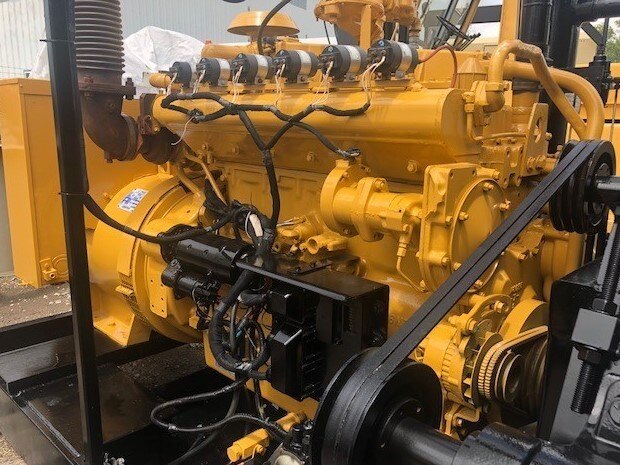
The operating cost of a natural gas generator is dynamic rather than fixed. It changes based on usage conditions, equipment specifications, and external economic factors. Four major variables play the most important roles: power demand, fuel price fluctuations, operating time, and efficiency level.
Power output is the most direct determinant of fuel consumption. In simple terms, larger generators consume more natural gas per hour because they are producing more electrical energy.
For example, a typical 10 kW residential natural gas generator consumes roughly 100 to 150 cubic feet of natural gas per hour when operating at full load. This level of consumption is suitable for basic household backup needs such as lighting, refrigeration, and small appliances.
In contrast, a 100 kW commercial generator operating at approximately 75% load may consume between 900 and 1200 cubic feet per hour. The difference is substantial, and it highlights how rapidly fuel costs scale with power capacity.
Proper sizing is therefore critical. A generator that is too large will waste fuel during low-load operation, while a unit that is too small may struggle to meet demand or suffer from overloading. Residential users typically choose units between 3 kW and 25 kW, while commercial systems often start from 30 kW and can exceed 1000 kW in industrial applications.
Fuel cost is heavily influenced by market conditions, and natural gas prices are not stable over time.
One of the most important factors is geographic variation. Regions with abundant natural gas production generally enjoy lower prices, while areas that rely on long-distance transportation or imports face higher costs. As a result, the same generator may have significantly different operating costs depending on location.
Seasonal variation also plays a key role. During winter months, demand for heating increases significantly, often pushing gas prices upward. In colder regions, operating costs during winter can be 20% to 30% higher than in summer.
To manage this risk, users sometimes adopt strategies such as monitoring price trends and locking in long-term contracts during low-price periods. Another increasingly common option is the use of dual-fuel generators, which allow switching between natural gas and alternative fuels such as gasoline or diesel when gas prices spike.
How often a generator runs has a direct impact on total cost. This is one of the most overlooked factors in cost planning.
In standby applications, a generator may only operate during power outages. In such cases, annual runtime may range from 50 to 200 hours, resulting in relatively low fuel consumption and manageable maintenance costs.
However, in continuous operation scenarios—such as remote industrial sites, construction projects, or unreliable grid environments—the generator may run for thousands of hours per year. In extreme cases, annual operating time may approach 8000 hours or more, meaning fuel and maintenance become major financial commitments.
This difference in usage patterns creates entirely different cost structures. A standby generator is primarily a capital investment with occasional operating expenses, while a continuous generator is essentially an ongoing energy production system with constant operational costs.
Efficiency is a critical but often underestimated factor in long-term cost control. Modern natural gas generators are significantly more efficient than older models.
New-generation high-efficiency engines can reduce fuel consumption by approximately 10% to 20% while producing the same electrical output. While these units may have higher upfront prices, the savings in fuel costs over time often outweigh the initial difference.
For example, over several years of operation, improved fuel efficiency can result in thousands of dollars in savings, particularly for high-usage commercial systems. Therefore, energy efficiency ratings and real-world fuel consumption data should be carefully evaluated during procurement.
The purchase cost is the most visible part of the investment, but it varies widely depending on power capacity, application type, and additional features.
Residential natural gas generators typically range from 3 kW to 25 kW.
Small units (3–5 kW) usually cost between $500 and $1500 and are designed for essential loads such as lighting and communication devices. Mid-range units (7–10 kW) range from $2000 to $4000 and can support basic household appliances including refrigerators and small air conditioning systems.
Larger residential systems (15–22 kW) typically cost between $4000 and $8000 and are capable of powering an entire home’s essential systems. High-capacity residential units (25–48 kW) may range from $6000 to $15000 or more, depending on configuration and brand.
Optional features significantly influence pricing. For instance, automatic transfer switches may add $500 to $1000, enabling seamless transition during power outages. Remote monitoring systems with Wi-Fi connectivity may add another $300 to $500, while advanced smart control systems can increase costs by $500 to $2000 depending on functionality.
Commercial and industrial generators require significantly higher power output and more durable construction.
Small commercial units around 30 kW typically cost between $15000 and $25000. Medium systems ranging from 60 kW to 100 kW usually fall between $30000 and $60000. Large industrial generators exceeding 500 kW can cost anywhere from $100000 to $500000 or more.
Several factors contribute to this wide price range. Brand reputation often plays a significant role, as established manufacturers charge premiums for reliability and service support. Configuration also matters, including soundproof enclosures, advanced digital control panels, and emissions compliance systems. Industrial-grade units are engineered for continuous operation under heavy loads, requiring stronger materials, enhanced cooling systems, and more sophisticated monitoring technology.
New generators offer full warranty coverage, typically ranging from 2 to 5 years, and incorporate the latest technology for improved efficiency and reliability. However, they require a higher initial investment.
Used generators can reduce upfront costs by 30% to 50%, making them attractive for budget-conscious buyers. However, purchasing used equipment requires careful inspection of operating hours, maintenance history, and overall mechanical condition. Without proper evaluation, buyers risk acquiring equipment with limited remaining lifespan or hidden mechanical issues. Certified refurbished units from reputable suppliers are generally the safest option.
Installation is a major but often underestimated component of total investment.
Typical installation work includes connecting or extending natural gas pipelines, installing automatic transfer switches, constructing concrete foundations for stationary units, completing electrical wiring and system integration, setting up ventilation and exhaust systems, and obtaining required permits and inspections.
Residential installation costs generally range from $1000 to $2500 for simple setups. More complex installations involving electrical upgrades or extended gas lines can reach $5000 or more.
Commercial installations are significantly more expensive, typically ranging from $5000 to $10000 for basic projects and exceeding $25000 for large-scale systems requiring structural modifications or custom piping.
Permit and regulatory fees typically range between $100 and $500 depending on local requirements. These ensure compliance with safety and electrical codes.
Long-term costs often exceed initial investment and are the most important factor in determining total ownership expense.
Natural gas generators are typically connected directly to pipeline systems, eliminating the need for manual refueling. Operating cost per kilowatt-hour generally ranges from $0.08 to $0.15 depending on fuel prices and efficiency.
Extreme weather events can significantly increase consumption. For example, during major outages, continuous generator use can lead to unexpectedly high fuel bills, highlighting the importance of planning for worst-case scenarios.
Routine maintenance is essential for reliability and long-term performance.
Residential maintenance costs typically range from $200 to $500 per year. This includes oil changes, filter replacements, spark plug inspection, battery checks, and system diagnostics.
Commercial systems require more intensive servicing, costing between $1000 and $2000 annually. This includes all residential maintenance tasks plus coolant replacement, load testing, and full system inspections.
Maintenance is typically required every 250 to 500 operating hours or every six months, whichever comes first. Over a 10-year period, maintenance costs may accumulate to $2000 to $5000 for residential units and $10000 to $20000 for commercial systems. As equipment ages, component replacements such as fuel pumps and voltage regulators may further increase expenses.
Several indirect costs are often overlooked:
Transportation expenses for large industrial units can be significant. Storage requirements may necessitate additional warehouse space. Financing costs also increase total ownership expense when generators are purchased through installment plans, as interest payments accumulate over time.
Residential vs. Commercial Systems: Residential systems are lower in cost and designed for intermittent use, while commercial systems require high reliability and continuous operation, leading to significantly higher long-term expenses.
Fuel Type Comparison: Compared with gasoline generators, natural gas systems are typically 30% to 50% cheaper to operate and safer to store. Compared with diesel generators, natural gas is cleaner and often less expensive, though diesel performs better in extreme cold and heavy industrial applications. Compared with solar systems, natural gas generators have lower upfront costs but higher ongoing fuel expenses. Solar systems require high initial investment but offer near-zero operating fuel cost. Many users adopt hybrid systems combining both technologies for optimal reliability and efficiency.
Reducing total ownership cost requires optimization at every stage: selection, operation, and fuel management.
Proper sizing is essential. Overestimating capacity leads to inefficiency, while underestimating results in overload risk. High-efficiency models should be prioritized despite higher upfront costs, as savings accumulate over time. Certified used equipment can also be a cost-effective option for low-usage scenarios.
Smart control systems can automatically start and stop generators based on demand, reducing idle time. Proper load management improves efficiency and prevents overload conditions. Regular maintenance ensures optimal combustion efficiency and reduces fuel waste.
Monitoring market prices and securing long-term supply contracts can stabilize costs. Dual-fuel systems provide flexibility during price spikes. Maintaining clean combustion systems improves efficiency and reduces unnecessary fuel consumption.
The cost of a natural gas generator is a multi-layered investment that extends far beyond the purchase price. It includes installation, fuel consumption, maintenance, and hidden operational expenses that accumulate over time.
For residential users, a complete system typically costs between $8000 and $20000, with annual operating expenses of $500 to $1000. For commercial users, investment levels can range from tens of thousands to hundreds of thousands of dollars, with operating costs heavily influenced by runtime and load demand.
Ultimately, the most important step before purchasing is a comprehensive evaluation of power requirements, expected usage patterns, local gas prices, and long-term operational goals. A well-planned decision ensures not only cost efficiency but also long-term reliability and performance.
