
In recent years, the frequency of extreme weather events and natural disasters has increased significantly across many regions. At the same time, aging electrical infrastructure and growing electricity demand have placed additional pressure on power grids. As a result, power outages have become more frequent, and in many cases, they last longer than before.
For households, a prolonged blackout is more than just an inconvenience. It can lead to food spoilage due to refrigerator failure, loss of lighting, disruption of communication systems, and in severe weather conditions, the inability to operate heating or air-conditioning systems. These issues can directly affect safety, comfort, and even survival in extreme environments.
In this context, investing in a reliable backup generator is no longer considered optional—it has become an essential part of modern household preparedness. A properly selected generator can ensure continuous access to electricity during outages, maintain the operation of critical appliances, and significantly improve a household’s resilience in emergencies.
Today, backup power solutions generally fall into three main categories: traditional fossil fuel generators (including gasoline, diesel, and propane), solar generators, and hybrid or dual-fuel systems that combine multiple energy sources. Each solution has its own advantages and limitations depending on usage scenarios.
This article focuses on a detailed comparison between propane generators and gasoline generators, the two most widely used types of backup power systems, and also explains how dual-fuel generators integrate the strengths of both to provide a more flexible solution.
To better understand propane generators, it is important to examine how they operate and what makes them different from other fuel-based systems.
A propane generator uses liquefied petroleum gas (LPG) as fuel and converts it into electrical energy through an internal combustion engine. Its operating principle is similar to that of a gasoline engine, but the fuel properties and combustion characteristics differ significantly.
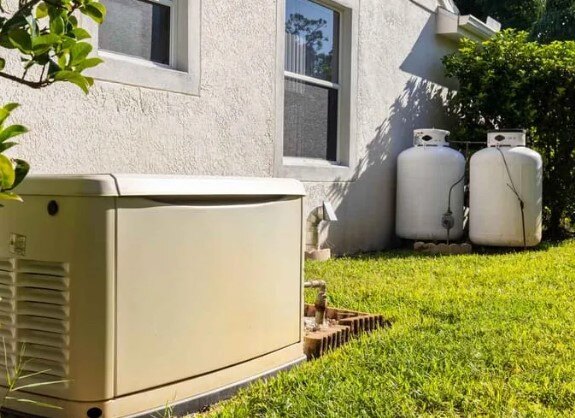
A propane generator produces electricity through a controlled combustion process inside an internal combustion engine. The overall mechanism is similar to an automobile engine but adapted for stationary power generation.
During operation, a propane tank is connected to the generator. When the system is started, propane gas flows out of the tank and passes through a valve and pressure regulator. The regulator ensures that the fuel is delivered at a stable and safe pressure into the engine.
Inside the combustion chamber, propane mixes with air in a precise ratio. This mixture is then ignited by a spark plug, producing controlled combustion. The resulting energy pushes the engine pistons, which drive a crankshaft or turbine system.
This mechanical motion rotates a magnet within a copper coil, creating an electromagnetic field that generates alternating current (AC) electricity. The electrical output is then supplied to connected devices or household circuits.
Most propane generators are designed to operate at a relatively constant output level rather than dynamically adjusting to changing loads. When the propane supply is exhausted, the empty tank must be replaced with a full one to restore operation.
For residential applications, propane generators typically range from 7 kW to 20 kW, which is sufficient to power essential household systems such as lighting, refrigeration, heating equipment, and communication devices.
Cleaner Environmental Performance: One of the most important advantages of propane is its relatively clean combustion. Compared to gasoline and diesel, propane produces significantly fewer greenhouse gas emissions and lower levels of harmful pollutants such as carbon monoxide and particulate matter. This makes it a more environmentally responsible option for backup power.
Long-Term Fuel Stability and Safe Storage: Propane does not degrade over time. Unlike gasoline, which begins to break down within a few months, propane can be stored indefinitely without loss of quality. This makes it particularly suitable for emergency preparedness. Propane is also stored in sealed pressurized tanks, which are resistant to leakage under proper conditions. This allows homeowners to safely store fuel in advance without worrying about deterioration.
Strong Emergency Reliability: A key advantage of propane systems is fuel independence. Because propane can be stored on-site in advance, users are not dependent on external fuel stations. During disasters such as hurricanes, earthquakes, or widespread grid failures, fuel supply chains are often disrupted. In such cases, stored propane becomes a highly reliable energy source.
Excellent Temperature Adaptability: Propane performs consistently across a wide temperature range. It remains stable in both extremely cold and hot environments, making it suitable for regions with harsh or unpredictable climates.
Lower Operating Noise: Propane generators generally operate more quietly than gasoline models. This makes them more suitable for residential areas where noise reduction is important, especially during nighttime operation.
Despite their advantages, propane generators also have certain limitations.
Lower Energy Density: Propane has a lower energy density compared to gasoline. This means that for the same volume of fuel, propane provides less runtime. As a result, users may need multiple large tanks for extended operation.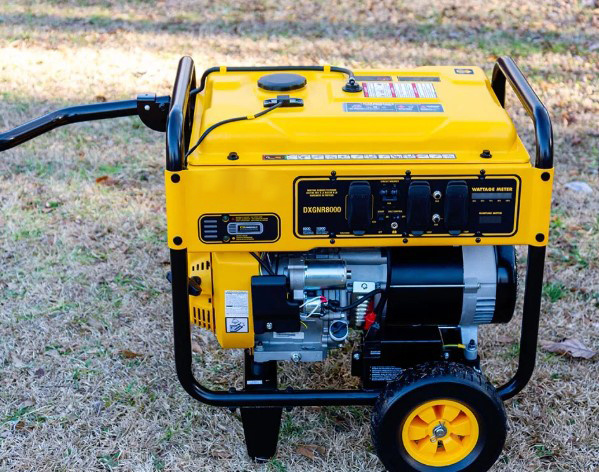
Bulk Storage Requirements: Propane is stored in pressurized cylinders, which can be bulky and require significant storage space. Transporting or replacing these tanks is also less convenient than refueling gasoline.
Higher Maintenance Demands: Because propane burns at a higher temperature, it may lead to increased engine wear over time. This can result in slightly higher maintenance costs compared to some gasoline systems.
Limited Fuel Availability: Unlike gasoline, which is widely available at almost every fuel station, propane distribution networks are less extensive in some regions. This may limit convenience in certain areas.
Gasoline generators remain the most widely used type of backup power system due to their maturity, availability, and ease of use.
A gasoline generator also operates using an internal combustion engine. Gasoline is injected into the engine’s combustion chamber, where it mixes with air and is ignited to produce mechanical energy.
This mechanical energy rotates a shaft connected to a generator rotor. As the rotor spins within a magnetic field, electricity is generated through electromagnetic induction. The electrical output is then delivered through standard outlets for use.
Gasoline generator technology is highly mature, and products are available in a wide range of sizes—from small portable units producing a few hundred watts to large industrial systems capable of generating hundreds of kilowatts.
Highly Accessible Fuel Supply: One of the biggest advantages of gasoline generators is fuel availability. Gas stations are widely distributed, making it easy to refuel under normal conditions. This accessibility is a key reason for their popularity.
High Energy Density: Gasoline contains more energy per unit volume than propane. This allows gasoline generators to run longer on smaller fuel quantities, making them efficient for extended use.
Lower Initial Cost: Gasoline generators are generally more affordable to purchase compared to propane or dual-fuel models with similar output capacity. This makes them attractive for budget-conscious users.
Strong Portability: Many gasoline generators are compact and lightweight, especially smaller models designed for outdoor use. They are widely used for camping, construction sites, and mobile applications.
Simple Maintenance and Wide Support: Gasoline engine technology is well-established. Maintenance procedures are straightforward, typically involving oil changes and air filter replacement. Repair services and spare parts are widely available.
Environmental Impact: Gasoline combustion produces harmful emissions such as carbon monoxide and nitrogen oxides. Therefore, gasoline generators must always be operated outdoors in well-ventilated areas.
Fuel Supply Vulnerability: During disasters or large-scale outages, fuel stations may become inaccessible due to power loss or transportation disruptions. This can severely limit usability when backup power is needed most.
Short Shelf Life of Fuel: Gasoline begins to degrade after approximately 3 to 6 months of storage. This can lead to engine starting problems or reduced performance unless stabilizing additives are used.
High Noise Levels: Gasoline generators are generally louder than propane models, which can be disruptive in residential or quiet environments.
Price Volatility: Gasoline prices fluctuate based on global oil markets, making long-term operating costs less predictable.
Higher Safety Risks: Gasoline is highly flammable and must be stored carefully. Improper storage conditions can increase fire and explosion risks.
To address the limitations of single-fuel systems, dual-fuel generators have become increasingly popular. These systems are designed to operate using either gasoline or propane, allowing users to switch between fuels depending on availability or cost.
Maximum Fuel Flexibility: Dual-fuel generators allow users to switch between gasoline and propane instantly. If one fuel source is unavailable, the other can be used without interruption, significantly improving reliability.
Balanced Performance and Environmental Benefits: Users can choose propane for cleaner, quieter operation or gasoline for higher energy availability when needed. This flexibility allows adaptation to different conditions.
Integration of Inverter Technology: Many modern dual-fuel generators include inverter systems that adjust engine speed based on power demand. This improves fuel efficiency, reduces noise, and extends engine life.
Wide Range of Applications: Dual-fuel generators are suitable for home backup power, outdoor activities, and emergency use. Many models are also designed for portability and ease of transport.
Stable and Clean Power Output: Inverter-based models provide stable electricity suitable for sensitive electronic devices such as laptops, smartphones, and medical equipment.
In practical applications, dual-fuel generators offer a balanced combination of efficiency, portability, and power output. They are often equipped with multiple outlets, including standard AC sockets and USB ports, allowing simultaneous use of different devices.
Their compact design and moderate weight make them easy to move and set up, even for a single user.
Selecting the right generator requires evaluating several practical factors.
The availability of fuel in your area is a key consideration. If gasoline is easily accessible, a gasoline generator may be sufficient. If propane can be safely stored or is readily available, a propane system may be preferable. If fuel availability is uncertain, a dual-fuel generator is the most reliable option.
Home backup: prioritize quiet operation and stable output
Outdoor use: prioritize portability
Industrial use: prioritize high power and durability
Propane is cleaner but may require higher initial investment. Gasoline is cheaper upfront but less environmentally friendly. Dual-fuel systems offer a balance between the two.
Calculate the total wattage of all essential appliances, including surge power requirements for devices like refrigerators and air conditioners. Most households require between 5 kW and 15 kW depending on size and usage patterns.
Propane and gasoline generators are both mature and reliable backup power solutions, each with distinct strengths.
Gasoline generators offer convenience, portability, and lower initial cost. Propane generators provide cleaner operation, safer storage, and better emergency readiness.
However, neither system is perfect on its own. Gasoline is vulnerable during disasters, while propane has lower energy density and limited refueling convenience.
Dual-fuel generators effectively solve these challenges by combining both fuel types into a single system. With modern inverter technology, they also deliver improved efficiency, reduced noise, and higher-quality power output.
For most households, a dual-fuel generator represents the most practical and future-proof investment. It ensures reliable electricity under a wide range of conditions, from short-term outages to extended emergency situations.
Before making a purchase, it is essential to evaluate your actual power needs, local fuel availability, and long-term usage expectations. A well-chosen generator is not just a piece of equipment—it is a long-term safeguard for home safety, comfort, and energy independence.
