
Diesel generator sets can be classified into single-cylinder and multi-cylinder types based on the number of cylinders. A single-cylinder diesel engine has only one cylinder and is usually used as the power source for small tractors, typically delivering horsepower in the range of several tens of horsepower, with torque reaching approximately 60 N·m. Multi-cylinder diesel generators, on the other hand, consist of multiple cylinders, with common configurations including four-cylinder, six-cylinder, twelve-cylinder, and even sixteen-cylinder designs. From the perspective of operating cycles, single-cylinder diesel engines are divided into two-stroke and four-stroke types, which are structurally similar, with the main difference lying in the valve timing and intake-exhaust mechanism. In engineering theory, a multi-cylinder engine can be regarded as a combination of multiple single-cylinder engines arranged in different configurations. The differences in cylinder arrangement directly determine the significant variations between the two types of diesel generators in terms of performance, cost, and application scenarios.
Power and Torque Characteristics: The maximum rotational speed of a single-cylinder diesel engine is generally around 2,000 rpm. Diesel engines are known for their excellent low-speed torque characteristics, mainly due to the long-stroke design of the cylinders, which reduces dependence on high rotational speed. Agricultural tractors take advantage of the large displacement, high gear reduction ratio, and long stroke characteristics of single-cylinder engines to amplify torque output and meet operational requirements. Under the same cylinder bore conditions, an increase in the number of cylinders results in greater displacement and higher power output. Under the same displacement conditions, more cylinders usually mean smaller cylinder bore, allowing the engine to operate at higher rotational speeds and achieve greater power output. Specifically, engines with 1–2.5 liters of displacement are generally four-cylinder engines, around 3 liters are six-cylinder engines, about 4 liters are eight-cylinder engines, and engines above 5.5 liters are typically twelve-cylinder configurations. When the cylinder bore remains constant, increasing the number of cylinders will increase displacement and consequently improve power output.
Rotational Speed and Load Response: When a single-cylinder diesel engine is equipped with a mechanical governor, increasing the throttle will raise the fuel supply. However, if the load is too large and torque output becomes insufficient, the engine speed will fail to increase. When rotational speed cannot rise, the air intake volume becomes insufficient, causing incomplete combustion of the excess fuel, which leads to carbonization and particulate emissions in the form of black smoke. Once a single-cylinder diesel engine begins to emit black smoke, it indicates that the engine is operating under excessive load. At this stage, forcing further acceleration will not solve the problem but instead indicates that the engine is already weakening and approaching the end of its service life. In contrast, a six-cylinder diesel generator set can provide stable torque output across a wider speed range and respond quickly to load variations. This rapid load response capability is particularly important in peak power demand scenarios in manufacturing facilities and commercial buildings, helping to improve overall system reliability.
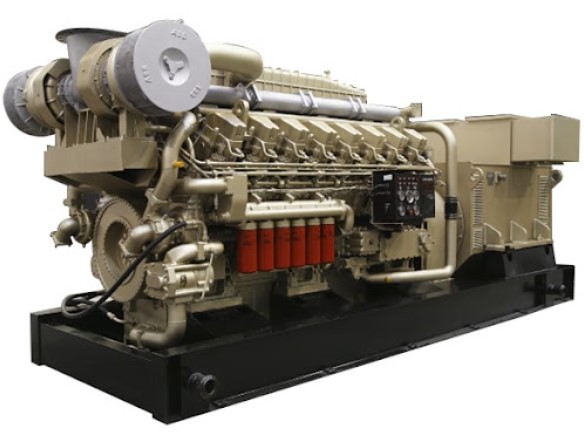
Structural Complexity: The structure of a four-cylinder engine is relatively simple, while a six-cylinder engine is more complex. The single-cylinder diesel generator has the simplest structure, with fewer components and relatively lower manufacturing process requirements. Multi-cylinder diesel generators, due to the increase in cylinder count, have more complex valve systems, crankshaft structures, and cooling systems, which require higher machining precision and assembly technology.
Manufacturing and Maintenance Costs: Differences in structural complexity are directly reflected in cost. Four-cylinder engines are relatively cheaper, while six-cylinder engines are more expensive. Single-cylinder diesel generators have the lowest manufacturing cost, and the cost increases as the number of cylinders rises. In terms of maintenance cost, four-cylinder engines are easier and cheaper to maintain than six-cylinder engines. Due to its simple structure, the single-cylinder engine is the easiest to maintain, with replacement parts being inexpensive and easy to obtain. Although multi-cylinder diesel generators require higher initial investment, their structural and operational advantages make them more suitable for large engineering projects and critical power supply applications. Single-cylinder diesel generators are more suitable for small household power demand or budget-limited scenarios.
Vibration and Noise Control: Multi-cylinder diesel generators generally produce lower noise and vibration levels compared to single-cylinder units. This is because multi-cylinder engines distribute pressure and load across multiple cylinders during operation, thereby reducing vibration and noise generation.
Six-cylinder diesel engines can achieve more uniform power stroke distribution during operation, reducing vibration and ensuring smoother performance. This balanced power output is essential for extending the service life of engine and generator components. Four-cylinder generators may exhibit more noticeable vibration and noise under heavy load operation, although their performance is acceptable in low-power applications. Since a single-cylinder diesel engine has only one working cylinder, a power stroke occurs only once every two crankshaft revolutions (in four-stroke engines), resulting in uneven operation and relatively high vibration and noise. This factor must be carefully considered when the generator is installed near areas with human activity or in noise-sensitive environments.
Operational Smoothness: Six-cylinder diesel generator sets can achieve an optimal balance among power output, fuel efficiency, and operational stability. Compared with engines with fewer cylinders, the six-cylinder layout enables smoother operation, lower vibration, and significantly improved durability. This design is especially suitable for continuous power supply or standby power applications, such as industrial facilities, data centers, and critical infrastructure projects. The popularity of six-cylinder diesel engines mainly comes from their ability to maintain mechanical balance while delivering stable power output. This structure allows the engine to achieve more uniform combustion distribution throughout the rotation cycle, thereby reducing operational vibration and improving system smoothness.
Fuel Consumption Comparison: Generally, the more cylinders an engine has, the heavier the engine and the larger the displacement, leading to higher fuel consumption. Six-cylinder engines consume more fuel than four-cylinder engines, which is a basic engineering principle. Single-cylinder diesel generators have the lowest fuel consumption but also provide the lowest power output. Fuel consumption increases with cylinder count, but power output also increases accordingly. In terms of fuel efficiency, six-cylinder diesel engines usually exhibit higher thermal efficiency. Their combustion chamber design promotes more complete fuel combustion and effectively converts thermal energy into mechanical energy. This feature provides better fuel economy, which is particularly important for users who need to control operating costs. Multi-cylinder diesel generators improve combustion efficiency by allowing multiple cylinders to operate simultaneously, thereby reducing fuel consumption. This is especially beneficial for long-term continuous operation, helping reduce operating costs and environmental impact.
Emission Control: Modern six-cylinder engines usually comply with strict emission standards and often adopt advanced exhaust gas treatment technologies. Six-cylinder engines operate more stably under high power output conditions, promoting more complete combustion and helping reduce emissions. Although four-cylinder engines can also be designed with high efficiency and low-emission structures, they may struggle to achieve the performance level of six-cylinder engines in high-power operating ranges. Single-cylinder diesel engines tend to produce incomplete combustion, especially under overload conditions, making them more likely to generate black smoke and particulate emissions, resulting in relatively poorer environmental performance.
Thermal Management Efficiency: Six-cylinder engines generally have better cooling performance because heat distribution is more uniform. A reasonable cylinder arrangement helps optimize the cooling system layout, ensuring that each cylinder receives sufficient cooling and preventing premature component failure caused by localized overheating. Meanwhile, strong thermal management capability allows the equipment to maintain stable operation under different load conditions. Single-cylinder diesel engines have a simple structure and relatively easy cooling design, but long-term high-load operation may lead to overheating due to concentrated heat accumulation.
Mechanical Stress and Wear: The number of cylinders significantly affects the service life of generator sets. During combustion, six-cylinder engines distribute mechanical forces more evenly. Compared with engines with fewer cylinders, they can significantly reduce the mechanical stress borne by crankshafts, bearings, and other key components. This more balanced mechanical structure not only reduces vibration but also lowers fatigue damage risk, thereby extending equipment service life and reducing maintenance requirements. The components of a single-cylinder diesel engine are subjected to high-speed friction for long periods, and increasing wear will inevitably lead to various failures. When failures occur, rapid and accurate diagnosis and troubleshooting are essential for improving agricultural machinery service life and operational efficiency.
The differences in mechanical structure, heat dissipation efficiency, and operating characteristics ultimately determine the different positioning of single-cylinder and multi-cylinder diesel generators in practical applications. After understanding these technical characteristics, users need to combine their specific requirements to make reasonable equipment selection decisions. The following provides practical selection guidance based on real application scenarios.
Single-cylinder diesel generators are suitable for the following situations:
Small household power demand
Temporary power supply in rural or remote areas
Small agricultural irrigation and product processing
Power supply for small construction electric tools
Scenarios with limited budget and low power requirements
The advantages of single-cylinder diesel generators lie in their low purchase cost, simple maintenance, compact size, and lightweight design, making them easy to move. For users with power demand ranging from several kilowatts to around ten kilowatts, single-cylinder generators are an economical choice.
Multi-cylinder diesel generators (taking six-cylinder engines as an example) are suitable for:
Continuous power supply for industrial production facilities
Backup power systems for data centers, hospitals, and other critical infrastructure
Large construction sites, mines, and other high-power demand environments
Environments requiring strict noise and vibration control
Long-term continuous operation scenarios
Six-cylinder diesel generator sets are particularly suitable for applications requiring continuous power supply or reliable backup power. Their high power density also makes them ideal for applications where space is limited but higher output power is required.
In the comparison between four-cylinder and six-cylinder diesel generator sets, power density is a key consideration. Although four-cylinder engines are generally more compact in structure, six-cylinder engines can provide higher power output within a similar overall size range.
For applications with lower power requirements or higher portability demands, four-cylinder generators have advantages due to their lighter weight and smaller volume. From an operational perspective, six-cylinder engines usually operate more smoothly, produce less vibration, and have better load adaptability, allowing them to handle frequently changing load conditions.
When selecting a diesel generator set, users need to comprehensively evaluate actual requirements, budget, space limitations, and other factors to choose the appropriate cylinder configuration and power output. The optimal choice should balance power, cost, and reliability while meeting operational needs.
In addition to technical parameters, the following details should also be considered:
Manufacturer reputation and technical strength to ensure equipment quality and reliable after-sales service
Equipment scalability, as six-cylinder engines can adjust displacement and power output by modifying cylinder bore and piston stroke without changing the basic structural design
Spare parts availability, since many core components of six-cylinder engines are interchangeable across different power ratings, helping simplify maintenance management and inventory control
Single-cylinder diesel generators and multi-cylinder diesel generators each have their advantages and disadvantages. The key lies in selecting the most suitable option based on specific needs.
Single-cylinder diesel generators are economical and practical, featuring simple structure and convenient maintenance, making them suitable for low-power, temporary, and budget-limited applications. However, they have drawbacks such as high vibration, high noise, low power output, and susceptibility to damage under overload conditions.
Multi-cylinder diesel generators (four-cylinder, six-cylinder, and above) provide higher power output, smoother operation, lower vibration, better fuel economy, and longer service life, making them suitable for high-power, long-duration continuous operation, and stability-sensitive environments. However, they involve higher procurement costs, more complex maintenance, and relatively higher fuel consumption.
In summary, engines with fewer cylinders are more economical but deliver lower horsepower, while engines with more cylinders provide greater power but consume more fuel. Users are advised to choose the most appropriate diesel generator configuration based on actual power demand, operating frequency, budget constraints, and installation environment. For critical power supply applications, priority should be given to six-cylinder diesel generator sets to achieve better operational stability and longer service life.
