
In modern society, the stability of power supply is directly related to production efficiency and the convenience of daily life. Diesel generator sets, as backup power sources and independent power supply solutions, are widely used in industrial manufacturing, commercial buildings, medical institutions, communication base stations, and field operations. However, many users often experience confusion regarding technical concepts related to power when purchasing and operating diesel generator sets, which may lead to improper equipment selection or inefficient operation. This article provides an in-depth analysis of the core factors affecting the power output of diesel generator sets to help users make more informed decisions.
Before purchasing a diesel generator set, it is essential to understand three core concepts: kilowatts (kW), kilovolt-amperes (kVA), and power factor (PF). These three parameters determine whether the generator can match the actual electricity demand. Selecting incorrectly may result in wasted investment or even equipment damage.
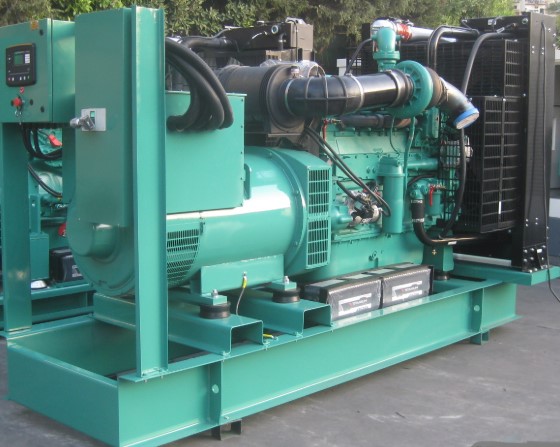
Kilowatt (kW) is the unit used to measure the actual electrical power output of a diesel generator set, representing the power that is truly consumed by electrical equipment and converted into useful work. When you turn on lights, start electric motors, or operate air conditioners, the electricity directly used by these devices is measured in kW as real power. In simple terms, kW is the basis of electricity billing and reflects the true working capability of the equipment.
Kilovolt-ampere (kVA) measures apparent power, a concept that is more comprehensive than kW. It includes not only active power (kW) but also reactive power (kVAR). Although reactive power is not directly consumed by equipment, it continuously circulates between the power source and the load and is necessary to maintain the normal operation of motors, transformers, and similar devices. KVA can be understood as the “total load” in the power system, while kW represents the portion that is actually consumed.
Power factor is the ratio of active power to apparent power and is calculated using the formula: PF = kW / kVA. This value is usually expressed as a percentage and ranges between 0 and 1. For example, if a building consumes 900 kW of active power and 1000 kVA of apparent power, the power factor is 0.90 or 90%.
The closer the power factor is to 1, the higher the electrical energy utilization efficiency. When the power factor is low, more electrical energy circulates in the system without performing useful work, leading to increased line losses and wasted equipment capacity. The nameplate of a diesel generator set usually indicates rated values of kW, kVA, and PF, and these parameters are the primary basis for equipment selection.
The power output of a diesel generator set is constrained by two major hardware components: the diesel engine determines the kW upper limit, while the generator winding determines the kVA upper limit. Understanding the difference between these two limitations is critical to avoiding equipment damage.
The maximum kilowatt output of a diesel generator set is determined by the diesel engine that drives it. The engine generates mechanical energy through diesel combustion, which is then converted into electrical energy by the generator. During this process, energy conversion losses inevitably occur.
For example, suppose a diesel generator set is driven by a 1000-horsepower diesel engine with a generator efficiency of 95%. First, unit conversion is required. 1000 horsepower is equivalent to 745.7 kW of shaft power provided by the engine to the generator. Considering the 95% conversion efficiency, the maximum electrical power output of the generator is 745.7 kW × 0.95 = 708.4 kW. This means that regardless of load demand, the actual power output of this unit cannot exceed 708.4 kW.
Unlike kW, the maximum kilovolt-ampere output depends on the electrical characteristics of the generator itself, mainly the rated voltage and current-carrying capacity. Generator windings have a fixed current-carrying capability. Exceeding this limit may cause winding overheating, insulation damage, or even burnout.
There are two distinctly different overload conditions for diesel generator sets, and users must clearly distinguish between them.
Engine Overload: When the load connected to the generator exceeds the rated kW, the diesel engine must output more mechanical power. If the load demand continuously exceeds the engine’s capacity, the engine will operate under overload conditions, characterized by reduced rotational speed, increased exhaust temperature, and rising engine oil temperature. Long-term operation in this state will significantly shorten engine service life.
Generator Winding Overload: When the load exceeds the rated kVA, the generator windings may overheat due to excessive current even if the actual kW remains within the rated range. This type of overload may occur under low power factor conditions. For example, if equipment operates at 950 kW and 1300 kVA (power factor 73%), the diesel engine is not overloaded, but the generator winding is already in a dangerous thermal state.
The following scenarios help better illustrate these relationships:
- Scenario 1: A building consumes 1000 kW and 1100 kVA, with a power factor of 91%. If the generator set is rated at 1000 kW / 1111 kVA (PF = 0.9), both kW and kVA are within the rated range, and the unit operates safely.
- Scenario 2: The generator operates at 1100 kW and 1250 kVA with a power factor of 88%. Even if kVA may not exceed the rated generator capacity, 1100 kW already exceeds the engine’s capability, resulting in severe diesel engine overload.
- Scenario 3: The equipment operates at 950 kW and 1300 kVA with a power factor of 73%. In this case, although kW is below the rated value and engine load is normal, 1300 kVA exceeds the current-carrying capacity of the generator windings, which may lead to overheating and winding damage.
Different electrical equipment exhibits different power factor characteristics, which directly affects the operational stability of generator sets. Load type must be considered during selection and configuration to avoid failures caused by power factor mismatch.
If only resistive loads (such as electric heaters and incandescent lamps) are connected to the generator, the voltage and current waveforms will be completely synchronized. Observed on digital instruments, the two signals alternate simultaneously between positive and negative values and cross the zero point at the same time. In this case, voltage and current are in phase, and the power factor reaches the ideal value of 1.0 or 100%, meaning that all electrical energy is fully utilized.
When the peak voltage leads the peak current, the load exhibits a lagging power factor. Such loads are called inductive loads and mainly include electric motors and transformers. Inductive loads require the establishment of a magnetic field to operate. The energy involved circulates back and forth during magnetic field formation and collapse, forming reactive power.
Electric motors are the most common inductive loads in industry and buildings. When a motor starts, it requires a large current to establish a rotating magnetic field, resulting in a temporary decrease in power factor. After normal operation begins, the power factor improves but usually remains between 0.7 and 0.9. Transformers also exhibit inductive characteristics, especially under no-load or light-load conditions, where the power factor is relatively low.
If the current peak leads the voltage peak, the load exhibits a leading power factor. Such capacitive loads include batteries, capacitor banks, certain electronic devices, and the capacitive effects of long cables. Capacitive loads inject reactive power into the system, which is opposite to the characteristics of inductive loads.
Most building loads are inductive in nature, and the overall power factor is usually lagging. Diesel generator sets are designed specifically for such typical load characteristics and can operate stably under lagging power factor conditions.
However, situations become more complex when buildings contain large amounts of capacitive loads, such as uninterruptible power supplies in large data centers or power factor correction capacitor banks. When the power factor becomes excessively leading, generator voltage regulation becomes unstable and may trigger automatic protection devices, causing disconnection between the generator and the load. Therefore, in environments with significant capacitive loads, power factor must be carefully calculated, and load configuration adjustments or specially designed generator sets may be required.
The rated power of a diesel generator set is based on standard operating conditions (25°C, atmospheric pressure 100 kPa, and humidity 30%). When actual environmental conditions deviate from these standards, power output must be corrected; otherwise, forced loading may lead to severe equipment failure.
Ambient temperature significantly affects the power output of diesel generator sets in two ways:
- Reduced Combustion Efficiency: When ambient temperature is too high, air density decreases and the oxygen content per unit volume is reduced. Diesel combustion requires sufficient oxygen. Insufficient oxygen leads to incomplete combustion, reduces combustion efficiency, and subsequently decreases the mechanical power output of the engine.
- Reduced Cooling Performance: During generator operation, windings generate heat that must be dissipated through cold air circulation. In high-temperature environments, the temperature difference between cooling air and windings decreases, reducing heat exchange efficiency and making winding temperatures more likely to rise. To protect insulation materials from damage, power output must be limited to reduce heat generation.
- Specific Correction Standard: When ambient temperature exceeds 40°C, power output should be reduced by 2% for each 1°C increase. For example, operation at 45°C requires a 10% power reduction.
Higher altitude leads to lower atmospheric pressure and reduced air density. Similar to temperature effects, lower air density means less oxygen enters the engine cylinder, reducing combustion efficiency and engine power output.
Standard guideline: When altitude exceeds 1525 meters (5000 feet), power output should be reduced by 4% for every 300 meters (1000 feet) increase in elevation. In high-altitude regions, it is necessary to purchase a diesel engine with higher power capacity to compensate for power loss. Meanwhile, cooling systems also require professional design and modification since reduced air density affects heat dissipation performance.
When multiple adverse environmental factors coexist, power correction must be considered comprehensively. Standard reference conditions are 25°C ambient temperature, 100 kPa atmospheric pressure, and 30% relative humidity. When actual operating conditions deviate from these ranges, the rated power must be adjusted accordingly.
If the operating load exceeds the corrected rated power, serious black smoke emission and overheating may occur. Long-term operation under such conditions may cause major engine failures and damage, including piston ring wear, cylinder liner scuffing, and turbocharger damage, which may result in expensive maintenance costs.
Relative Humidity: High humidity areas do not directly reduce output power but may affect electrical insulation performance and accelerate corrosion of metal components. Moisture-proof and anti-corrosion measures should be considered during equipment selection.
Mold Environment: Warm and humid environments are prone to mold growth, which may block air filters and contaminate fuel systems, affecting normal engine operation.
Installation Inclination: If the generator set is installed on an inclined surface, the normal operation of lubrication and cooling systems may be affected. Special design considerations or restrictions on inclination angle are required.
The power output of a diesel generator set is influenced by multiple complex factors, ranging from the fundamental relationship among kW, kVA, and power factor, to load characteristics, environmental conditions, and different power rating standards. Each aspect requires in-depth understanding. Only by mastering this knowledge can users make correct purchasing decisions, avoid equipment damage during operation, and ensure reliable and economical power supply. Remember that exceeding either the kW rating or the kVA rating can damage the equipment. Maintaining an appropriate power factor and paying attention to environmental condition changes are key to extending generator service life and improving operational efficiency.
