
Diesel generator sets are core equipment for modern industrial production and emergency power supply. Their working principle is straightforward: diesel fuel is burned in the engine to generate mechanical energy, which is then converted into electrical energy. However, this seemingly simple energy conversion process has a direct impact on operating costs and environmental responsibility.
When diesel does not burn completely inside the engine, a chain of problems follows. First, air pollution increases. Incomplete combustion produces excessive black smoke and harmful gases, including particulate matter (PM), carbon monoxide (CO), and nitrogen oxides (NOx). These emissions not only endanger public health but may also expose enterprises to environmental penalties. Second, mechanical wear intensifies. Carbon deposits formed during incomplete combustion accelerate the wear of internal engine components and shorten equipment lifespan. Most directly, as fuel costs rise, more diesel is required to generate the same amount of electricity, resulting in significant long-term expenses.
Therefore, improving diesel combustion efficiency of diesel generator sets is not merely a technical upgrade; it is a key strategy for cost reduction, performance optimization, and environmental compliance. This article systematically explains how to achieve more complete combustion from multiple dimensions, including fuel quality, equipment maintenance, and operational adjustments.
To achieve complete combustion, it is essential to understand the factors that influence it. Only by identifying root causes can effective corrective actions be taken. In practical operation, six key factors determine combustion efficiency.
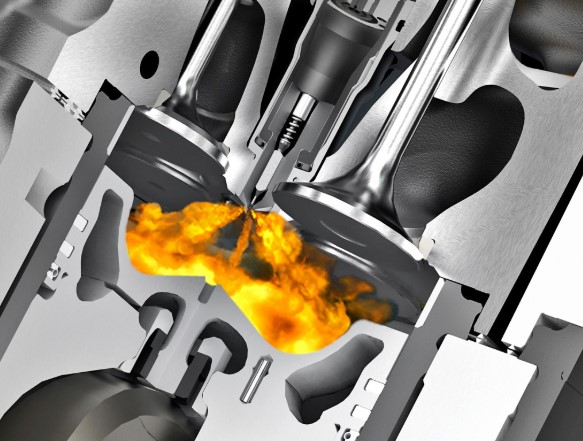
Fuel quality directly determines combustion performance. Diesel that fails to meet national standards or becomes contaminated during storage can significantly impair atomization. Atomization refers to the process by which diesel is sprayed into fine droplets. The finer the droplets, the larger the contact area with air, and the more complete the combustion.
Excessive water, mechanical impurities, or gum content in diesel can clog injectors or deteriorate spray quality. Cetane number is a particularly critical indicator—it reflects the self-ignition performance of diesel. If the cetane number is too low, ignition delay becomes longer and combustion becomes rough. If it is too high, ignition may be easy, but incomplete combustion and increased fuel consumption may occur.
Diesel combustion requires sufficient oxygen. A clogged air filter is a common yet often overlooked issue. When excessive dust accumulates, intake resistance increases and the volume of air entering the cylinder decreases, resulting in an overly rich mixture. Even if atomization is adequate, lack of oxygen prevents complete combustion, leading to black smoke and reduced power output.
Injection advance angle refers to the crankshaft angle at which fuel injection begins before the piston reaches top dead center in the compression stroke. Precise control is essential:
If injection is too early, fuel burns prematurely during compression, increasing compression work and causing rough engine operation.
If injection is too late, combustion continues into the expansion stroke, reducing thermal efficiency and increasing exhaust temperature, also leading to incomplete combustion.
The technical condition of injectors is crucial. Common issues include:
Low injection pressure, causing poor atomization and oversized droplets.
Poor nozzle sealing, resulting in dripping or leakage and unintended fuel entry into the cylinder.
Uneven fuel supply from the injection pump, leading to imbalance among cylinders and reduced overall efficiency.
Adequate pressure and temperature at the end of compression are necessary for diesel self-ignition. Worn piston rings, leaking valves, or damaged cylinder head gaskets can cause insufficient compression pressure. Low pressure worsens atomization, prolongs ignition delay, slows combustion speed, and allows unburned fuel to exit with exhaust gases.
Generator sets operating under partial load often show lower combustion efficiency than at design conditions. When the load is too low, fuel injection decreases while intake air remains relatively high, creating a lean mixture with slower flame propagation. Frequent load fluctuations can also cause delayed response in the governor system, leading to unstable fuel supply and combustion.
- Fuel Quality Management: Using high-quality diesel that meets national standards is fundamental. When purchasing fuel, verify quality inspection reports, paying attention to cetane number, distillation range, and sulfur content. During storage, prevent water and impurity contamination. Regularly remove water and sediment from the bottom of storage tanks. Installing oil-water separators and fine filters for multi-stage filtration before fuel enters the engine is strongly recommended.
- Intake System Maintenance: Establish a routine inspection system for air filters. Replacement intervals should be determined based on operating environment. In dusty conditions, daily inspection of filter resistance may be necessary. When resistance exceeds specified limits, clean the filter element with compressed air (from inside to outside) or replace it. Also inspect intake pipelines for leaks to ensure sufficient air supply.
- Regular Fuel Tank Cleaning: After extended operation, mineral deposits and impurities accumulate at the bottom of the fuel tank. These can clog filters and injectors if they enter the fuel system. It is recommended to clean the tank every 500 operating hours or every six months. Drain sediment and, if necessary, flush with clean diesel.
Once fuel quality and air intake are ensured, the injection system becomes the decisive factor in combustion efficiency. Even slight deviations in injection timing, pressure, or atomization can significantly reduce efficiency.
Adjustment is recommended after 400 operating hours or after reassembling the injection pump.
In general:
- Remove the high-pressure pipe of the first cylinder.
- Fix the governor handle at maximum fuel position.
- Slowly rotate the flywheel in the normal direction while observing the fuel level at the delivery valve.
- Stop when the fuel level just begins to fluctuate—this indicates the start of fuel supply.
Compare the flywheel scale reading with the specified injection advance angle. If deviation exists, loosen the locking bolts and rotate the injection pump housing accordingly:
- Rotate opposite to engine rotation if injection is too early.
- Rotate in the same direction if too late.
- Tighten bolts and recheck.
Use an injector tester to check opening pressure and spray pattern. A normal spray should be fine and uniform, without visible droplets, and accompanied by a crisp injection sound. If injection pressure is below specification, spray is irregular, or dripping occurs, repair or replace the injector.
For multi-cylinder engines, ensure uniform fuel supply across cylinders. Adjust plunger stroke in the injection pump to control fuel quantity deviation within specified limits.
Water Injection in the Intake Manifold: Injecting a small amount of water into the intake manifold is an effective auxiliary combustion method. When water enters the high-temperature combustion chamber, it rapidly vaporizes and expands, creating a “micro-explosion” effect. This further breaks fuel droplets into finer particles, increasing air contact and promoting secondary combustion. Water vaporization absorbs heat, lowering peak combustion temperature and reducing NOx formation. However, water injection must be strictly controlled, typically not exceeding 5% of diesel consumption, otherwise combustion temperature may drop excessively.
Emulsified Diesel Technology: Mixing diesel and water in a controlled ratio using emulsifiers forms stable emulsified fuel. During combustion, microscopic water droplets produce micro-explosions that improve atomization. Studies show that emulsified diesel can reduce fuel consumption by 2–5% and significantly decrease black smoke emissions. Proper emulsification equipment and stable formulations are essential to prevent phase separation.
Maintain Proper Cooling Water Temperature: Cooling water temperature directly affects combustion efficiency. Too low a temperature reduces cylinder wall temperature and prolongs ignition delay; too high a temperature risks overheating and knocking. Maintain outlet water temperature between 75°C and 85°C.
Avoid Overload and Prolonged Low-Load Operation: Long-term overload worsens combustion and increases wear. Prolonged low-load operation lowers combustion chamber temperature and may cause fuel dilution of engine oil. Operating at 70–80% of rated load is generally the most economical condition.
Regular Carbon Deposit Removal: Carbon deposits in the combustion chamber, injectors, and piston crown impair heat transfer and airflow, reduce compression ratio, and lower efficiency. Clean deposits periodically and check piston ring sealing to maintain proper compression.
When selecting generator capacity, do not simply sum all equipment power ratings. Consider motor starting methods:
Direct-on-line starting: 5–7 times rated current.
Reduced-voltage starting: 2–3 times.
Soft start: lower.
If generator capacity is too small, voltage drop during motor startup may cause failure or stalling. If too large, long-term low-load operation reduces efficiency.
Correct practice is to calculate total load, add the maximum starting power of the largest motor, and reserve an additional 10–15% margin to ensure reliable startup and efficient operation.
Improving combustion efficiency in diesel generator sets is a systematic engineering task involving fuel management, equipment maintenance, precise adjustment, and proper operation. The foundation lies in qualified fuel and clean air intake; the core lies in accurate injection timing and pressure; advanced measures include water injection and emulsification; daily operation requires proper temperature and load control.
By implementing these measures, enterprises can reduce fuel consumption, lower operating costs, decrease emissions, extend equipment lifespan, and achieve both economic and environmental benefits. Establishing a scientific maintenance management system and training skilled operators are fundamental to ensuring long-term efficient operation.
Users are encouraged to develop maintenance plans tailored to their equipment, regularly monitor key parameters, and address issues promptly. Only by integrating technical measures into daily management can diesel be fully and efficiently combusted, allowing generator sets to deliver optimal performance.
