
In modern industrial production and commercial operations, the continuity of power supply is directly linked to normal business operations and economic performance. Once a diesel generator power outage occurs, it may lead to production interruptions, data loss, or even equipment damage and safety accidents in severe cases. Therefore, establishing a reliable uninterrupted power supply system by combining diesel generator sets with UPS power systems has become the preferred solution for facilities requiring high power reliability. This article provides a detailed overview of system configuration, operational management, emergency response, and UPS application strategies to achieve true uninterrupted power supply.
To achieve reliable uninterrupted power supply, three fundamental hardware conditions must be satisfied: redundant generator configuration, intelligent control systems, and adequate fuel storage. These elements together form the physical foundation of an uninterrupted power system.
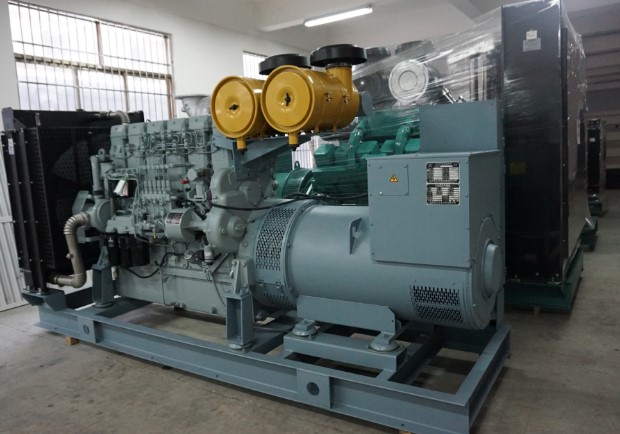
A single diesel generator is usually insufficient to guarantee uninterrupted power supply. The most basic configuration is to equip two or more diesel generators operating in parallel.
The main advantage of parallel operation is that when one generator fails or requires scheduled maintenance, the remaining units can continue supplying power, ensuring that electricity supply is not interrupted.
Parallel operation also allows automatic adjustment of the number of running generators according to actual load demand. When the load is low, only one generator may operate; when the load increases, additional generators can be automatically started. This intelligent load distribution not only ensures stable power supply but also improves fuel efficiency and reduces operating costs.
Modern diesel generators must be equipped with a comprehensive automatic control system. The system should monitor key operational parameters in real time, including output voltage, current, frequency, as well as engine oil temperature, coolant temperature, and oil pressure.
The system must possess intelligent decision-making capability. When abnormal conditions are detected, it can automatically make adjustments or switch to standby generators if necessary.
In addition, the control system should support remote monitoring. Operators do not need to stay in the engine room at all times; they can monitor generator status and perform operations in real time through computers or mobile devices from the office or remote locations. This remote management capability significantly improves operational efficiency, especially in multi-site deployments.
Continuous operation of diesel generators requires stable and reliable fuel supply. Sufficient fuel storage must be maintained to meet the consumption requirements during uninterrupted operation. The storage volume should be calculated based on generator power rating, expected operating duration, and fuel resupply intervals.
In practical applications, large-capacity fuel tanks can be installed as reserves while establishing reliable fuel procurement channels to ensure timely replenishment when needed. Routine management should include regular inspection of fuel quality and inventory levels to prevent fuel deterioration caused by long-term storage or supply shortages.
Although diesel generators can solve long-duration power outages, they cannot eliminate transient interruptions during system switching. To achieve truly zero-interruption power supply, UPS equipment must be installed between the generator system and the load as a buffer interface.
The combination of UPS and diesel generators forms a complete architecture where the UPS ensures instantaneous power continuity while the generator provides long-term backup power.
UPS (Uninterruptible Power Supply) is a high-quality, highly reliable independent power device, essentially a battery-based static backup power system. It mainly consists of four core components: rectifier, inverter, AC static switch, and battery bank.
During normal operation, utility power is first converted into direct current through the rectifier. Part of the DC power is used to float-charge the battery bank to maintain full charge status, while the remaining DC power is converted into high-quality AC power through the inverter to supply critical loads.
In this process, the load receives purified power that is not affected by voltage fluctuations, frequency instability, or harmonic interference from the utility grid.
When a power outage occurs, the system automatically switches to battery power within a very short time, usually within milliseconds. The battery discharges and continues supplying stable AC power through the inverter. The switching process is so fast that sensitive equipment experiences almost no interruption.
Not all applications require UPS installation, but it is strongly recommended in the following situations:
Facilities with extremely high power reliability requirements: Even if automatic standby power switching or diesel generator auto-start systems are already installed, UPS systems may still be necessary as the final protection layer. This is because diesel generators typically require several seconds or longer to start and stabilize, and this power gap must be bridged by UPS batteries.
Precision equipment power supply: When simple voltage and frequency regulation is insufficient, UPS systems become necessary. For example, computer equipment requires high-quality power, not only uninterrupted supply but also voltage fluctuations within strict limits. Network transmission equipment generally requires voltage variation control within ±5%, which is difficult to guarantee using conventional utility power.
Systems requiring safe shutdown procedures: Some industrial control systems must execute sequential shutdown processes during power failure. Sudden power loss may cause equipment damage or safety risks, making UPS protection essential.
Real-time control and networked computing systems: In real-time industrial control or networked computing environments, even momentary power loss may cause data corruption, system crashes, or network interruption.
When designing UPS power systems, configuration should be tailored to specific application scenarios. For distributed control rooms, under a primary power supply mode with dual-end automatic transfer, deploying decentralized small UPS units is often practical. This approach avoids complex centralized wiring and reduces single-point failure risks, since each critical location is equipped with an independent backup system.
Hardware configuration addresses the question of system availability, while operation management and maintenance determine reliability during actual use. Uninterrupted power supply is a systematic engineering project. After equipment installation, corresponding management systems must be established, including strict maintenance schedules, professional personnel training, real-time monitoring, and comprehensive record management.
Diesel generators are mechanical equipment that inevitably experience wear during long-term operation. Therefore, a strict maintenance program must be established to conduct regular inspection, servicing, and component replacement to ensure optimal operating condition.
Maintenance tasks mainly include checking engine oil level and quality and replacing oil when necessary; inspecting coolant level and concentration to ensure proper cooling system operation; cleaning or replacing air filters to maintain smooth air intake; replacing fuel filters to prevent impurities from entering the engine; and testing and calibrating electrical systems, including insulation testing and wiring tightening.
Maintenance intervals should be determined based on generator usage frequency and manufacturer recommendations, typically including daily inspection, monthly maintenance, quarterly maintenance, and annual overhaul.
Operating diesel generators requires specialized knowledge and technical skills. Operators must be familiar with generator operation procedures, maintenance requirements, and emergency response protocols.
Enterprises should regularly organize professional training and conduct competency assessments to ensure operators possess the necessary operational and emergency handling capabilities.
Training should cover startup and shutdown procedures, parallel operation methods, common fault diagnosis, and emergency response strategies. Only technically proficient personnel can respond quickly and accurately when problems occur.
Dedicated personnel should monitor generator operating status in real time and record operational parameters periodically to detect potential issues through trend analysis.
A comprehensive archive management system should be established to document cumulative operating hours, maintenance records, fault occurrence time and symptoms, and corresponding corrective measures.
These records are valuable for analyzing performance trends, evaluating equipment reliability, and developing more scientific maintenance strategies. Long-term data accumulation enables prediction of potential failures and allows preventive maintenance to avoid unexpected power interruptions.
- Comprehensive Emergency Plans: Detailed emergency response plans must be formulated to address generator failure, fuel supply interruption, or external environmental disasters. A complete emergency plan should include organizational command structure, job responsibilities, fault diagnosis procedures, backup power activation protocols, and external rescue communication channels. After plan formulation, personnel must be trained to clearly understand their responsibilities during emergencies to ensure orderly response and avoid delays caused by panic.
- Regular Emergency Drills: Emergency plans should not remain theoretical documents. Practical drills must be conducted regularly by simulating possible emergency scenarios to evaluate plan effectiveness and improve operator response capability and interdepartmental coordination. After drills, performance evaluation should be conducted, identifying deficiencies in the plan and making necessary revisions. Through continuous improvement, emergency measures can be implemented quickly and effectively during real emergencies to ensure uninterrupted power supply.
The reliability of UPS systems largely depends on battery condition. As chemical energy storage devices, batteries are extremely sensitive to charging methods, ambient temperature, and service life. Improper management can easily become the weakest link of the entire system. Therefore, scientific battery management deserves separate discussion.
Batteries are the core component of UPS systems, and their management quality directly affects system reliability. Two improper charging methods must be avoided.
First is excessive current charging. Excessive charging current may cause deformation of positive and negative plates inside the battery, leading to shedding of active material and reduction of usable capacity, or even internal short circuits.
Second is overvoltage charging. Excessively high charging voltage can electrolyze water in the electrolyte into hydrogen and oxygen gas, accelerating water loss and shortening battery lifespan.
With prolonged use, battery performance gradually declines, manifested by reduced terminal voltage and deteriorated charge-discharge characteristics. Such batteries cannot be restored through UPS charging circuits and must be replaced promptly due to safety risks.
Internal resistance is an important indicator for battery condition. Normally, battery internal resistance ranges from 10 to 30 milliohms. If resistance exceeds 200 milliohms, performance has severely degraded and the battery must be replaced.
In maintenance practice, some users replace only part of the degraded batteries to reduce costs, mixing new and old batteries in operation. This practice carries significant risks.
Because new batteries have lower internal resistance while old batteries have higher resistance, charging imbalance may occur. Old batteries may experience overvoltage charging due to voltage division, while new batteries may suffer excessive current charging. Therefore, mixed use of new and old batteries should be avoided, and complete group replacement is recommended.
Battery lifespan is closely related to ambient temperature. Low temperatures may cause zinc plates inside batteries to become brittle and lose storage performance, resulting in permanent damage. High temperatures may also reduce battery capacity and cause permanent degradation.
According to manufacturer specifications, the optimal operating temperature for batteries is 20–25°C. Maintaining this temperature range can significantly extend battery service life. Therefore, UPS rooms should be equipped with air conditioning or ventilation systems.
Achieving true uninterrupted power supply requires the organic integration of diesel generator and UPS systems. Typically, when utility power is normal, electricity is purified by the UPS before supplying loads. When utility power fails, the UPS immediately switches to battery power while starting the diesel generator.
After the generator stabilizes, it takes over load supply and charges the UPS batteries.
This multi-level protection architecture can handle various power interruption scenarios. Short-term outages are handled by UPS batteries, longer outages are supported by diesel generators, and generator faults can be covered by parallel standby units or maintenance windows.
Enterprises should determine system configuration levels based on load criticality, allowable interruption time, and budget constraints. For extremely critical loads, N+1 or even 2N redundancy configurations may be considered to ensure power continuity under any single-point failure condition.
The construction of a diesel generator uninterrupted power supply system is a comprehensive engineering project involving equipment selection, installation and commissioning, operation maintenance, and emergency management. Only when every link is properly implemented can a truly high-reliability uninterrupted power supply system be established, providing strong electrical protection for safe production and stable enterprise operations.
