
Diesel generator sets serve as the core equipment for backup power and emergency power supply systems, playing a vital role in industrial production, commercial operations, and civil buildings. A standardized pre-start inspection and commissioning process not only ensures reliable startup during emergencies but also extends equipment service life and helps prevent major safety incidents. This article provides a comprehensive overview of the diesel generator set inspection and commissioning steps required from installation completion to official operation, enabling operators to establish a standardized workflow.
Before initiating any commissioning procedures, conduct a thorough visual inspection of the diesel generator set. Cleaning the unit is not only for appearance but also ensures unobstructed heat dissipation channels and makes it easier to detect potential leakage points.
Inspect foundation bolts, flywheel screws, and nuts on other moving components for looseness. Fasteners may loosen during transportation and installation; if left unattended, they can cause severe vibration during operation and even lead to mechanical damage. Any looseness must be corrected immediately using appropriate tools and tightening torque as specified.
Next, verify that clearances throughout the engine are correctly set. Pay particular attention to the intake valve, exhaust valve, and decompression mechanism clearances, ensuring they meet manufacturer technical requirements. Excessive or insufficient valve clearance directly affects valve timing, potentially resulting in power loss or valve burning. Improper decompression clearance can negatively impact starting performance.
After completing static clearance checks, place each cylinder in the decompression position and manually rotate the crankshaft. Listen carefully for abnormal knocking or friction sounds from each cylinder. The crankshaft should rotate freely without binding. This process also allows the oil pump to deliver lubricant to friction surfaces, establishing an initial protective oil film.
Once lubrication is complete, disengage the decompression mechanism and rotate the crankshaft again to evaluate cylinder compression. Noticeable resistance indicates good cylinder sealing and normal compression. If rotation feels unusually easy, there may be valve leakage or worn piston rings requiring further investigation.
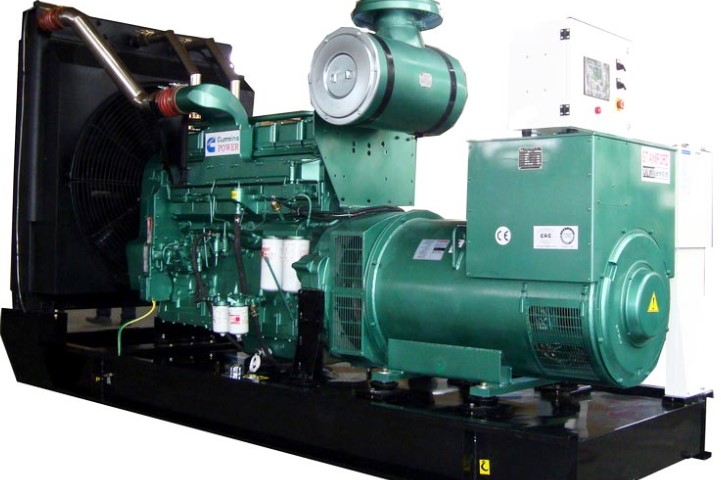
The reliability of the fuel system directly determines whether the generator can start smoothly and operate stably.
Begin by checking whether the vent hole on the fuel tank cap is unobstructed. A blocked vent can create negative pressure inside the tank, preventing proper fuel flow. Remove any debris immediately.
Confirm that the diesel fuel meets the specified grade. Seasonal changes require special attention to fuel pour point selection, use low-pour-point diesel in winter to prevent waxing and fuel line blockage. After verifying sufficient fuel, open the fuel line valve.
Engage the decompression mechanism and rotate the crankshaft while listening for crisp fuel injection sounds from each cylinder. Clear injection sounds indicate proper injector function and good atomization.
If injection sounds are present but no fuel is delivered, or fuel flow feels inadequate, air may have entered the fuel system. Loosen the bleed screws on the diesel filter and injection pump, then use the manual priming pump or crank the engine to expel air until fuel flows without bubbles.
Carefully inspect fuel lines and connections for leaks. Even minor seepage can develop into serious faults over time and must be addressed immediately.
For water-cooled diesel generator sets, cooling system inspection is critical. Check that the radiator contains sufficient coolant; if not, add clean soft water. Hard water can form scale inside the water jacket, reducing heat dissipation efficiency.
Inspect all hoses and joints for signs of leakage. For units equipped with a cooling water pump, ensure the impeller rotates smoothly without sticking.
Check the drive belt tension. Apply pressure at the midpoint of the belt—an ideal deflection is approximately 10–15 mm. A loose belt may slip, reducing pump speed and causing engine overheating, while excessive tension increases bearing load and accelerates wear.
The lubrication system is fundamental to engine longevity. Begin by checking oil lines and connections for leaks. Then measure the oil level in the oil pan using the dipstick, ensuring it falls between the upper and lower marks.
An oil level that is too low leads to inadequate lubrication, while excessive oil increases crankshaft resistance and may allow oil to enter the combustion chamber.
For diesel engines, select oil viscosity according to seasonal conditions, use lighter oil grades in winter and heavier grades in summer to match ambient temperatures.
If the oil level exceeds the specified mark, investigate the cause carefully. Possible reasons include overfilling during maintenance, diesel fuel leaking into the crankcase through injectors or cracked cylinder liners (diluting the oil), or coolant entering the oil due to a damaged cylinder gasket. The latter two indicate engine faults that must be resolved before operation.
Apply grease with a grease gun to components requiring manual lubrication to ensure all friction points are adequately protected.
For electrically started diesel generator sets, inspect the starter battery before operation. Verify that the electrolyte specific gravity falls within the normal range of 1.240 to 1.280. A reading below 1.180 indicates insufficient charge and requires recharging.
Confirm that power cables are correctly connected, the positive terminal to the starter motor and the negative terminal grounded, to avoid equipment damage caused by reverse polarity.
Check battery terminals for dirt or oxidation, as corrosion increases contact resistance and reduces starting current. Clean terminals with sandpaper and apply petroleum jelly to prevent rust.
Finally, ensure good contact at electrical points such as the starter motor and solenoid mechanism so that voltage drop in the starting circuit remains within acceptable limits.
The coupling installation between the alternator and diesel engine requires strict alignment. Parallelism and concentricity of the coupling should be controlled within 0.05 mm; in practice, up to 0.1 mm may be acceptable, but excessive deviation can impair bearing performance and cause abnormal wear.
After coupling, secure with locating pins and recheck alignment accuracy before installation.
For alternators with sleeve bearings, pay special attention to center height adjustment. The alternator center should be slightly lower than the diesel engine center to prevent the flywheel weight from transferring to the alternator bearings. Additional load can disrupt oil film formation in sleeve bearings, causing overheating or bearing failure. Never suspend heavy objects from the coupling.
Ensure unobstructed cooling air intake during installation. Exhausted hot air must not be recirculated into the alternator. If ventilation covers have louvers, install them facing downward to meet protection requirements. For single-bearing alternators, verify uniform air gaps between the stator and rotor to avoid contact.
During wiring, select power cables with appropriate cross-sectional area according to the electrical schematic and use copper lugs for connections. After connecting to the busbar, local gaps at joints must not exceed 0.05 mm, conductor spacing should exceed 10 mm, and reliable grounding must be installed.
Terminals inside the alternator output box are marked U, V, W, and N; however, these markings do not necessarily indicate the actual phase sequence, which depends on engine rotation direction. Certification documents typically specify that UVW corresponds to clockwise rotation, while VUW corresponds to counterclockwise rotation, always confirm before wiring.
If multiple generator neutral points are interconnected, or if the generator neutral connects with transformer and load neutrals, triple-frequency neutral currents may occur during operation. Measure neutral current under various load conditions to ensure it does not exceed 50% of rated current; otherwise, install a neutral reactor to limit it.
During commissioning, adjust electrical parameters appropriately. For units with mechanical fuel pumps, frequency is typically set to 51.5 Hz; electronically governed units are set to 50.0 Hz. Voltage is generally configured at 400 V.
New generators require gradual loading for proper run-in, typically in stages of 25%, 50%, and 75% load. Each stage should run for no less than 30 minutes before reaching 75%. Depending on unit specifications, short-term operation at 110% load may be conducted to verify power capability.
Check automatic protection features, including low oil pressure, high coolant temperature, and overspeed protection. Simulate or adjust these abnormal conditions to confirm that alarms activate and the unit shuts down reliably.
New diesel engines are coated internally and externally with rust-preventive oil before leaving the factory and must be properly unsealed before use.
Heat diesel fuel to 45–56°C to remove external rust-preventive oil. Heat water above 90°C and continuously pour it into the water jacket outlet, allowing it to drain from the cylinder block side. Repeat this process for 2–3 hours while intermittently rotating the crankshaft so that rust-preventive oil on piston crowns, cylinder liners, and other parts dissolves and drains away.
Clean the oil pan with fresh diesel and replace it with new engine oil. Inspect and clean the cooling system, fuel system, injection governor, water pump, starting transmission system, and related components according to the manual.
After preparation, press the start button and observe whether the engine starts smoothly, recording the startup time. Exhaust smoke at startup and idle should appear light gray or colorless; persistent black, blue, or white smoke indicates abnormal conditions.
Listen for unusual knocking or friction sounds from both engine and alternator, check for abnormal vibration, and observe control panel instruments such as oil pressure, speed, frequency, and voltage to ensure they quickly reach normal ranges.
Allow the unit to run at no load for 10–15 minutes while monitoring oil pressure, coolant temperature, voltage, and frequency stability. Recheck all pipelines for fuel, oil, and coolant leaks. Test fundamental control functions such as acceleration, deceleration, and frequency fine-tuning for responsiveness.
Load testing should begin only after successful no-load operation, and loads must be increased gradually, never applied suddenly.
Close the output switch and apply approximately 25% rated load for 15–30 minutes, observing operational stability and parameter consistency. Then increase to 50% rated capacity and run for 30–60 minutes. This represents the generator’s primary operating condition and warrants careful monitoring.
Next, raise the load to 75% rated capacity and operate for 60–120 minutes. At this higher load, closely monitor exhaust temperature, coolant temperature, and oil temperature.
Finally, increase the load to 100% rated capacity. A new generator set should run continuously for at least 4–12 hours, providing the ultimate test of durability and performance. Confirm that steady-state voltage and frequency remain within rated limits under varying loads, and verify that transient fluctuations and recovery times during sudden load changes meet standards.
During operation, oil pressure should typically remain between 300 and 500 kPa, responding appropriately to speed and load changes. Coolant temperature should stabilize within the ideal range of 85–95°C. Exhaust temperature will rise with load but must remain below permissible limits. Slight black smoke may appear at full load, but dense black smoke is unacceptable.
After stable full-load operation, a short overload test may be conducted by increasing the load to 110% rated capacity for one hour—provided the unit is designed to permit it. This test evaluates overload capability but is not required for every routine commissioning.
Near the end of load testing, perform simulated tests of critical protection functions. Reduce coolant circulation or simulate signals to trigger high-temperature alarms and shutdown; simulate low oil pressure to confirm alarm activation and shutdown; press the emergency stop button to verify immediate stopping capability.
Overspeed protection testing carries higher risk and is typically handled by qualified professionals to confirm that electronic governors or mechanical protection devices can cut off fuel effectively during overspeed conditions.
When shutting down, gradually remove all loads and allow the unit to run at no load for 3–5 minutes so internal temperatures can decrease evenly. Then perform a normal shutdown.
After stopping, conduct another comprehensive inspection, focusing on new leaks or loosened fasteners. Record all operational data, observations, test results, and any abnormalities encountered during the trial run, this report becomes an essential technical record for the generator set.
By strictly following the inspection and commissioning procedures outlined above, operators can ensure that diesel generator sets enter service in optimal condition, laying a solid foundation for reliable power supply. Every step should be treated as part of a standardized operating procedure, with no detail overlooked. Only through disciplined execution can the equipment deliver maximum performance and maintain long-term stable operation.
