
In industrial production, construction projects, data centers, and emergency backup power systems, diesel generator sets play a vital role. They provide stable and reliable electrical power for a wide range of equipment, ensuring the continuity of production processes and the safety of data storage. However, when a diesel generator set experiences an overspeed fault, it not only threatens the safety of the equipment itself but may also trigger a series of serious safety incidents, causing substantial losses to personnel and property. Therefore, understanding the causes, hazards, and countermeasures of diesel generator overspeed is of great significance for ensuring safe operation and preventing accidents.
An overspeed fault in a diesel generator set generally refers to a condition in which the engine speed exceeds its rated value. In the industry, this phenomenon is often referred to as “runaway.” The causes of overspeed are diverse and mainly include the following aspects.
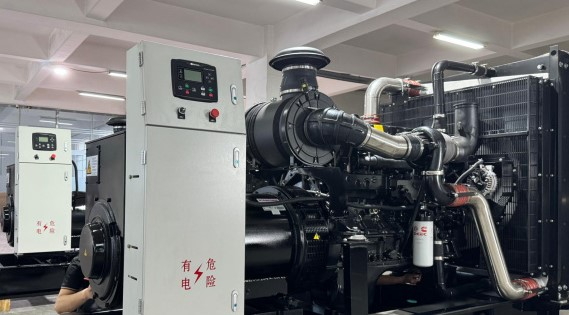
The governor is a key component responsible for controlling the speed of a diesel generator set. It automatically and rapidly adjusts the fuel supply according to load variations, keeping the output power balanced with the load and ensuring stable operation.
However, when the governor malfunctions, the fuel supply system becomes unstable. For example, wear, sticking of internal components, or errors in control logic may prevent the fuel supply from being accurately adjusted according to the actual load. When the generator speed exceeds 1500 rpm, the governor may fail to control it within the normal range, leading to an overspeed condition. At this point, the alarm system is typically activated and attempts to shut down the unit. If the governor failure is severe, however, the shutdown may not be completed effectively or in time.
The proper operation of the fuel supply system is critical to maintaining stable engine speed. If the system malfunctions, excessive fuel may enter the combustion chamber, causing the generator speed to rise abnormally.
For instance, if the fuel pump or electronic actuator becomes stuck, the throttle may remain fully open, resulting in a sharp increase in fuel supply and engine speed far above the normal 1500 rpm. In addition, poor fuel quality is a common issue. Fuel contaminated with impurities or water can clog injectors, leading to uneven fuel injection, impaired combustion efficiency, and unstable speed control. Over long-term operation, clogged fuel filters may also restrict fuel flow, cause unstable fuel pressure, and ultimately trigger overspeed faults.
The control system of a diesel generator set monitors and regulates operating parameters such as speed, voltage, and frequency. If the control system fails to accurately detect or control engine speed, overspeed may occur.
Sensor failures, short circuits in wiring, or software errors in the control module can prevent accurate speed feedback, making it impossible to adjust fuel supply or shut down the unit in time. Most modern diesel generator control modules are equipped with overspeed shutdown protection. When the detected speed exceeds the preset limit, the system automatically cuts power to protect the unit. However, if the control module itself fails or the overspeed protection function is disabled, overspeed faults cannot be effectively prevented.
During long-term operation, mechanical components inside a diesel generator set inevitably experience wear. Wear of pistons, connecting rods, crankshafts, and other components can result in abnormal speed increases.
For example, increased clearance between the piston and cylinder wall reduces combustion efficiency and alters the inertial forces of piston reciprocation, affecting speed stability. In addition, wear of the turbocharger oil seal may cause engine oil to leak into the intake system, acting as additional fuel. This unintended fuel supply increases engine speed and can lead to overspeed conditions.
Sudden increases or decreases in load can cause the generator speed to deviate before the system has time to respond. In data centers or factories, for example, the simultaneous startup or shutdown of multiple devices can cause dramatic load fluctuations in a short period. If the governor and control system cannot respond promptly, speed may become uncontrollable. Improper load distribution can also result in localized overloads or underloads, further destabilizing engine speed.
Overspeed is an extremely dangerous condition that can cause severe damage to the generator set and connected electrical equipment, and may even lead to serious safety accidents. The main hazards include the following.
During overspeed, the inertial forces of piston reciprocation increase exponentially. These enormous forces can first loosen or stretch connecting rod bolts, leading to bending or fracture of the connecting rods. A broken connecting rod may puncture the cylinder block, causing catastrophic damage.
The crankshaft may also deform or fracture under excessive torque. Valve timing becomes unstable as piston speed exceeds valve opening and closing speeds, potentially causing valve-to-piston collisions that damage the rocker arm and camshaft systems. At very high speeds, a stable lubricating oil film cannot be maintained, resulting in dry friction between shafts and bearings. This quickly leads to bearing seizure, shaft locking, and engine seizure.
Turbochargers, which already operate at extremely high speeds, may overspeed severely along with the engine. Turbine wheels may shatter due to excessive centrifugal force, rendering the turbocharger unusable. The flywheel, a massive rotating component, may also be torn from its mounting and ejected due to extreme centrifugal forces, posing a fatal threat to personnel and equipment.
Fuel injection, air intake, power output, and combustion processes are all designed for rated engine speed. Overspeed disrupts their coordination, leading to incomplete fuel–air mixing and poor combustion. This results in excessive black smoke, severe carbon buildup, and sharply increased cylinder temperatures.
Deteriorated combustion generates additional heat, while the cooling and lubrication systems may not be able to keep up with the increased flow and heat dissipation demands at overspeed. Consequently, overall engine temperature rises significantly, potentially causing piston scuffing and cylinder liner deformation. Oil pump capacity is also limited; during overspeed, friction pairs require more lubrication, but oil supply may be insufficient, accelerating wear.
Generator speed directly determines output frequency (frequency = speed / number of pole pairs). Overspeed causes frequency to exceed the standard 50 Hz or 60 Hz, leading to increased speed and heating in connected electrical equipment, particularly induction motors, which may eventually be damaged.
Higher speed usually also results in increased output voltage, which can destroy sensitive electronic devices. Similar to the flywheel, the generator rotor is subjected to enormous centrifugal forces during overspeed, which may cause rotor windings to loosen, deform, or even be thrown out.
When an overspeed fault occurs, rapid and effective measures must be taken to prevent further deterioration and minimize losses.
Once overspeed is detected, immediate forced shutdown measures should be taken to cut off combustion conditions.
- Quickly cut off fuel supply: For injection pumps with exposed fuel control rods or racks, immediately pull the rod to the fuel-cutoff position to stop fuel from entering the combustion chamber.
- Use decompression devices: For engines equipped with decompression devices, quickly move the decompression lever to reduce cylinder pressure and stop the engine.
- Block the air intake: If the above methods fail, use readily available items such as thick towels, cloths, gloves, or wooden boards to tightly seal the air intake of the air filter, preventing air from entering. This cuts off oxygen and stalls the engine. During this process, abnormal noises and violent vibrations may occur; this is normal and the blockage must be maintained until the engine completely stops.
After an overspeed shutdown, never restart the generator immediately. Qualified maintenance personnel must conduct a thorough inspection to identify and eliminate the root cause.
- Governor: Check for wear, sticking, or abnormal control logic. Replace the governor if necessary.
- Fuel supply system: Inspect the fuel pump, electronic actuator, and throttle operation. Ensure fuel quality is high and filters are replaced regularly.
- Control system: Check sensors, wiring, and software. Ensure overspeed shutdown protection functions properly.
- Mechanical components: Inspect pistons, connecting rods, crankshaft, valves, and turbocharger for damage and repair or replace as required.
- Lubrication system: Verify oil pump capacity, lubrication to all friction pairs, and proper crankcase ventilation to prevent oil ingestion into the intake system.
Prevention is always better than corrective action. Effective preventive measures can significantly reduce the likelihood of overspeed faults.
- Install overspeed protection devices: As the final and most critical line of defense, independent overspeed protection devices shut down the unit when speed exceeds 110–115% of rated speed. Modern generators usually feature “three protections”: overspeed, high coolant temperature, and low oil pressure. Ensure all are fully functional.
- Regular maintenance and inspection: Regularly inspect actuators, sensors, control modules, fuel and air filters, turbocharger oil seals, piston rings, and lubrication systems. Use correct-grade engine oil and ensure proper crankcase ventilation.
- Professional operation and adjustment: Non-professionals must never adjust fuel pump limit screws or governors. Calibration and adjustment should be performed only by qualified technicians.
Diesel generator set overspeed faults are extremely dangerous and may result in severe mechanical damage, combustion abnormalities, electrical failures, and serious safety accidents. Understanding their causes, hazards, and countermeasures is essential for safe operation and accident prevention.
In practical use, great emphasis should be placed on regular maintenance and inspection to identify and eliminate potential risks in time. Installing reliable overspeed protection devices and ensuring their proper function is a fundamental safeguard for generator safety. When overspeed occurs, immediate forced shutdown must be carried out, followed by comprehensive inspection and repair by professionals.
Only through scientific management, proper maintenance, and strict safety awareness can diesel generator sets operate reliably, providing stable and dependable power for industrial production and daily life. It is hoped that this detailed discussion will help readers better understand diesel generator overspeed faults, enhance awareness of safe operation, and adopt effective measures to prevent and address such incidents, always keeping safety as the top priority to support social development and daily living with reliable power.
