
When diesel generator sets operate in low-temperature environments, they face multiple failure risks. Low temperatures have significant impacts on various systems of the equipment. From difficult starting to abnormal operation, the problems involve the battery, fuel system, lubrication system, cooling system, and many other aspects. Understanding the causes of these faults in diesel generator operation in low temperature environment and adopting correct preventive measures is of great significance for ensuring the stability of power supply in winter.
The battery is the power source for starting the diesel generator set, and low temperatures have a very significant impact on its performance. When the ambient temperature drops from 25°C to –18°C, the capacity of a lead-acid battery decreases by about 50%, and its output capability is greatly weakened. Under extreme conditions of –30°C, the actual output capability of the battery is only 34% of the rated value, causing the starter motor to fail to obtain sufficient current. In low-temperature environments, the viscosity of the battery electrolyte increases, the internal resistance rises significantly, and the terminal voltage decreases, resulting in insufficient starting torque. In addition, low temperatures accelerate the sulfation of battery plates and shorten the service life.
Key Maintenance Considerations: During winter maintenance, ensure that the no-load battery voltage is not lower than 24V (for 24V systems). Regularly clean oxidation from terminals and apply conductive paste to reduce contact resistance. Starter motor carbon brushes wear more severely at low temperatures and must be replaced when the remaining length is less than 5 mm. Oxidation or burning of solenoid switch contacts may cause a “click” sound without engagement and should be repaired in time. If the starting speed is lower than the normal range of 150–300 rpm, the compression temperature required for diesel auto-ignition cannot be achieved. Mechanical resistance can be sensed through manual cranking. If resistance increases abnormally, check whether crankshaft bearings or connecting rod bearings are seized and whether the turbocharger is stuck. Low temperatures also increase wire resistance and thicken oxidation layers at joints. When the voltage drop in the starting circuit exceeds the specified value, the voltage reaching the starter motor becomes insufficient. Regularly check cable tightness and measure line voltage drop to ensure the engine ignites within 3 seconds after issuing the starting command.
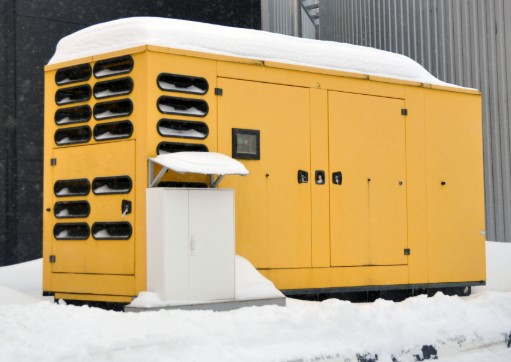
Diesel precipitates paraffin crystals at low temperatures, leading to a sharp deterioration in fluidity. When the temperature falls below the pour point, diesel viscosity increases by 83%, surface tension rises, and injection speed decreases by more than 30%. At the end of compression, air swirl speed, temperature, and pressure are all at relatively low levels. The atomization quality of injected diesel deteriorates severely, making it difficult to form a combustible mixture, or even impossible to ignite.
- Fuel Selection Standards: When selecting diesel, its pour point should be 7–10°C lower than the local minimum seasonal temperature. For example, in a –20°C environment, –35# diesel should be selected. Fuel temperature can be increased through heating devices to improve fluidity and ensure smooth fuel supply. In extremely cold regions, it is recommended to use anti-gel additives or improved diesel formulations.
- Filter and Fuel Line Maintenance: Clogged fuel filters lead to reduced fuel supply. When the pressure differential exceeds 0.05 MPa, the filter must be replaced. Water accumulated in the oil-water separator and at the bottom of the fuel tank will freeze at low temperatures, completely blocking the fuel line. Air entering the low-pressure fuel line forms air lock, preventing the injection pump from building sufficient pressure. In winter, install fuel heaters to maintain fuel temperature above the pour point and regularly drain water from the bottom of the tank.
- Injection System Failures: Injector needle valve assemblies are prone to sticking at low temperatures, and opening pressure may deviate from the standard range of 18–25 MPa. Poor atomization manifests as excessive spray penetration distance or overly large droplet size. Deteriorated combustion causes white smoke during startup. After wear of the injection pump plunger pair, leakage increases at low temperatures and the fuel supply advance angle deviates from the optimal value. For every 10°C decrease, the advance angle needs to be increased by 0.5–1° crankshaft angle.
Engine oil viscosity increases exponentially as temperature decreases. 15W-40 oil at –10°C has a viscosity more than 10 times that at 40°C in summer, resulting in extremely poor fluidity. Oil pump suction resistance increases, main oil gallery pressure builds slowly, and friction surfaces remain under boundary lubrication or even dry friction.
- Oil Selection Recommendations: Low-viscosity winter oils such as 5W-30 or 0W-30 should be used. The smaller the number before “W,” the better the low-temperature fluidity. In winter, multi-grade oil should be selected to reduce viscosity and improve flowability. In northern winter regions, SAE 5W/30 or 10W/30 viscosity oil is generally recommended. During cold seasons, oil heaters can be installed to raise oil temperature and further improve lubrication performance.
- Cold Start Wear Issues: During the initial cold start, oil fails to reach key friction pairs such as piston rings–cylinder liners and crankshaft bearings in time. Wear during this stage accounts for more than 60% of total wear. Bearing alloy layers may suffer scoring and burning under dry friction. Turbocharger floating bearings rotate at high speed before oil pressure is established, leading to abnormal wear. After starting, the engine should idle for 3–5 minutes until oil pressure stabilizes and engine temperature rises before applying load.
- Oil Contamination Issues: At low temperatures, incomplete fuel combustion allows liquid fuel to wash cylinder walls and enter the crankcase, diluting the oil and reducing viscosity, thereby worsening lubrication. Water entering the oil deactivates detergent-dispersant additives and forms emulsions. When water content reaches 1%, wear rate increases by 2.5 times. The freezing point of diesel is higher than that of engine oil, causing the pour point of lubricating oil to rise and lose flowability at temperatures above its normal freezing temperature.
Water reaches maximum density at 4°C and expands by about 9% when cooling further. If antifreeze is not used or its freezing point is insufficient, freezing cracks may occur in the cylinder block water jacket, radiator, and water pump housing. Cast iron components develop cracks under freezing stress, and repair costs are high.
- Antifreeze Usage Specifications: The antifreeze freezing point should be 8–10°C lower than the local historical minimum temperature. The pH value should be maintained between 8.5 and 10.5, and antifreeze should be replaced every 2 years or 5,000 hours. Before winter, conduct a comprehensive inspection of the cooling system to ensure no leaks or blockages.
- Shutdown Water Drainage Operation: Do not drain coolant immediately after shutdown. When the engine body temperature exceeds 60°C, sudden exposure to cold air produces thermal stress contraction and cracks. Incomplete drainage leaves residual water in narrow passages that freezes and expands, cracking metal walls. The correct operation is to let the engine idle after shutdown until water temperature drops below 60°C and is not hot to the touch, then shut down and completely drain the water.
- Water Pump and Thermostat Failures: Water pump mechanical seals may deform under freezing and leak after thawing. If the thermostat sticks in the closed position, coolant cannot circulate in a large loop, causing engine overheating. Install a jacket water heater to maintain engine temperature above 5°C for immediate startup readiness.
Worn piston rings, poor valve sealing, and damaged cylinder gaskets cause compression leakage. Normal cold compression pressure should be ≥2.5 MPa; below 1.8 MPa the engine cannot start. At low temperatures, metal contraction increases the clearance between piston rings and cylinder liners, increasing leakage and lowering compression end temperature below the diesel auto-ignition temperature (about 330°C). Measure compression pressure of each cylinder, grind valves, and replace piston rings.
Valve clearance changes with temperature. At low temperatures, clearance increases, resulting in insufficient intake and incomplete exhaust. Valve springs and plunger springs exhibit “cold brittleness,” reducing toughness and causing fracture under high stress. Camshaft bearings wear more severely under poor lubrication, leading to incorrect valve timing.
Crankshaft seizure and connecting rod bearing melting cause difficulty in cranking. Turbocharger rotor bearings encounter increased resistance in low-temperature oil, and delayed oil supply at startup causes dry friction. Timing gears and oil pump gears develop pitting and scuffing due to poor lubrication.
Air filter elements frost and clog in cold and humid environments. When intake vacuum exceeds –5 kPa, black smoke and power reduction occur. Intercooler fins frost, intake temperature becomes too low, and compression end temperature is insufficient. Shorten air filter maintenance intervals and use 0.2 MPa compressed air to blow from inside outward at a distance ≥15 cm.
Carbon deposits in the muffler absorb moisture and clump, increasing exhaust back pressure. Condensed water in exhaust pipelines freezes and blocks flow, causing excessive exhaust pressure during startup and damaging turbocharger seals. Install a rain cap at the end of the exhaust pipe to prevent water backflow and remove muffler carbon deposits every 2,000 hours.
The air filter must not be removed for heating, as this will cause wear of piston cylinders and other components.
Intake air temperature sensors and coolant temperature sensors drift at low temperatures; if error exceeds ±2°C, replacement is required. Weak speed sensor signals prevent the ECU from identifying cylinders and triggering injection. Low-temperature hardening and cracking of insulation layers cause short or open circuits. Electronic governor stepper motors may stick, and throttle actuators may fail to respond.
In common rail systems, slow pressure buildup in the high-pressure pump triggers fault code P0087, indicating abnormal fuel pressure. Low-temperature protection programs may limit startup or loading. Use diagnostic tools to read fault codes and check actuator resistance and operation.
Under low-temperature and high-humidity conditions, insulation resistance of motor windings and control circuits decreases, increasing leakage risk. Condensation on terminals causes oxidation and increased contact resistance. Apply three-proof coating (moisture-proof, mildew-proof, salt-spray-proof) to control cabinets and maintain a dry generator room.
Diesel generator sets must not use open flames to bake the oil pan, as this causes oil deterioration or even burning, reducing or completely losing lubrication performance and increasing machine wear. The statement that blowtorches or open flames can be used to heat the oil pan is incorrect and should be avoided.
- Correct Preheating Method: First cover the radiator with an insulation quilt, then open the drain valve and continuously inject 60–70°C clean soft water into the radiator. When the water flowing from the drain valve feels hot to the touch, close the drain valve. Then fill the radiator with 90–100°C clean soft water and rotate the crankshaft so that all moving parts receive appropriate pre-lubrication before starting. During winter cold starts, due to the small amount of oil on piston rings and cylinder walls and poor sealing, repeated starting without ignition may occur. Remove injectors and add 30–40 ml of oil into each cylinder to enhance sealing performance and increase compression pressure.
- Insulation Measures: In winter, low temperatures cause excessive cooling during operation. Therefore, insulation is a key issue for winter use. In northern regions, diesel generator sets used in winter should be equipped with insulation jackets and curtains. Insulation materials can be wrapped around fuel tanks and pipelines to reduce heat loss. Insulate the generator room to ensure stable winter operation. Use heating covers to protect equipment from cold exposure.
- Jacket Water Heater: The newly introduced diesel generator preheating system “jacket water heater” helps generator startup. This system is made of high-quality stainless steel and equipped with a thermostatic control device. It features an attractive appearance, corrosion resistance, and long service life. It is suitable for engines from Cummins, Perkins, Volvo, Shanghai Diesel Engine Co., Ltd., and Weichai, as well as similar water-cooled diesel engines, generators, and engineering vehicles, for preheating startup and anti-freezing warming purposes.
Adding a warm-up system to the unit allows preheating of the engine and oil before startup, ensuring the engine operates under optimal conditions at startup.
To ensure normal operation of diesel generator sets in low-temperature environments, comprehensive maintenance should include:
- First, select appropriate fuel. Choose diesel with a lower pour point according to local temperature conditions. The cold filter plugging point should be 7–10°C lower than the current seasonal temperature. When temperature is between –5°C and –14°C, –20# diesel should be used.
- Second, use low-temperature lubricating oil. In winter, multi-grade oil should be used. In northern winter regions, SAE 5W/30 or 10W/30 viscosity oil is generally recommended.
- Third, install preheating devices. Preheating raises engine temperature to a suitable starting range and greatly improves startup success rate.
- Fourth, keep filters clean. Inspect fuel filters weekly and clean impurities. Air filter elements clog easily in low-temperature conditions and should be replaced in time.
- Fifth, inspect and maintain the ignition system. Regularly check components such as spark plugs and ignition coils to ensure good performance. Replace faulty or aged parts promptly.
- Sixth, strengthen insulation measures. Insulate the generator room and use heating covers to protect equipment from external cold.
Compression end temperature depends on intake temperature, compression ratio, compression efficiency, and heat dissipation loss. At low temperatures, intake air density increases, but heat transfer to cylinder walls increases, lowering compression end temperature. Low starting speed prolongs compression time, increasing heat dissipation time and further lowering temperature. Fuel, oil, and coolant viscosity increase as temperature decreases, worsening fluidity. Boundary layer thickness increases, increasing heat and mass transfer resistance. Evaporation rate of atomized droplets decreases, and mixture formation quality deteriorates.
Metals contract at low temperatures, changing fit clearances. Rubber seals harden and lose elasticity, and O-ring sealing fails. Composite materials exhibit “cold brittleness,” and impact toughness decreases.
Through comprehensive application of the above measures, starting difficulties of diesel generator sets in low-temperature environments can be effectively resolved, ensuring normal, stable, and safe operation in winter and providing reliable power support for various application scenarios.
