
Generator sets, as the core equipment for power supply, are widely used in industrial production, commercial buildings, data centers, hospitals, communication stations, and as backup power sources for homes. With so many brand options available, many buyers often feel confused during the purchasing process: Are imported brands really better than Chinese ones? What are the key price differences between different brands? This article provides an objective comparison of mainstream Chinese and international generator set brands across multiple dimensions, such as technical parameters, price ranges, after-sales service, and applicable scenarios, to help you make an informed purchasing decision.
Before comparing brands, it is essential to understand the key indicators used to assess generator performance, as these directly determine the equipment's applicability and cost-effectiveness.
Generator power is typically measured in kilowatts (kW) or kilovolt-amperes (kVA). When selecting a generator, it is important to distinguish between rated power (continuous running power) and standby power (short-term overload capacity). Industrial generators typically range from 20kW to 3000kW, while residential backup generators range between 5kW and 50kW.
Generators are primarily categorized into diesel and gasoline-powered types. Diesel generators offer higher power output and fuel efficiency, making them ideal for long-duration operations. Gasoline generators are smaller in size and quieter, making them suitable for residential and small commercial settings. Fuel consumption is typically measured in grams per kilowatt-hour (g/kWh), with high-quality generators achieving efficiency below 200g/kWh.
Noise control is a critical factor in assessing generator quality, usually expressed in decibels (dB). Silent generators can keep noise levels between 65-75 dB with soundproof enclosures, while open-frame generators can exceed 100 dB. Locations sensitive to noise, such as hospitals, schools, and residential areas, should prioritize silent models.
With stricter environmental regulations, the emission standards of generators are increasingly important. In China, the current emission standard is National III, with some high-end models meeting National IV or Euro V standards. Higher emission ratings indicate more advanced engine technologies but also result in higher prices.
International generator brands dominate the high-end market, leveraging their long history, mature technology, and extensive global service networks. Below is a detailed analysis of several representative brands.
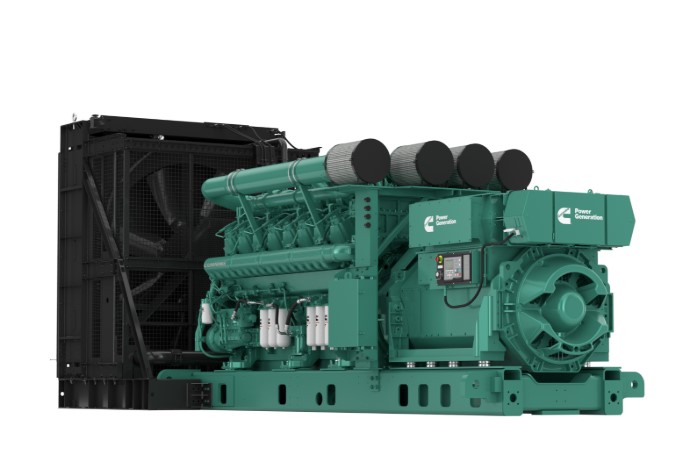
Brand Background: Founded in 1919 and headquartered in Indiana, USA, Cummins is one of the world's largest independent engine manufacturers. Its generator business spans over 190 countries and regions.
Core Advantages:
Mature technology: Known for high reliability and low failure rates, with overhaul cycles reaching 15,000-20,000 hours.
Fuel efficiency: Utilizing high-pressure common rail injection technology, fuel consumption is 8%-15% lower than similar products.
Global warranty: A comprehensive service network with readily available parts supply.
Product Positioning: Mid-to-high-end market, with power ranges from 20kW to 3000kW, commonly used in data centers, hospitals, and large factories requiring high reliability.
Price Range: 40%-80% more expensive than Chinese brands in the same power range, though total lifecycle costs (considering maintenance and fuel consumption) offer a significant advantage.
Brand Background: Established in 1925, Caterpillar is a Fortune 500 company with a leadership position in the engineering machinery and generator sectors. Its generators are known for reliability in extreme environments.
Core Advantages:
Extreme environment adaptability: Performs stably in high altitudes, high temperatures, and frigid conditions.
Intelligent monitoring system: Equipped with advanced EMCP control panels for remote monitoring and fault diagnosis.
Long lifespan: Designed to last over 30,000 hours, suitable for mining, oil drilling, and other continuous operations.
Product Positioning: High-end market, focused on large industrial generators (500kW and above), preferred for large infrastructure projects and the energy industry.
Price Range: 20%-30% more expensive than Cummins products of similar specifications, considered a "luxury" in the generator market.
Brand Background: Founded in 1932 and based in Peterborough, UK, Perkins was acquired by Caterpillar in 1998 but continues to operate independently. The brand holds a significant share in the European and Asian markets.
Core Advantages:
Compact design: Smaller in size compared to other generators of the same power, suitable for space-constrained installations.
Cold-start performance: Features advanced preheating systems, allowing smooth starts in temperatures as low as -25°C.
Cost-effective: Offers better pricing than Cummins and Caterpillar, making it a competitive option.
Product Positioning: Mid-to-high-end market, with power ranges from 7kW to 2500kW, widely used in agricultural machinery, small industries, and commercial buildings.
Price Range: 15%-25% cheaper than Cummins, offering excellent value for money in the import category.
Brand Background: Volvo Penta, a subsidiary of the Volvo Group, specializes in industrial engines and marine power systems. Its generators are known for environmental performance and low noise levels.
Core Advantages:
Leading in environmental standards: Emission standards typically meet Euro V or even Euro VI.
Noise control: Industry-leading silent technology, making them ideal for urban environments and indoor installations.
Electronic control system: Uses Volvo's proprietary ECU, ensuring precise and controllable operational data.
Product Positioning: Mid-to-high-end market, particularly favored by European customers, with strong advantages in areas with strict environmental regulations.
In recent years, Chinese generator brands have made significant progress in technology research and development, manufacturing processes, and quality control, enabling them to compete with international brands in both mid-to-low-end markets and certain high-end applications.
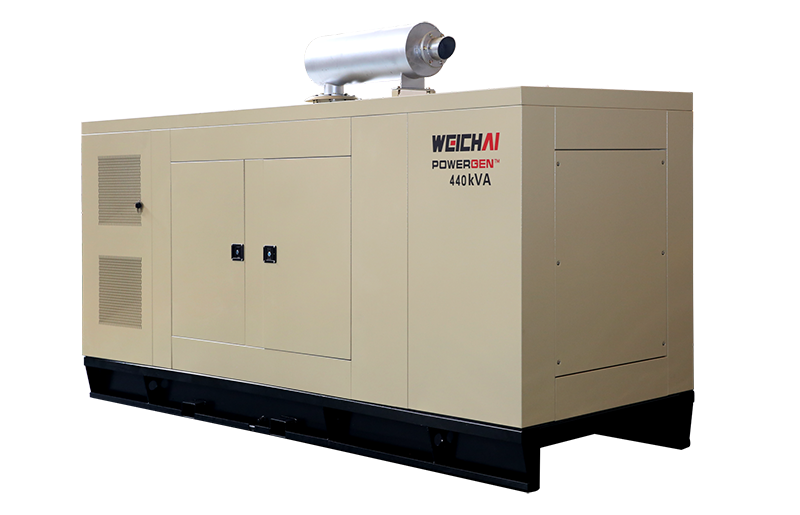
Brand Background: Established in 1946, Weichai Power is China's largest automotive parts enterprise group, with diesel engine production and sales ranking first in the world for several consecutive years. In 2009, it acquired the French Baudouin Engine Company, significantly improving its technical capabilities.
Core Advantages:
Scale advantage: With an annual engine production capacity of over 1 million units, Weichai excels in cost control.
Technology acquisition: The Baudouin acquisition enabled the introduction of large-bore engine technology, filling a domestic gap.
Service network: Over 5000 service stations across China, with a county-level coverage rate exceeding 90%.
Product Positioning: Covers all power ranges (10kW-10000kW), from economical to high-end models. The WP series engine is dominant in heavy-duty truck applications and increasingly used in generators.
Price Range: 30%-60% cheaper than imported brands, offering exceptional value for money and ranking as the Chinese market leader in sales.
Brand Background: Established in 1951 and based in Yulin, Guangxi, Yuchai is one of China's largest internal combustion engine production bases, with products exported to over 180 countries and regions.
Core Advantages:
Full product range: Offers a comprehensive engine product line from light trucks to heavy trucks, with many specialized generator models.
Extensive export experience: Strong market share in Southeast Asia, the Middle East, and Africa, with high adaptability.
Focus on new energy: Actively developing gas generators and hybrid systems with sufficient technical reserves.
Product Positioning: Primarily mid-end market, with power ranges from 20kW to 2000kW, with advantages in bus and construction machinery applications.
Price Range: Comparable to Weichai, with some models slightly cheaper, making it a strong competitor for the second-place Chinese brand.
Now that we have an overview of the key brands, it is essential to compare them across technical performance, cost, after-sales service, and suitability for various scenarios to better understand their competitive strengths.
Feature Imported Brands (Cummins/Caterpillar) Chinese Brands (Weichai/Yuchai)
Engine Technology High-pressure common rail, electronic injection, variable geometry turbo Commonly used high-pressure common rail, some models with electronic control unit
Fuel Efficiency 195-210g/kWh 210-230g/kWh
Overhaul Cycle 15,000-20,000 hours 8,000-12,000 hours
Emission Level Euro V/Euro VI/National IV National III/National IV (some models)
Noise Control 65-75dB (silent models) 70-80dB (silent models)
For a 500kW diesel generator (standard configuration, open frame):
Caterpillar: ¥1.8M-2.2M
Cummins: ¥1.2M-1.5M
Perkins: ¥1M-1.3M
Weichai: ¥600K-800K
Yuchai: ¥550K-750K
Imported brands typically have service networks in major cities with high service professionalism, but spare parts are more expensive and may take longer to import.
Chinese brands offer a broader service network, faster response times, and lower spare part costs, making them more advantageous in remote areas.
Imported Brands are preferred for high-demand scenarios such as data centers, mining, and oilfields, where extreme reliability and performance are required.
Chinese Brands are more cost-effective and suitable for backup power, emergency generation, and areas with limited budgets or infrastructure.
With so many options available, it is recommended to follow these steps when making a decision:
Calculate the actual power load and reserve 20%-30% capacity.
Determine the annual running time (backup/regular/continuous).
Assess the installation environment (altitude, temperature, noise restrictions).
Define the budget range.
For annual running times over 3000 hours or sufficient budget: Consider Cummins, Caterpillar.
For annual running times between 1000-3000 hours and a focus on cost-effectiveness: Consider Perkins, Weichai high-end series.
For annual running times less than 1000 hours and a sensitive budget: Consider Yuchai, Shanghai Diesel, Wuxi Power.
Regardless of the brand you choose, the supplier's professionalism is crucial:
Does the supplier have original manufacturer authorization?
What are the local service response time commitments?
Does the supplier have successful case studies for similar projects?
Is there sufficient stock of spare parts?
Transportation and lifting costs (large generators may require special vehicles).
Installation and commissioning costs (including silencer, chimney, parallel connection cabinets, etc.).
First-time maintenance and subsequent service package costs.
Fuel supply and storage facility construction costs.
This framework ensures that you make a well-rounded and informed purchasing decision.
Both Chinese and international generator brands have their respective strengths and weaknesses, and there is no absolute "best" or "worst" choice, only what is suitable. Imported brands still hold an advantage in core technologies, extreme environment adaptability, and long-term reliability, making them ideal for high-load and high-demand applications. Chinese brands, on the other hand, excel in cost-effectiveness, service networks, and localized customization, making them the rational choice for most standard applications.
Core Advice for Buyers:
- Don't blindly favor foreign brands: For backup power with short annual operating hours, high-quality Chinese brands can fully meet your needs and provide more convenient service.
- Don't focus only on purchase price: Consider the full lifecycle costs, including fuel consumption, maintenance, and downtime losses.
- Value supplier selection: Even the best brands can face problems if the supplier is unprofessional.
- Allow for future upgrades: Given business growth, choose a generator with slightly higher capacity to accommodate future needs.
- Pay attention to environmental compliance: Familiarize yourself with local emission regulations to avoid buying equipment that may soon be phased out.
With China's continuous improvements in manufacturing capabilities, the gap between Chinese and international generator brands is narrowing. When making a purchase, it is recommended to choose the most suitable product based on actual application scenarios, budget constraints, and service requirements, rather than simply pursuing the brand name. Rational purchasing decisions should be based on thorough technical comparisons and total lifecycle cost analysis.
