
In modern industrial production and everyday life, diesel generator sets play an increasingly important role as either standby power sources or primary power supplies. From temporary power on construction sites and emergency backup systems in hospitals to uninterrupted power supply for data centers, the correct wiring of a diesel generator set is the foundation for safe, stable, and reliable operation.
Improper wiring can lead to equipment damage, unstable voltage, frequent failures, or even serious electrical accidents. For this reason, wiring should never be treated as a casual task or handled solely based on experience.
This article explains the entire diesel generator wiring process in a clear and practical way, guiding you step by step from preparation and installation to inspection and commissioning. Whether you are an electrical technician, an engineer, or an operator new to generator systems, this guide will help you understand the key points and avoid common mistakes.
Adequate preparation before wiring is essential to prevent safety hazards and equipment failures later on.
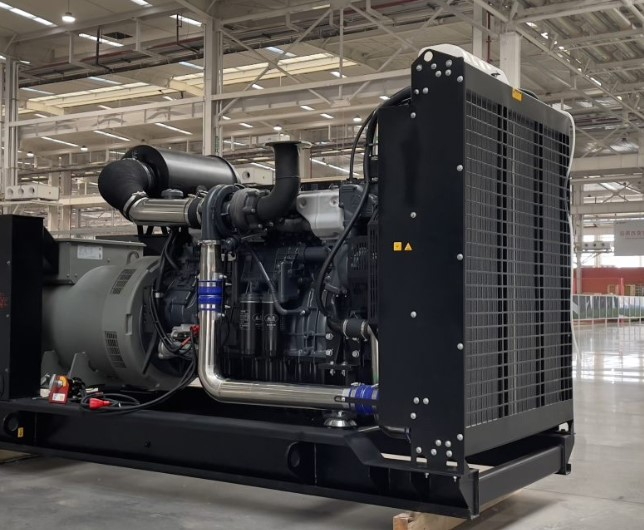
Before any wiring work begins, the distribution cabinet and generator set should undergo a thorough visual inspection.
Check for:
- Mechanical damage, deformation, or corrosion
- Loose components or missing fasteners
- Signs of moisture or contamination
Next, carefully verify the wiring layout against the design drawings. This process is similar to assembling a puzzle—every cable must be connected to the correct terminal. In addition, confirm the following:
- Insulation condition of all components
- Electrical continuity of cables
- Reliability of grounding connections
Although these checks may seem time-consuming, they form the first and most critical line of defense for electrical safety.
After completing the basic inspection, it is recommended to use a three-phase 5A switch as a test power source to perform a live simulation test. This step acts as a “dress rehearsal,” allowing potential issues to be identified before full operation and ensuring that the system meets actual operating requirements.
Before wiring, prepare the following tools and materials:
- Crimping pliers for securely crimping cable lugs
- Wire stripping pliers for accurately removing insulation
- Insulation resistance tester (megohmmeter) essential for checking cable insulation quality
- Heat-shrink tubing for insulation and leakage prevention
- Copper–aluminum transition terminals mandatory when connecting copper conductors to aluminum conductors to prevent electrochemical corrosion
In addition, inspect the cables carefully to ensure there are no cuts, deformation, or aged insulation. Verify that the cable cross-sectional area and voltage rating match the design specifications.
Safety must always come first.
Before starting work:
Disconnect the diesel generator set from the load and utility power
Place a visible warning sign reading Do Not Switch On – Maintenance in Progress
Ensure all personnel wear appropriate personal protective equipment (PPE), such as insulated gloves and safety goggles
Never underestimate the importance of these measures—many electrical accidents occur due to complacency during preparation.
With preparations completed, the actual wiring work can begin. This stage is like building the “nervous system” of the generator set—every connection directly affects overall system performance.
One key consideration during wiring is power source priority, especially in dual-power systems.
Typically:
- The preferred power source (usually the utility grid) is connected to the non-delayed side
- The backup power source (the diesel generator) is connected to the delayed-action side
- This arrangement ensures smooth power transfer and avoids supply interruptions when either power source is energized.
Cable installation is not simply about pulling wires; it must comply with strict technical standards.
Cable occupancy inside conduits must not exceed 40%
Cable occupancy inside trays must not exceed 45%
Minimum bending radius should be ≥ 2.5 times the cable outer diameter
Excessive bending can damage internal conductors and insulation.
Cable trenches should be enclosed and designed with drainage slopes
Maintain a spacing of 160–400 mm between high-voltage and low-voltage cables to reduce electromagnetic interference
Armored cables should have a bedding depth of at least 75 mm
When crossing roads, cables must be protected by steel pipes to prevent mechanical damage
Keep cables away from high-temperature components such as exhaust pipes
Avoid sharp edges; use galvanized steel pipes or flame-retardant PVC conduits when necessary
The bending radius in such cases should be ≥ 10 times the cable diameter.
For example, a YJV-3×120 mm² cable with a 30 mm diameter requires a minimum bending radius of 300 mm.
Horizontal installation: fixing interval ≤ 1 m
Vertical installation: fixing interval ≤ 1.5 m
Nylon cable ties or cable clamps may be used
Terminal treatment directly affects connection quality and operational safety.
Key requirements include:
- Stripping length must match the terminal size
- Exposed conductor length should not exceed 5 mm
- No burrs or sharp edges after crimping
For stranded copper conductors:
- Tin plating or OT/DT copper lugs must be used to prevent strand dispersion
- For copper-to-aluminum connections:
- Use copper–aluminum transition terminals
- Apply antioxidant grease to prevent oxidation and poor contact
Three-phase power must be connected according to the correct phase sequence:
- L1, L2, L3 (typically Yellow, Green, Red)
- Special attention must be paid to the neutral (N) and protective earth (PE):
- Neutral wire (N) → Neutral bar
- Protective earth (PE) → Grounding electrode
- Grounding resistance should be ≤ 4 Ω
For shielded cables: The shield should be grounded at one end only, usually at the distribution cabinet, to avoid circulating currents.
Grounding protection is one of the most critical, and often overlooked, parts of diesel generator installation.
The grounding terminal is typically located at the rear end of the generator base frame.
Grounding resistance requirements:
General applications: ≤ 4 Ω
Critical facilities (hospitals, data centers): ≤ 1 Ω
The grounding of the generator neutral point is usually determined during installation.
When the diesel generator is the only power source, the neutral must be directly connected to the facility grounding system
For complex systems, a grounded neutral point is recommended to ensure:
Proper generator operation
Effective fault detection
Minimal circulating ground currents
This distinction often causes confusion.
Protective Earthing
Used in low-voltage systems where the neutral point is not grounded. If insulation failure causes the equipment enclosure to become live, earthing ensures that most fault current flows through the grounding system rather than the human body, reducing shock risk.
Protective Neutralization
Used in systems with a grounded neutral point. When a phase conductor contacts the enclosure, a single-phase short circuit is formed, causing rapid fuse or breaker operation and removing voltage from the enclosure.
Important Rule:
Protective earthing and protective neutralization must not be mixed within the same low-voltage distribution system. However, using both methods on the same piece of equipment is permitted and improves safety.
The neutral conductor must be repeatedly grounded. If the neutral breaks, the enclosure of neutralized equipment may carry 220 V to ground, which is unacceptable.
In TN systems:
Each repeated grounding point of the protective neutral conductor must have a resistance ≤ 10 Ω
Accurate identification, testing, and systematic commissioning are essential to ensure reliable operation.
Generator terminals are usually marked:
- Neutral terminal: M or O, sometimes with a grounding symbol
- Phase terminals: L1, L2, L3 or U, V, W (Yellow, Green, Red)
If markings are unclear, never use trial-and-error sparking methods. Instead, run the generator and identify terminals using a voltmeter—this is both safe and accurate.
After wiring is completed, perform the following tests:
- Continuity test: Use a multimeter to confirm no open circuits or short circuits
- Insulation resistance test: Measure phase-to-phase and phase-to-ground insulation using a 2500 V megohmmeter; required value ≥ 10 MΩ
- Voltage and frequency check: Voltage and frequency fluctuation should remain within ±2%
A diesel generator is essentially a three-phase, four-wire synchronous generator. Load imbalance can seriously affect generator lifespan.
For example, a 15 kW generator supplying a 5 kW three-phase motor may not safely support an additional 2 kW single-phase load. Drawing excessive single-phase power can cause phase imbalance, overheating, and reduced efficiency.
Recommendations:
- For small generators, prioritize three-phase loads
- Single-phase loads should be light (e.g., lighting)
- Avoid high-power single-phase equipment
When inspecting energized equipment, strict safety procedures must be followed.
Key reminders:
- Never work on live circuits unless using certified insulated tools
- Outdoor electrical work is prohibited during thunderstorms
- Shut down the generator immediately if abnormalities occur
- Complex installations should be carried out by licensed electricians
- Always comply with relevant standards such as IEC 60364 or GB 50169
Wiring a diesel generator set is a highly technical task that requires both solid theoretical knowledge and practical experience. From preparation and cable installation to grounding, testing, and commissioning, every step matters. Safety must always take priority. Never rely solely on experience, skip inspection steps, or cut corners. Only by strictly following standards can a diesel generator operate safely, stably, and efficiently. Whether you are a professional electrical engineer or a first-time generator operator, we hope this guide provides valuable insights and practical guidance. Correct wiring not only extends equipment service life; it also protects people, property, and production continuity.
