
In outdoor camping, RV travel, or home emergency backup scenarios, a stable and reliable power supply has become an essential requirement of modern life. Faced with a wide range of portable power products on the market, many consumers hesitate between traditional inverter generators and emerging portable power stations. Although both devices can supply electricity to electronic equipment, they differ fundamentally in working principle, user experience, and applicable scenarios. This article provides a detailed comparison of inverter generators and portable power stations from multiple dimensions, including technical principles, practical usage, and economic cost, to help you make an informed choice based on your needs.
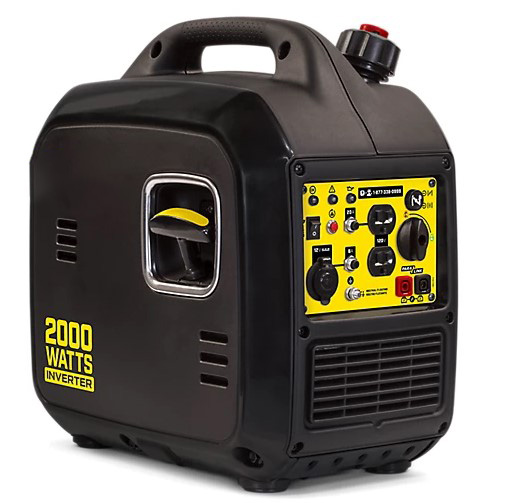
Inverter Generators: An inverter generator is essentially a compact fuel-powered generator, driven by internal combustion engines using gasoline, diesel, or propane. Compared with traditional generators, its core technology lies in the built-in inverter module. Its operation occurs in three steps: first, the engine drives the generator to produce raw AC electricity; second, the current is converted to DC; finally, it is converted back to AC through a digital inverter, producing stable pure sine-wave output. This "AC→DC→AC" conversion effectively eliminates voltage fluctuations, ensuring power quality sufficient for laptops, medical devices, and other sensitive electronics. The intelligence of inverter generators lies in their ability to automatically adjust engine speed according to the actual electrical load. When connected devices require less power, the engine automatically reduces speed to save fuel; when the load increases, the speed correspondingly rises. This on-demand power mechanism makes fuel efficiency significantly higher than traditional generators, with a single tank usually providing 8 to 12 hours of runtime.
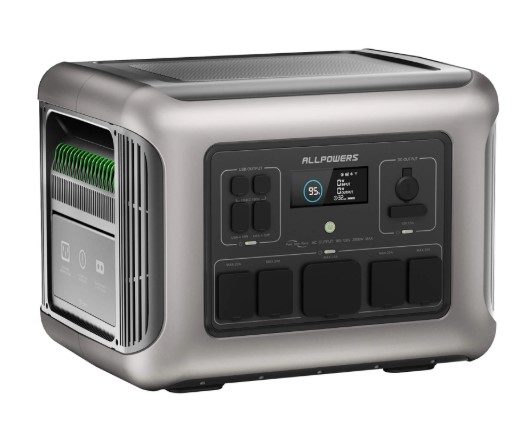
Portable Power Stations: Portable power stations adopt a completely different technical approach. They are essentially ultra-high-capacity mobile power supplies, equipped with high-energy-density lithium batteries (usually LiFePO4 or ternary lithium batteries), directly supplying power from stored electricity. The power station itself does not generate electricity, instead relying on external sources for energy replenishment, including household AC outlets, car 12V cigarette lighter ports, or solar panels. Modern portable power stations are typically equipped with multiple output interfaces: standard AC outlets for household appliances, USB-A and USB-C ports for phones and tablets, DC ports for vehicle devices, and some high-end models even support wireless charging. This integrated design allows users to connect various devices without additional adapters, achieving true plug-and-play operation.
After understanding the fundamentally different operating principles of portable power stations and inverter generators, it is necessary to make a direct comparison from the practical usage perspective. After all, technical specifications ultimately translate into daily experience, and factors such as noise level, maintenance frequency, and usage limitations often directly determine user satisfaction. Below is a detailed analysis of four key dimensions.
Noise control is one of the most immediate differences between the two. Although inverter generators reduce noise through soundproof enclosures and vibration-damping systems, keeping levels around 50–60 dB (equivalent to normal conversation) and much quieter than traditional generators, they still produce a continuous mechanical hum similar to a lawn mower idling. In quiet campsites or national parks, this noise can disrupt the natural atmosphere, disturb wildlife, and even annoy nearby campers.
In contrast, portable power stations are almost completely silent. With no internal combustion engine running, operational noise is usually below 30 dB, comparable to a library environment. This quiet characteristic makes them especially suitable for scenarios requiring silence: not disturbing companions during night camping, not affecting sleep inside an RV, and even safe indoor use during home power outages without noise disturbance.
As precision mechanical equipment, inverter generators require strict regular maintenance to ensure reliable operation. Users need to change engine oil regularly (typically every 50–100 hours), clean or replace air filters, check spark plugs, and ensure the fuel system is unobstructed. During long-term storage, fuel can oxidize and degrade, requiring stabilizers or complete drainage. Additionally, the generator must remain upright; tilting may cause fuel leaks or inadequate lubrication.
Portable power stations, on the other hand, require almost no maintenance. Lithium batteries have no memory effect and do not require regular charge/discharge maintenance; no mechanical moving parts means no wear issues; daily care only requires maintaining appropriate charge levels (recommended 20%–80%) and avoiding extreme temperature conditions. High-end models also support remote monitoring via mobile apps to check battery status, output power, and estimated runtime, making management extremely convenient.
The use of inverter generators is strictly limited by fuel availability. In remote areas, obtaining gasoline or diesel may be difficult; fuel requires special containers for safe storage and carries leakage and evaporation risks; indoor or enclosed use is prohibited due to high carbon monoxide poisoning risk, requiring at least 15 feet distance from buildings and proper ventilation.
Portable power stations demonstrate extremely high usage flexibility. They can be safely used indoors, in tents, or inside RVs without exhaust risk; support multiple charging methods including solar, car, and wall outlets, and can continue replenishing energy off-grid as long as there is sunlight; compact in size and freely placeable, with some models supporting modular battery expansion, allowing capacity to double by connecting additional battery packs in parallel.
Inverter generators have obvious advantages in power output. Mainstream products provide 1,000 to 4,000 W continuous output, with peak power up to 1.5 times rated power, sufficient to drive air conditioners, microwaves, drills, water pumps, and other high-power devices. With sufficient fuel, they can run continuously for days or even weeks, making them very suitable for long-term off-grid operation or disaster emergency backup.
Portable power station output depends on battery capacity and inverter power. Small models (300–500 Wh) are suitable for charging phones, laptops, and LED lights; medium models (1,000–2,000 Wh) can support mini-fridges, fans, projectors, and similar devices; large professional models like the Bluetti EP500Pro or iTech PS3600 offer over 3,000 W output and over 5,000 Wh capacity, theoretically capable of powering induction cookers or heaters, though runtime will be greatly reduced. Users need to carefully calculate device power requirements and runtime, planning charging cycles accordingly.
Construction sites or outdoor work requiring high-power tools such as chainsaws, welders, or water pumps.
Long-term off-grid living in remote cabins or extended outdoor research requiring continuous power for weeks.
Disaster emergency backup for hurricanes, earthquakes, or other long-term outages, maintaining full household appliance operation.
Outdoor events requiring high power, such as large gatherings or mobile catering operations.
Weekend camping or short RV trips, powering phones, cameras, drones, or portable refrigerators.
Home emergency backup for short-term outages, keeping lights, network equipment, and medical devices operational.
Mobile work or outdoor creative projects, providing quiet and reliable power for laptops, tablets, and photography equipment.
Eco-friendly lifestyles, paired with solar panels for 100% renewable energy, suitable for off-grid cabins or environmentally conscious users.
Daily satisfaction is determined by user experience, while economic investment and environmental impact relate to long-term ownership costs and value orientation. Many consumers overlook these two dimensions during initial purchase: they may be attracted by low upfront costs but bear high subsequent expenses, or fail to realize the long-term ecological impact of energy choices. This section examines both lifecycle costs and environmental sustainability.
In terms of purchase price, the two are in a similar range. Entry-level inverter generators cost around $500–$800, with high-end models exceeding $2,000; portable power stations vary by capacity, with 500 Wh models costing $500–$700, and 2,000 Wh+ high-capacity units ranging $1,500–$3,000. Usage costs, however, differ significantly:
Inverter generators incur hidden costs including ongoing fuel purchases (gasoline price fluctuations impact significantly), regular oil and filter replacement, and repair costs due to mechanical wear. Operating a 1,000 W load for 8 hours costs approximately $15–$20 in gasoline.
Portable power stations have very low daily operating costs once purchased. Solar charging is nearly free; even AC charging costs are far lower than fuel. Lithium batteries typically last 2,000–5,000 cycles, with capacity declining to 80% after 5–8 years, making long-term usage more economical.
Environmental performance is a prominent advantage of portable power stations. Although inverter generators emit less than traditional generators, they still burn fossil fuels, producing carbon dioxide, nitrogen oxides, and particulate matter, contributing to greenhouse effects and air pollution. Fuel production and transport also carry a carbon footprint.
Portable power stations produce zero direct emissions, and combined with solar charging, can create a fully clean energy system. Although battery production has environmental impacts, batteries are recyclable, and the overall carbon footprint is far lower than continuously burning fuel. For environmentally conscious consumers, power stations represent a more responsible choice.
Choose an inverter generator if you:
- Need to power devices exceeding 3,000 W (air conditioners, heaters, high-power tools).
- Plan to use continuously off-grid for over a week without daily recharge access.
- Operate outdoors where noise is not an issue and fuel is conveniently available.
- Have a limited budget and can accept ongoing fuel and maintenance costs.
Choose a portable power station if you:
- Primarily power electronic devices and small appliances, with total demand under 2,000 W.
- Value quiet operation, often in noise-sensitive environments like campsites or national parks.
- Want flexible indoor/outdoor use, especially safe use inside tents or RVs.
- Seek low maintenance, zero emissions, and better long-term economic efficiency.
- Already have or plan to integrate solar systems for self-sufficient energy.
Inverter generators and portable power stations are not mutually exclusive. Many serious outdoor users equip both: power stations meet daily silent and indoor power needs, while generators serve as high-power backup and extreme-case assurance. For most recreational campers, RV travelers, and home emergency planners, portable power stations, with their combined advantages of cleanliness, quietness, safety, and low maintenance, are becoming the smarter mainstream choice.
With lithium battery costs continuing to fall and solar technology spreading, portable power station applications will expand further. Under the dual trends of energy transition and upgraded outdoor lifestyles, choosing a suitable portable power source is not only an enhancement of current living quality but also an investment in sustainable living. Regardless of the final choice, understanding technical characteristics, reasonably evaluating usage scenarios, and following safety measures are key to ensuring reliable power supply.
