
Diesel generator sets produce significant amounts of heat during operation. For a typical generator, the energy conversion efficiency is usually around 30%-40%, meaning that more than 60% of the fuel energy is released as heat. If this heat is not effectively dissipated from the generator room, the ambient temperature can rise quickly, leading to a series of performance and safety issues. In mild cases, this may result in reduced power output, increased fuel consumption, and accelerated wear of components. In more severe cases, excessive heat can trigger overheat protection shutdowns or even cause permanent damage to the engine, generator, and auxiliary systems.
The issue becomes particularly acute during high-temperature seasons, such as summer, when outdoor temperatures are already elevated. Poorly designed generator room ventilation can easily allow internal temperatures to exceed 40°C, the commonly accepted safety threshold for diesel generators. Prolonged operation under such high-temperature conditions accelerates engine oil oxidation, promotes the aging of insulation materials, and significantly increases the failure rate of electronic components such as sensors, controllers, and circuit boards. Therefore, a scientifically designed and well-ventilated generator room is a fundamental prerequisite for ensuring the stable, reliable, and long-term operation of diesel generator sets.
- Airflow Volume Calculation: The first and most critical step in designing a generator room ventilation system is to calculate the required airflow volume. A commonly adopted industry guideline is 1.5–2 m³/min of airflow per kilowatt of generator power. For example, a 500 kW diesel generator set would require at least 750–1,000 m³ of fresh air per minute. This calculation is based on comprehensive consideration of heat generated by the engine, generator, exhaust pipes, and other auxiliary heat sources within the room, such as battery banks, transformers, and lighting. It is advisable to use the upper limit in practical design to provide an adequate safety margin. Over time, ventilation efficiency tends to decline due to equipment aging, dust accumulation, and filter clogging. Therefore, designing with sufficient capacity ensures that the system maintains adequate cooling performance even under degraded conditions.
- Airflow Path Organization: Efficient airflow organization is equally important. Ventilation pathways generally follow one of two principles: "air in from the bottom, out from the top" or "side in, side out." In practical terms, intake vents should be positioned near the floor, typically 30–50 cm above ground. This height prevents ground dust and debris from entering the generator room while taking advantage of the natural density of cool air, which tends to sink. Exhaust vents, on the other hand, should be placed at the top of the room or directly above the generator set. Since hot air is less dense, it naturally rises, making top-mounted exhaust vents the most effective placement. This configuration minimizes airflow resistance and encourages natural convection. Even if the exhaust fan fails temporarily, natural convection ensures a baseline level of ventilation. Intake and exhaust vents should be staggered to avoid short-circuiting, where fresh air is immediately expelled without cooling the equipment.
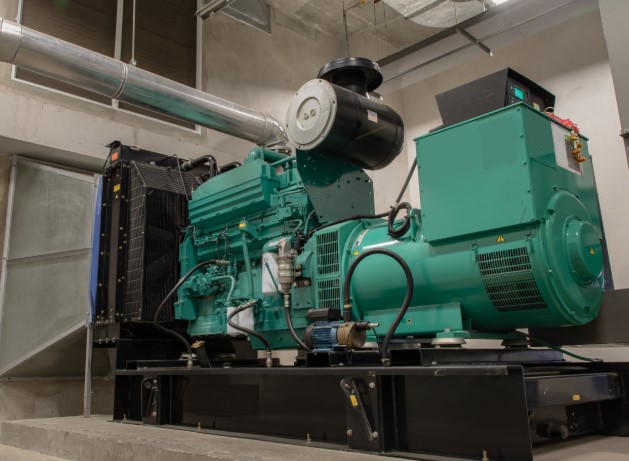
- Intake System Design: The intake system directly affects the air quality in the generator room and, consequently, the longevity of the generator. Intake vents should avoid exposure to high-temperature sources, fumes, and pollution, such as boiler exhausts, kitchen vents, or busy traffic routes. Dust and particulate matter can significantly impact engine and radiator performance. Therefore, intake vents must be equipped with dust filters of G4 grade or higher. G4 filters efficiently remove pollen, dust, and other large particles, keeping the engine air intake and radiator surfaces clean and maintaining efficient heat transfer. The cross-sectional area of the intake vent is critical. Ideally, it should be at least 80% of the exhaust vent area. If the intake area is too small, negative pressure may develop in the room, increasing the load on the exhaust fan and potentially drawing unfiltered air through door and window gaps. External rainproof louvers are recommended to prevent water ingress, while internal filters simplify maintenance and replacement.
- Exhaust System Design: The selection and placement of exhaust fans are crucial for effective heat removal. Axial-flow fans are typically preferred in generator rooms because they combine moderate pressure, high airflow, and efficiency, allowing them to overcome duct resistance effectively. Fans should be installed directly above or beside the generator radiator, aligned with the primary heat source, ensuring immediate removal of hot air. Exhaust vents connecting to the external environment must include louvers and insect screens to prevent rainwater backflow and the entry of birds or insects. It is important to account for the resistance introduced by these accessories when selecting fan pressure ratings, ensuring adequate airflow under all operating conditions.
- Maintaining Adequate Clearance: Sufficient spacing around radiators is essential to maximize heat dissipation. A minimum clearance of 1.5 meters between the radiator and any wall ensures proper diffusion of hot air and prevents recirculation. Many generator rooms save space by placing equipment flush against walls, which can create hot air vortices in corners, reducing cooling efficiency. Where site limitations require external ducting, duct length should be kept under 3 meters. Duct bends should exceed 90° and employ curved guide vanes to minimize local resistance. Right-angle bends create significant airflow resistance, with each 90° bend equivalent to an additional 3–5 meters of straight duct. Duct interiors should be smooth to reduce friction, and cross-sectional area should be at least as large as the radiator to prevent throttling.
- Temperature Monitoring and Interlock Control: Temperature sensors should be installed approximately 1 meter from the generator and 1.5 meters above the floor. This placement accurately reflects ambient conditions near the generator. If temperature exceeds 40°C, backup fans should automatically activate. Should temperatures rise further, the ventilation system should be interlocked with the generator control system to reduce load or initiate protective shutdown, preventing damage.
Ventilation and noise control are inherently conflicting objectives. Effective ventilation favors large, unobstructed openings and low resistance, while noise reduction requires sealed enclosures and sound insulation. A combination of strategies is needed to balance these demands:
- Silencing Devices: Install sound-absorbing insulation at intake and exhaust vents, with a minimum thickness of 50 mm. High-temperature resistant materials capable of withstanding temperatures above 80°C should be used. Silencer ducts can be maze-type or plate-type to increase the number of sound reflections, enhancing noise reduction.
- Fan Noise Reduction: Select low-noise fans where possible or wrap fan housings with soundproofing material. Fan foundations should include vibration isolation to prevent noise transmission through building structures. For stricter requirements, fans can be relocated outside the generator room and connected via ducts.
- Room Soundproofing: Walls and ceilings should include at least 50 mm of thermal and acoustic insulation. Doors and windows should be soundproof, with all gaps properly sealed to maintain acoustic integrity.
- Room Insulation: The generator room itself absorbs external heat. In summer, sunlight can heat roof surfaces to over 60°C, transmitting heat indoors. To reduce this effect, walls and ceilings should be insulated, and floors should include moisture barriers and insulation layers to limit heat and humidity ingress.
- Emergency Ventilation: A generator room's primary ventilation system may fail due to power outages or fan malfunctions. An independent emergency exhaust fan, powered separately from the main system and ideally supported by battery backup or dual power sources, is essential. Although emergency fans may provide less airflow than the main system, they must ensure sufficient cooling for safe generator shutdown.
- Humidity Control: High humidity negatively impacts generator reliability. Relative humidity should be maintained below 60% to prevent circuit board damage, insulation degradation, and metal corrosion. Dehumidifiers may be installed in regions with high moisture levels, particularly during rainy seasons or in coastal areas. Humidity control should be coordinated with ventilation to avoid counterproductive effects.
- Radiator Cleaning: Dust and debris are common causes of reduced cooling efficiency. Radiator surfaces should be inspected weekly, removing dirt, pollen, and insect remains with soft brushes or low-pressure air from inside out. Heavy oil contamination may require quarterly cleaning with neutral cleaning agents to prevent corrosion.
- Cooling System Maintenance: Coolant levels should be checked regularly, especially in high-temperature conditions where evaporation is rapid. Coolant should be replaced every two years or every 500 operational hours. High-temperature operation may require coolant with an elevated boiling point and long-life antifreeze instead of plain water.
- Filter Maintenance: Intake filters should be cleaned monthly, and replaced if clogged more than 50%. Clogged filters reduce airflow and increase fan energy consumption. Maintain spare filters to ensure timely replacement.
- Temperature Sensor Calibration: Calibrate sensors annually using standard thermometers. Deviations over 2°C require adjustment or replacement to prevent false alarms or missed alerts.
- High-Temperature, High-Humidity Areas: Increase radiator cleaning to twice weekly and consider spray-cooling systems (ensuring no direct contact with electrical components). Use high-temperature-resistant lubricants to maintain proper oil film at elevated temperatures.
- Enclosed or Underground Rooms: Natural ventilation is insufficient. Forced ventilation using ducted air delivery is required, with external cold air directed to generator intakes and exhaust routed via ducts. Temperature-controlled backup fans should activate at 40°C, creating forced convection.
- High-Altitude Locations: Reduced air density at high altitudes decreases cooling efficiency. Increase ventilation volume by 10%-15% for every 1,000 meters of elevation. Engine power may need adjustment, or high-altitude-specific generators should be used.
Designing an effective ventilation and heat dissipation system for diesel generator rooms is a comprehensive engineering task. It requires careful consideration of room location, layout, airflow calculations, equipment selection, control systems, and maintenance. The key principles can be summarized as follows:
- Sufficient Airflow: Provide 1.5–2 m³/min per kW with extra margin to accommodate efficiency losses.
- Smooth Airflow: Ensure bottom-to-top or side-in/side-out ventilation, avoid short-circuiting, and minimize resistance.
- Adequate Clearance: Maintain at least 1.5 meters between radiators and walls; use short, straight ducts wherever possible.
- Effective Monitoring: Automatic alarms and backup fan activation above 40°C.
- Regular Maintenance: Weekly radiator cleaning and monthly filter maintenance.
- Emergency Preparedness: Independent power supply for backup fans to maintain safe operation.
Implementing these measures ensures diesel generator sets operate reliably across diverse environments, maximize backup power readiness, extend equipment lifespan, and reduce failure rates and maintenance costs. Through careful design, monitoring, and maintenance, generator rooms can maintain safe, efficient, and stable operation under all conditions.
