
Diesel generators, as important backup power equipment, are widely used in hospitals, data centers, construction sites, and other locations. Since they contain both electrical and mechanical systems, they are typical electromechanical devices, and vibration issues have become one of the common faults affecting their stable operation. This article systematically introduces the causes, classifications, hazards, and solutions of diesel generator vibration, helping users better maintain the equipment.
Diesel generator vibration problems mainly originate from two parts: the mechanical part and the electrical part. Understanding the difference between these two sources is the first step in troubleshooting.
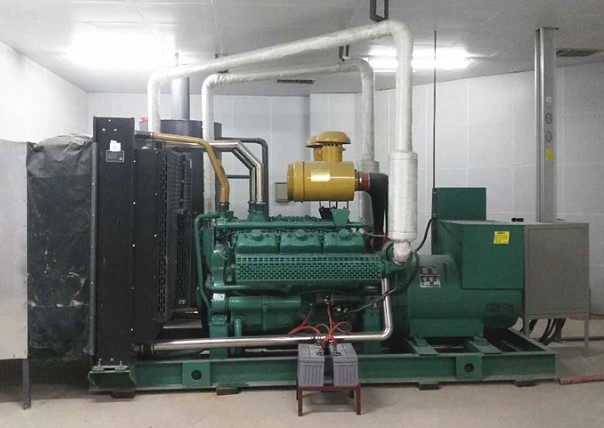
Mechanical vibration is the most common type, mainly caused by imbalance of rotating components, mechanical looseness, or installation issues.
Imbalance of rotating components is the primary source of mechanical vibration. If the mass distribution of the generator rotor, coupling, or drive wheel is uneven, centrifugal force will be generated during high-speed rotation, causing vibration. Resolving this type of problem requires dynamic balancing of the rotor. If the equipment has large drive wheels, brake wheels, or couplings, these components need to be separated and balanced individually.
Mechanical looseness can also lead to imbalance of rotating components. Common issues include loose core brackets, loose keys and pins, or loose rotor fasteners. These looseness points can create new imbalance in an otherwise balanced rotor.
Poor shaft alignment is another important issue, manifested as misalignment of coupled shaft parts or non-coincident centerlines. This problem usually originates from improper alignment during installation. A special case is when the centerline is aligned when the equipment is cold, but after running for a period, the centerline shifts due to deformation of rotor supports or foundation settlement, resulting in vibration.
Gear and coupling faults can also transmit vibration. Specific manifestations include poor gear meshing, severe gear surface wear, insufficient lubrication, misaligned couplings, incorrect gear coupling tooth profiles or pitch, excessive clearance, or severe wear.
Load-transmitted vibration should not be ignored. For example, vibration from a turbine in a turbine-driven generator can transfer to the generator, and vibration from motor-driven fans or pumps can also affect the motor.
Structural defects and installation problems include: oval shaft journals, bent shafts, improper clearances between shafts and bearing shells (too large or too small), insufficient rigidity of bearing seats, baseplates, or foundations, and even insufficient rigidity of the entire generator installation foundation. In addition, loose anchor bolts and loose connections between bearing seats and baseplates are common causes.
Although vibration caused by electrical problems is not as common as mechanical vibration, it still requires attention.
Winding faults are the main cause: rotor winding short circuits in asynchronous wound motors, incorrect stator wiring in AC motors, inter-turn short circuits in synchronous motor excitation windings, or misaligned synchronous motor excitation coils.
Rotor faults include broken bars in squirrel-cage rotors of asynchronous motors and uneven air gaps between stator and rotor. Especially when rotor core deformation causes air gap changes, it will result in unbalanced air-gap flux and abnormal vibration.
Diesel generator vibrations can be divided into two types based on motion form: torsional vibration and linear vibration.
Torsional vibration is caused by engine combustion forces acting on the crankshaft and will transfer to the entire rotating mass system. This vibration is an inherent characteristic of internal combustion engines, originating from the pulsating torque experienced by pistons during the power stroke when the fuel-air mixture ignites. Each torque peak causes a slight torsional deformation of the drive shaft, and when the power is large, this force can be substantial.
Fortunately, torsional vibration issues are mostly resolved before leaving the factory. Engines and generator sets are properly matched during factory design, and under normal circumstances, torsional vibration problems can be completely avoided. Unless there are special installation situations, users generally do not need to worry.
Linear vibration is more complex, usually related to vibration sources and mechanical noise. Because actual measured vibration is the superposition of all vibration sources, it is difficult to accurately determine its specific nature without professional instruments.
Engine vibration is the result of multiple factors: combustion forces, torque response, structural mass and stiffness, manufacturing tolerances of rotating components, etc. These forces may produce various adverse effects, from simple noise issues to high-stress states, ultimately leading to damage to engine or generator components.
Resonance is the most dangerous situation. When the engine's excitation frequency matches the system's natural frequency, resonance occurs. At the resonant engine speed, vibration stress may reach destructive levels. Therefore, professional analysis of both linear and torsional vibration in the entire engine-generator system is necessary.
If diesel generator vibration is not effectively controlled, it can cause multiple types of damage.
Vibration accelerates the wear of moving parts such as bearings and bearing shells. Improper clearance between bearings and bearing shells not only causes vibration but also leads to abnormal lubrication and increased temperature. Long-term vibration can loosen fasteners, crack welds, and cause fatigue failure of structural components, potentially resulting in complete failure of engine or generator components.
Idle generators, switches, relays, and other auxiliary equipment, as well as the building structure itself, may be adversely affected by the running diesel generator vibration. It is particularly important to note that if idle units are close to running units, the internal components of idle units, lacking oil pressure lubrication, may suffer more severe damage from vibration.
Diesel generators should not be installed directly on rock, soil, steel, or concrete foundations. These materials can transmit vibration over long distances, and when the generator set's specific frequency coincides with the natural frequency of building components, resonance may occur, potentially causing structural damage to certain types of buildings.
Accurate detection is a prerequisite for solving vibration problems. Because actual vibration is the sum of all vibration sources, professional testing is needed to determine the exact source.
Vibration testing can identify the primary vibration source and assess whether vibration levels are within allowable limits. For vibration-sensitive building structures, it is recommended to conduct system testing before commissioning to ensure vibration does not exceed limits.
Tests include measuring vibration displacement, velocity, and acceleration, performing frequency spectrum analysis to determine main frequency components, and analyzing the vibration patterns of various components.
A complete set of solutions has been established in the industry to address diesel generator vibration issues.
As rotating machinery, diesel generators inevitably generate some vibration, making isolation measures essential. Equipment should not be installed directly on rigid foundations, and appropriate vibration isolation measures must be implemented.
Spring Isolators are the most commonly used, capable of isolating about 95% of vibration without requiring additional inertial mass. They should be installed directly beneath the engine and generator mounting feet, ensuring that the springs can support the unit's weight. If the springs are fully compressed, isolation is lost, and vibration will directly transmit to the foundation.
Spring isolators are usually placed under the generator guide rails but do not need to be bolted to the floor unless the unit operates in parallel with other generators or is located in a seismic-prone area.
Inertia Block Isolation Systems use a large mass block on which the generator is mounted, isolated from surrounding structures using fiberglass or cork. This system is more expensive and complex but provides better vibration isolation.
Rubber Pads can suppress high-frequency vibrations that cause noise but have limited effectiveness against low-frequency vibration.
Fuel pipes, exhaust pipes, and electrical connections transmit vibration. If these connections are not flexibly designed, foundation isolation measures will be significantly reduced.
Every connection must be flexibly isolated to achieve maximum vibration reduction. Pipe supports should be arranged with uneven spacing to avoid resonance. For low-frequency vibration, spring-loaded pipe hangers are recommended; for high-frequency vibration, rubber- or cork-lined hangers should be used.
Rubber compression couplings are ideal for protecting gas and diesel generators from torsional vibration and resonance damage. As mentioned, torsional vibration is inherent to internal combustion engines, and resonance can occur when the vibration frequency coincides with the system's natural frequency, potentially causing catastrophic consequences. Rubber compression couplings absorb torsional vibration energy through elastic deformation, preventing resonance and effectively protecting the generator.
For installed equipment, regular shaft alignment checks and rotor balance corrections are necessary. Misalignment is a significant source of vibration, especially after the equipment has been running for a period, as cold-state alignment may change due to foundation settlement, thermal deformation, or other factors.
When electrical problems are suspected as the vibration source, check winding insulation, wiring correctness, air gap uniformity, and rotor integrity. Once electrical faults are resolved, vibration usually decreases significantly.
Vibration problems are best addressed during the design phase to avoid numerous difficulties later.
Technical specifications should include vibration isolation requirements: specifying spring isolators or inertia blocks, requiring flexible connections, and defining pipe hanger types and arrangements. For critical projects, vibration testing and verification should be mandated.
For parallel operation or multi-unit layouts, mutual interaction and seismic safety requirements must be considered.
- Regular Fastener Checks: Inspect anchor bolts, bearing seat bolts, and other fasteners to prevent loosening.
- Monitor Bearing Conditions: Observe bearing temperature, noise changes, and replenish or replace lubricants as needed.
- Observe Vibration Changes: If vibration increases noticeably, shut down and inspect immediately.
- Maintain Cleanliness: Dust and debris accumulation may affect heat dissipation and mechanical balance.
- Professional Testing: Annual professional vibration testing and analysis are recommended to detect potential problems early.
Diesel generator vibration issues involve mechanical, electrical, installation, and other factors, requiring a systematic understanding and approach. Through reasonable vibration isolation design, correct installation and commissioning, and regular inspection and maintenance, vibration can be controlled within allowable limits, ensuring long-term stable operation.
For users, understanding the basic principles and hazards of vibration helps to detect anomalies promptly and take appropriate measures. For severe vibration issues, it is recommended to seek professional technical assistance for detailed testing, analysis, and targeted solutions.
