
In modern society, the stability and reliability of power supply are of paramount importance. Generator sets serve as essential backup power equipment, ensuring uninterrupted electricity for a wide range of applications, from industrial operations to critical infrastructure. However, conventional generator sets often generate substantial noise during operation, which can disrupt work environments, residential areas, and sensitive facilities. With growing environmental regulations and increasing demand for quiet surroundings, silent generator sets have emerged as an advanced solution. These generator sets combine innovative soundproofing technologies with efficient energy generation, offering low-noise, high-performance operation. This article delves deeply into the sound-absorbing structure technologies, working principles, advantages, and applications of silent generator sets, providing a comprehensive overview for engineers, facility managers, and end-users.
Generator sets produce noise across a broad frequency spectrum. Low-frequency noise, in particular, is notoriously difficult to control with conventional porous materials. To address this challenge, sound-absorbing structures are specifically designed to optimize attenuation at targeted frequency ranges, ensuring maximum noise reduction.
Impedance-gradient structures are ingeniously engineered to gradually transition the acoustic impedance of materials. This design allows sound waves to enter the absorber smoothly, maximizing absorption efficiency. A common example is the sound-absorbing wedge, composed of a tapered tip and a base. The wedge tip is typically made from porous sound-absorbing materials and reinforced with fiberglass or metal mesh.
When sound waves strike the tip, the gradual impedance transition between the absorbing material and the surrounding medium ensures optimal matching, enabling sound waves to penetrate deeply and be efficiently absorbed. The performance of sound-absorbing wedges is remarkable: absorption coefficients often exceed 0.99 for frequencies above the cutoff.
The cutoff frequency can be adjusted by varying the type of material, the wedge length, and the air layer behind the wedge. For example, wedges constructed from glass wool or slag wool, with a total length of 1 meter and a 5–10 cm air layer, can achieve a cutoff frequency of approximately 70 Hz. These wedges are widely used in high-performance anechoic chambers and other applications requiring superior sound absorption.
Resonant structures leverage the principle of acoustic resonance to dissipate sound energy. One of the most common forms is the thin-plate resonator, which consists of a metal or plywood plate mounted in a frame with an air layer behind it. The combination of the plate's elasticity, the air layer's compressibility, and the plate's mass forms a resonant system. When sound waves match the system's resonant frequency, the plate vibrates and converts sound energy into heat, thereby absorbing it effectively.
Another resonant design is the perforated-plate resonator, which uses a perforated panel backed by an air cavity, sometimes lined with porous material. Each cavity functions like a Helmholtz resonator: air in the perforation acts as a piston, moving in response to sound pressure. Friction and elastic interactions dissipate the sound energy. While conventional perforated plates offer moderate absorption due to low acoustic impedance, performance can be enhanced by adding fiberglass, metal mesh, or additional porous layers, which increases resistance, broadens the absorption band, and improves overall efficiency.
To cover wider frequency ranges, composite structures combine multiple absorption principles and materials. For instance, coupling impedance-gradient wedges with resonant panels allows each element to target different frequency ranges, achieving superior overall attenuation. This approach is particularly effective in generator enclosures, where noise spans a wide spectrum, from low-frequency engine hum to high-frequency mechanical vibrations.
Innovative designs continue to expand the capabilities of silent generator sets. Examples include:
- Thin plastic box absorbers: Constructed from modified rigid PVC, these multi-layer boxes utilize resonance within enclosed cavities to absorb sound. With a typical thickness of 50–100 mm and modular panels sized 0.5 × 0.5 meters, these structures are lightweight, physically stable, easy to install, and highly effective.
- Micro-perforated panels: Featuring thousands of sub-millimeter holes per square meter, these panels achieve wideband absorption with precise acoustic characteristics. Double-layer configurations extend low-frequency performance, making them suitable for high-temperature, humid, and corrosive environments. When fabricated from acrylic, these panels also allow light transmission, offering architectural versatility alongside acoustic performance.
Such innovations are critical in modern silent generator design, where compactness and efficiency must be balanced with noise suppression.
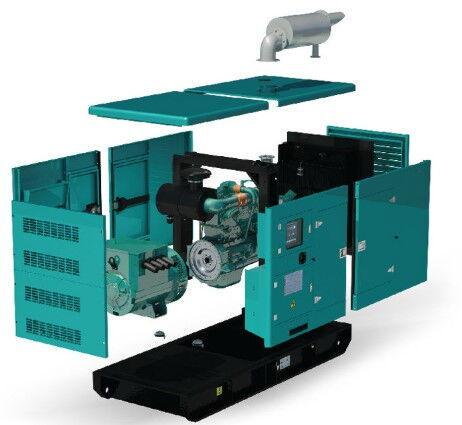
Silent generator sets achieve low-noise operation through a combination of advanced soundproofing technologies, vibration isolation, and strategic structural design. The key principles include:
- Vibration Isolation: High-performance dampers are installed between the engine, generator, and mounting frame to absorb mechanical vibrations. By minimizing vibration transmission, these dampers reduce radiated noise to the surrounding environment.
- Soundproof Enclosure: The enclosure uses four to five layers of sound-absorbing material. These layers absorb and reflect sound, containing noise within the enclosure while maintaining adequate ventilation and heat dissipation.
- Intake Silencer: A labyrinth-style intake silencer with three layers of absorbing material allows fresh air to enter the generator while impeding noise propagation. The extended sound path increases wave reflection and absorption, reducing the noise reaching the exterior.
- Exhaust Silencer: Similarly, the exhaust system employs a labyrinth design with multiple layers, ensuring efficient exhaust flow while attenuating noise. Some systems use impedance-composite silencers to reflect and absorb sound waves repeatedly, further reducing exhaust noise.
Power cables are connected via fixed junction boxes on the exterior of the enclosure. This direct connection minimizes vibrations and mechanical noise along the cable path, maintaining stable power transmission.
Doors and windows of the soundproof enclosure are tightly sealed, with double-glass windows where necessary. This design prevents internal noise from escaping while maintaining operational accessibility, ensuring that the generator's acoustic performance is maximized.
Silent generator sets offer multiple features that make them ideal for noise-sensitive environments:
- Low-Noise Operation: Typically, noise levels are ≤75 dB(A) at 1 meter, allowing operation near hospitals, hotels, high-end residential areas, and shopping centers without disruption.
- Compact Design: Small footprint and modern aesthetics facilitate installation, transport, and integration into confined spaces.
- Efficient Noise Mitigation: Multi-layer enclosures and optimized intake/exhaust channels suppress sound while maintaining generator performance.
- Large Fuel Capacity: Extended runtime reduces refueling frequency, increasing operational convenience.
- User-Friendly Design: Observation windows, emergency stop buttons, and advanced vibration damping ensure operational safety, ease of monitoring, and minimal noise spread.
The versatility and quiet operation of these generators make them suitable for numerous settings:
- Hospitals: Hospitals demand extremely quiet environments to avoid disturbing patients. Silent generators provide reliable emergency power for critical medical equipment and lighting while maintaining a peaceful atmosphere, ensuring patient comfort and safety.
- Hotels: Guests expect a serene environment, even during power outages. Silent generators ensure uninterrupted hotel operations, such as lighting, HVAC systems, and elevators, without compromising guest comfort.
- High-End Residential Complexes: In luxury residential areas, noise pollution is a significant concern. Silent generators provide backup power for elevators, lighting, and other essential systems while maintaining a quiet environment that preserves residents' quality of life.
- Large Shopping Centers: Shopping malls require reliable power during business hours while maintaining a comfortable atmosphere for customers. Silent generators ensure continuous operation during outages without disturbing shoppers, enhancing the overall retail experience.
As environmental standards and quality-of-life expectations continue to rise, silent generator sets have become increasingly essential. By employing advanced sound-absorbing structures, resonance-based technologies, and thoughtful mechanical and electrical design, these generators achieve exceptionally low-noise operation while delivering reliable power.
Their wide range of applications, spanning hospitals, hotels, residential complexes, and commercial centers, demonstrates their versatility. Silent generators not only ensure uninterrupted electricity but also provide a comfortable, quiet environment, making them indispensable in modern society. Understanding the sound-absorbing technologies, operational principles, key features, and practical applications of silent generator sets enables users to make informed decisions, ensuring optimal performance and minimal environmental impact.
With continued innovation in materials, enclosure design, and acoustic engineering, silent generator sets will remain at the forefront of high-performance, low-noise power solutions, safeguarding both critical operations and the well-being of people in noise-sensitive environments.
