
When renting or purchasing a diesel generator, noise level is a key concern for many people. It is generally believed that generators are very loud, but in reality, the level of noise depends on your reference point. Compared with a quiet countryside walk, the generator does seem loud; however, compared with the noise of a plane taking off, the generator is actually relatively quiet.
However, we are not here to debate noise levels, but to help you solve practical problems. The definition of noise is simple; it is “unwanted sound.” This article will provide a detailed explanation of several effective ways to make diesel generators quieter, helping you maintain power supply while reducing the impact on the surrounding environment and personnel.
Once the seriousness of the noise problem is understood, we start with the simplest and lowest-cost noise reduction methods. These basic measures do not require complex equipment; just reasonable layout planning can achieve obvious noise reduction effects.
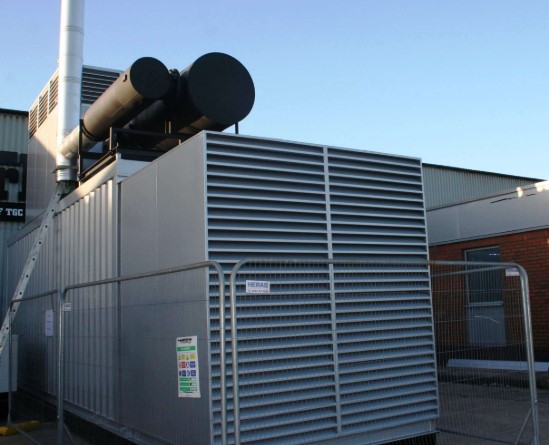
The simplest and most easily overlooked method is to increase the distance between you and the generator. Moving the generator farther allows sound energy to disperse over a larger space, reducing sound intensity. There is a basic rule: for every doubling of distance, noise is reduced by approximately 6 decibels. However, it should be noted that this rule only applies to free-field conditions in open spaces.
In practice, it is recommended to place the generator at least 6 to 9 meters away from buildings. If site conditions allow, the farther, the better. Also, pay attention to the direction of the generator exhaust—ideally, it should face an open area to avoid sound directly reflecting toward areas requiring quiet.
Hard surfaces reflect sound waves and can limit noise propagation. If the generator is installed indoors, solid walls act as acoustic barriers, limiting noise from spreading outside the room. Similarly, standard generator covers and room enclosures can reduce noise by at least 10 decibels, while customized enclosures achieve even more significant reductions.
If a cover alone is not enough, acoustic fences can provide additional barriers. For construction projects, public utility networks, and outdoor events, temporary acoustic fences are a fast and effective solution; for large installations, acoustic barriers can be customized and permanently installed.
When increasing distance and using natural barriers still cannot meet noise reduction requirements, it is necessary to carry out specialized acoustic treatment of the generator room or cover. By properly applying sound-absorbing and sound-insulating materials, noise levels can be further reduced, creating a quieter operating environment.
Using acoustic barriers to reflect sound waves only limits noise propagation outside the barrier. If you want to reduce noise and reverberation inside the generator room or cabinet, the space itself must be acoustically treated. This includes laying sound-absorbing materials on hard surfaces or installing acoustic wall panels or ceiling panels.
For industrial applications, perforated steel wall panels are commonly used, but other materials are also available. Installing high-density sound-absorbing materials on walls can effectively absorb sound waves, reducing reflections and superposition inside the room.
Building a soundproof cover is an effective measure for reducing generator noise. Covers made from steel, acoustic foam, or fiber-reinforced panels can absorb and block noise. When designing a soundproof cover, the following points should be considered:
- Intake and exhaust ports should be equipped with silencing baffles
- Walls should be lined with high-density sound-absorbing materials
- Ensure good heat dissipation design to prevent generator overheating
- Cover structure must be sturdy to avoid vibration noise
Large soundproof walls or fences can reduce noise propagation by 15 to 20 decibels. Professional heavy-duty acoustic covers can reduce noise by up to 35 decibels. These covers usually use galvanized steel, acoustic foam, and precise ventilation design to combine performance and quiet operation.
Acoustic treatment of rooms and covers mainly blocks noise from spreading outward. However, to more effectively solve the problem, noise must be addressed at its source. By reducing generator vibration and optimizing operational components, the intensity of noise can be reduced at its origin, achieving twice the effect with half the effort.
Another effective way to reduce noise is source control. Installing anti-vibration mounts under the generator can isolate vibration and reduce noise transmission. Options include:
- Rubber mounts: suitable for general noise reduction needs
- Spring mounts: suitable for higher noise reduction requirements
- Dampers: suitable for precise noise control
The specific choice depends on the desired decibel reduction. In addition to isolating vibration under the generator, installing flexible joints between the generator and connected systems can also reduce noise transmission to surrounding structures.
Using anti-vibration mounts or rubber pads to isolate the generator from the floor prevents structural transmission through surrounding buildings. This is important because placing a generator on a hard surface allows vibrations to transmit and amplify through the ground, and the metal enclosure can resonate like a speaker, increasing noise.
High-efficiency cooling fans and properly designed exhaust ducts can reduce airflow turbulence, which is a major source of mid-frequency noise. Proper duct layout also lowers backpressure, improves performance, and reduces noise.
For exhaust systems, extending the exhaust pipe beyond 10 meters and appropriately increasing the exhaust fan diameter can reduce backpressure, further lowering noise.
Vibration control and system optimization can effectively reduce some noise, but for the prominent exhaust noise of diesel generators, specialized equipment is required. Mufflers are dedicated devices designed for exhaust noise and are essential components in noise reduction solutions for large generator sets.
For large installations, mufflers are the most effective noise control method. A muffler allows large volumes of air to pass but limits noise propagation. Its internal structure includes:
Baffles: to guide airflow
Perforated metal plates: to scatter sound waves
High-density rock wool: to absorb sound waves and shorten wavelengths
As air flows through the baffles, this system absorbs sound energy and significantly reduces noise output.
Muffler systems can reduce noise at 1 meter to 48–85 decibels. The general rule is that the larger the muffler, the more significant the noise reduction. Integrating industrial mufflers into diesel generator systems can reduce exhaust noise by 25 decibels.
For exhaust noise control, a multi-stage muffler design can be added to a single-stage muffler to ensure effective exhaust noise suppression. This multi-stage design treats different noise frequencies in layers, achieving better noise reduction.
After understanding various noise reduction measures, how do you determine whether they are effective? This involves noise measurement methods and relevant standards. Mastering basic measurement knowledge and regulatory requirements helps scientifically evaluate noise reduction effects and ensures compliance.
Noise is measured in decibels (dB). For standardized testing, a sound level meter is typically used to measure generator noise at 7 meters. Typical industrial generators produce 70–100 dB depending on load and distance.
It should be noted that decibels are logarithmic units. Each increase of 10 dB roughly doubles the perceived loudness. This means that 80 dB sounds twice as loud as 70 dB, not just 10% louder.
International and local regulatory agencies set maximum permissible noise limits. Compliance is particularly important in cities, hospitals, or residential areas. Professional acoustic covers and muffler designs should meet or exceed these requirements.
Low-noise operation not only reduces worker stress and prevents hearing damage, but also improves community well-being and helps enterprises comply with ISO 14001 environmental management standards, demonstrating responsible energy use.
Construction sites: Typically open spaces, but consider nearby residential areas. Use temporary acoustic barriers, place generators away from residences, and schedule construction appropriately.
Hospitals: Require high noise control, using quiet generators with professional acoustic rooms and muffler systems. Backup generators must balance quiet operation with rapid startup.
Factories and residential areas: Noise reduction should consider production needs and residents’ daily life. In addition to technical measures, plan generator placement carefully and install permanent acoustic barriers if necessary.
Reducing diesel generator noise does not necessarily mean replacing the entire unit. Through proper methods, noise can be significantly reduced. The noise reduction methods described range from simple to complex, from low-cost to high-investment, and can be flexibly chosen according to actual needs and budget.
Remember, selecting a proper location is the first step—doubling the distance reduces noise by about 6 dB. Based on that, combining soundproof covers, mufflers, and anti-vibration mounts can achieve significant noise reduction. For new purchases, prioritizing quiet generators is a more economical long-term choice.
As environmental requirements increase, solving diesel generator noise has become key to their application. With scientific noise reduction measures, we can enjoy the power security provided by diesel generators while minimizing environmental and human impact, achieving efficient, quiet, and sustainable energy use.
