
When selecting and using diesel generators, many people have a common perception: they believe that fuel consumption is directly proportional to load—that is, the higher the load, the higher the fuel consumption, and the lower the load, the lower the fuel consumption. This view seems intuitive under normal circumstances, but in reality, it is not entirely accurate. Fuel consumption in diesel generators is indeed affected by load, but this influence is not a simple linear relationship. Understanding this is of great significance for correctly using generators, reducing fuel costs, and extending equipment lifespan.
After understanding the common misconception, we need to further explore the actual performance of diesel generators during operation. Through a large amount of measured data and engineering practice, technicians have found a clear pattern: fuel efficiency reaches its peak near 80% of the rated load.
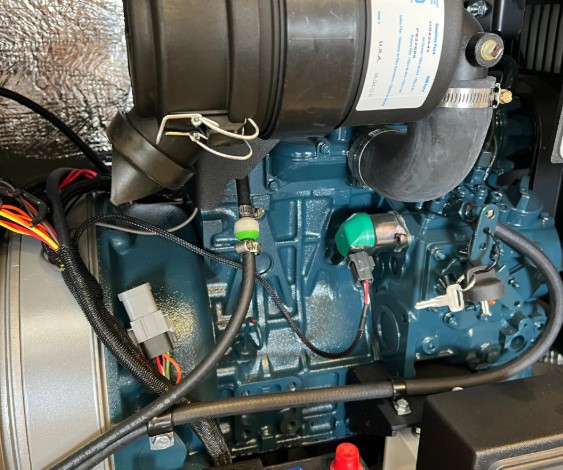
According to actual operating data, diesel generators achieve the lowest fuel consumption and highest efficiency at 80% of the rated load. Specifically:
When the load is 80% of the rated load, one liter of diesel can generate 3.5 to 6 kWh of electricity (the exact value varies by model)
When the load exceeds 80%, fuel consumption increases as the load rises
When the load is below 20%, fuel consumption not only does not decrease but instead increases significantly
This 80% load point is the “golden range” for diesel generator operation. Within this range, combustion efficiency, mechanical losses, and thermal management of the engine reach a relatively balanced state.
Under 80% load conditions, the diesel engine exhibits the following characteristics:
Optimal Combustion Efficiency: The combustion chamber design and fuel injection system of diesel engines are usually optimized and calibrated within the range of 70%–80% of rated power. At this load, fuel atomization is at its best, the air–fuel mixture ratio is appropriate, combustion is more complete, and energy conversion efficiency is the highest.
Relatively Balanced Mechanical Losses: Mechanical losses such as internal friction and piston movement resistance exist at any load. At low load, these fixed losses account for a higher proportion of total output power, leading to increased fuel consumption per unit of electricity. At 80% load, the ratio between useful output and mechanical losses reaches a better balance.
Thermal Management Balance: Diesel engines need to maintain a certain operating temperature to run efficiently. The heat generated at 80% load is moderate, allowing the cooling system to effectively regulate temperature, neither overheating nor overcooling, thus avoiding efficiency loss caused by improper temperature.
The previous section analyzed the principle of 80% load as the economical operating range. So what happens when the load deviates downward from this optimal point? Especially when the load drops below 20%, why does the fuel consumption curve show an abnormal increase? The answer lies in the engine’s operating mechanism and actual working conditions.
When the load is below 20%, the following problems occur:
Incomplete combustion: When the engine operates under extremely low load, fuel injection decreases, but cylinder volume remains unchanged, resulting in an overly lean mixture, lower combustion temperature, incomplete combustion, and some fuel being discharged without doing effective work
Increased carbon deposits: Low-temperature combustion easily produces carbon deposits, which adhere to pistons, valves, and injectors, further affecting combustion efficiency
Wet stacking phenomenon: Unburned fuel and moisture may accumulate in the exhaust system, forming “wet stacking,” which not only wastes fuel but may also corrode exhaust components
Long-term low-load operation can cause the following damage to the engine:
Early wear of cylinder liners: When the engine temperature is too low, oil viscosity increases, lubrication effectiveness decreases, and friction between piston and cylinder liner increases, leading to abnormal wear
Oil burning: At low temperatures, the sealing performance between piston rings and cylinder walls decreases, allowing engine oil to enter the combustion chamber and burn, which wastes oil and produces carbon deposits
Reduced service life: Long-term operation under low load prevents engine components from reaching optimal clearances, significantly shortening overall lifespan
According to diesel generator operating specifications:
No-load running time: Generally should not exceed 5 minutes; typically, loading can be applied after 3 minutes of warm-up
Minimum load requirement: The generator set should operate at no less than 30% load to ensure the engine reaches normal operating temperature
Prohibition of long-term low load: Long-term operation below 20% load is improper and should be avoided
When the load exceeds 80% and approaches 100% of rated power:
Increased fuel injection: To output more power, the engine must inject more fuel
Rising thermal load: High load generates more heat, increasing the burden on the cooling system and possibly requiring additional energy for heat dissipation
Increased mechanical stress: Under high load, engine components are subjected to greater pressure, increasing friction losses
Rising fuel consumption curve: Fuel consumption per unit of electricity begins to increase, and efficiency decreases
Therefore, although generators can operate under short-term overload conditions (generally allowing about 110% load for around 1 hour), long-term full-load or overload operation is neither economical nor beneficial for equipment maintenance.
In addition to load rate, the following factors also significantly affect diesel generator fuel consumption:
Air filter: A clogged filter reduces air intake, leading to incomplete combustion and increasing fuel consumption by 10%–15%
Fuel filter: A dirty or clogged filter affects smooth fuel supply, causing unstable combustion
Engine oil condition: Aged or insufficient oil increases mechanical friction and reduces efficiency
Injector condition: Carbon buildup or worn injectors result in poor atomization and incomplete fuel combustion
Valve clearance: Improper valve clearance affects intake and exhaust efficiency
Regular maintenance (usually every 250–500 operating hours or every six months) can keep the generator in optimal condition and effectively reduce fuel consumption.
Diesel grade: Using diesel that does not match ambient temperature (such as using No. 0 diesel in winter) can lead to poor combustion
Fuel cleanliness: Diesel containing impurities or water not only has low combustion efficiency but may also damage the injection system
Cetane number: An appropriate cetane number (usually 45–55) ensures good ignition performance
Altitude: For every 1,000 meters increase in altitude, air density decreases by about 10%, engine power decreases, and fuel consumption relatively increases
Ambient temperature: Extremely high or low temperatures affect combustion efficiency and cooling performance
Humidity: High humidity results in relatively lower oxygen content in the air, affecting combustion
Different engine technologies show significant differences in fuel consumption rates:
Electronic fuel injection engines: Compared with traditional direct injection engines, electronic injection systems provide more precise fuel control, typically saving 5%–10% fuel
Turbocharging: Turbocharged engines are more efficient in the medium-to-high load range
Electronic speed control: Precise speed control helps maintain stable and efficient operation
Power (kW) × fuel consumption rate (g/kWh) ÷ 1000 × 0.8 (three-phase coefficient) = L/h
Scientific Selection: Bigger or Smaller?
From the measured data in the previous section, when the load decreases from 80% to 20%, unit fuel consumption increases from 0.200 L/kWh to 0.450 L/kWh, and efficiency drops by more than half. This abnormal increase in fuel consumption is not accidental but is determined by the engine’s operating principles. Understanding the specific hazards of low-load operation helps users avoid economic losses and equipment damage caused by improper operation.
Many users, considering the need for a safety margin, tend to purchase generators with much higher power than actually required. This practice has obvious disadvantages:
Long-term low-load operation: actual electricity demand is only 30%–40% of rated power, keeping the generator in a low-efficiency range
Increased unit power generation cost: fuel consumption per kWh rises significantly
Increased maintenance cost: carbon buildup and wet stacking lead to higher maintenance frequency and expenses
Shortened equipment lifespan: although running time may not be long, damage from low-load operation accumulates
Choosing a generator with insufficient power also creates problems:
Long-term overload operation: the generator frequently operates at 90%–100% load or even overload conditions
Reduced efficiency: fuel consumption rate increases near full load
Accelerated wear: high load speeds up engine aging
Reduced reliability: there is a constant risk of shutdown due to overload protection, affecting power supply safety
A scientific selection method includes:
Calculate actual load demand: Sum the power of all simultaneously operating equipment and consider starting current (motor starting current is typically 3–7 times the rated current)
Determine required power: Actual operating power × 1.2 (safety factor), and consider motor starting multiples
Match optimal load range: Select a generator whose 70%–80% rated power can meet actual demand
Consider future expansion: Reserve 10%–20% capacity, but avoid excessive oversizing
Practical suggestion: For applications with stable power demand, choose a generator with rated power about 1.25 times the actual demand, so that the operating load falls within the optimal 80% range.
The relationship between diesel generator fuel consumption and load can be summarized as follows:
Non-proportional relationship: fuel consumption is not simply proportional to load; the highest efficiency occurs at 80% load
Avoid low load: below 20% load not only fails to save fuel but significantly increases fuel consumption and damages equipment
Control high load: long-term operation above 80% load increases fuel consumption and accelerates wear
Scientific selection: choose appropriate power based on actual demand, avoiding oversizing or undersizing
Regular maintenance: good maintenance is the foundation for low fuel consumption
Standardized operation: correct start-up, loading, and shutdown procedures help improve efficiency
Understanding and applying these principles can help users significantly reduce the operating costs of diesel generators while ensuring power demand, extend equipment lifespan, and achieve the best balance between economic efficiency and equipment reliability.
