
In industrial production, the most feared event is a power outage. When electricity stops, production lines halt, machinery may be damaged, and orders can be delayed, resulting in losses that are often difficult to quantify. For factories, manufacturing plants, construction sites, and remote operations, a reliable backup generator is no longer a luxury; it is an operational necessity.
Among clean-fuel generator options, two types dominate the market: natural gas generators and propane generators. Both represent environmentally friendly solutions, but they differ significantly in fuel supply methods, performance, operating costs, maintenance requirements, and emergency capabilities. Understanding these differences is essential for selecting the backup power solution that best aligns with your facility’s operational needs.
This article examines natural gas generators and propane generators across seven key dimensions, providing an in-depth comparison to guide industrial decision-makers.
The most fundamental difference between natural gas and propane generators is how fuel is delivered.
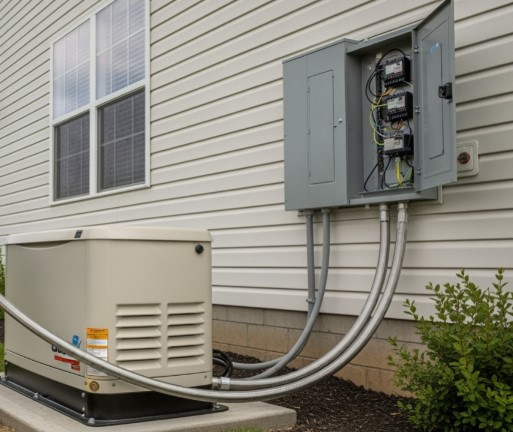
- Natural Gas Generators: Natural gas generators rely on pipeline delivery. If your facility is located near a city gas network, the generator can be connected directly to the supply, much like a household gas stove. This provides a continuous, reliable fuel source without the need for on-site storage. Concerns such as fuel running out are virtually eliminated. Mature gas networks, such as those in Alberta, provide stable year-round supply, even during winter peak demand. Pipeline infrastructure ensures that facilities connected to the grid can operate their generators with minimal logistical planning for fuel.
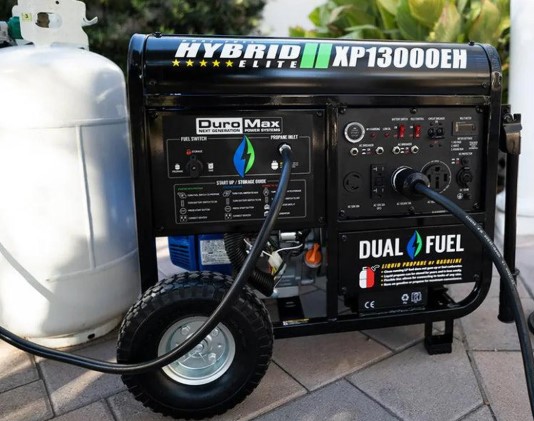
- Propane Generators: Propane, by contrast, requires on-site storage. Propane is stored as a liquid under pressure in tanks, and vaporizes into gas for engine combustion during operation. This setup is independent of pipelines, allowing power generation in remote areas, temporary construction sites, or locations where natural gas pipelines are unavailable. Tank sizes vary from several hundred gallons to several thousand liters, and can be customized according to electricity consumption requirements. On-site storage provides flexibility and redundancy, enabling facilities to maintain power even when fuel delivery is delayed.
- Decision Guidance: Urban industrial areas with pipeline access → Natural Gas is more convenient. Remote locations, temporary sites, or regions with unreliable pipelines → Propane provides operational independence.
Energy density is critical in determining how much electricity can be generated from a given volume of fuel.
- Propane: Propane has a higher energy density than natural gas. One cubic meter of propane vapor provides roughly 93 megajoules (MJ) of energy, compared to about 38 MJ for natural gas—more than double. In more familiar terms, propane delivers approximately 2,516 BTU per cubic foot, while natural gas provides about 1,030 BTU per cubic foot, a difference of 144%. This higher energy density translates to smaller engines generating more power, making propane generators particularly suitable for industrial operations requiring heavy-load startups, such as steel processing, machining, or manufacturing. For example, a 22 kW generator running on propane produces higher output and consumes slightly less fuel than the same generator running on natural gas.
- Efficiency Considerations: Generator efficiency depends on engine design. Residential-grade generators typically achieve thermal efficiencies of 25–35%. Standard natural gas engines convert fuel at 23–28%, while propane engines convert slightly more efficiently at 27–30%. With fuel-optimized engines, the power output of both fuels can be matched, but in high-load scenarios, propane generally performs better.
- Implications for Industrial Operations: Facilities that experience heavy startup loads or intermittent high-demand cycles may benefit from propane’s higher energy density, while continuous, moderate-load operations may see minimal difference in output between fuels if the engine is properly calibrated.
Fuel costs are a major component of a generator’s total cost of ownership (TCO), accounting for 40–60% over a 15-year lifespan.
- Natural Gas Costs: Natural gas prices are relatively stable, averaging $10–15 per million BTU, or less than $0.50 per cubic meter. Alberta commodity prices are around $3–3.3 per gigajoule, and industrial users often receive discounts for bulk consumption.
- Propane Costs: Propane prices fluctuate more widely. In early 2026, retail propane ranged from $0.99 to $1.26 per liter, with industrial bulk deliveries varying by region and quantity. Seasonal swings of 30–50% are common.
- Example Cost Calculation: A 20 kW generator operating at full load consumes roughly 218 cubic feet of natural gas per hour or 2.2 gallons of propane. Using mid-range prices, natural gas costs ~$5.50 per hour, while propane costs ~$4.40 per hour. While propane may appear cheaper at full load, most generators rarely operate at 100% capacity. Efficiency drops 3–5% at loads below 50%, and propane delivery fees ($3–$5 per gallon) can increase costs significantly.
- Long-term View: High-load, continuous operations → Natural Gas offers lower TCO due to stable pricing and no storage requirements. Light-load, intermittent operations with bulk propane purchases → Propane can be cost-competitive.
Cold climates introduce unique challenges for generator operation.
- Natural Gas: Pipeline pressure remains stable even in subzero temperatures. Tests show a 98% first-start success rate at -20°F (-29°C) without additives. Engine adjustments for low-pressure fuel ensure reliable startup in harsh conditions.
- Propane: Although propane boils at -44°F (-42°C), below 0°F (-18°C) vaporization slows, reducing usable energy by 15–25%. First-start success rates drop to 72% without preheating.
Mitigation Strategies:
- Install two-stage regulators and tank insulation.
- Use underground storage to leverage higher ground temperatures.
- Consider propane preheating systems for extremely cold conditions.
In northern regions with harsh winters requiring uninterrupted power, natural gas generally provides more reliable low-temperature performance.
Both generator types require regular maintenance, but schedules and costs vary.
Cleaner combustion produces less carbon buildup.
Oil changes every 300–350 hours.
Spark plugs and valves replaced every 800–1,000 hours, 40–60% longer than propane.
Cooler engine operation reduces wear, with a lifespan of 20–30 years.
Annual maintenance cost: $350–$500.
20-year total maintenance: $7,000–$10,000.
Slightly faster oil degradation due to combustion properties.
Oil changes every 200–250 hours.
Spark plugs every 400–600 hours, valves every 500 hours.
Requires periodic inspection of tanks, valves, and piping for leaks.
Annual maintenance cost: $450–$650.
20-year total maintenance: $9,000–$13,000.
Key Tip: Weekly NFPA 110 test runs are critical for both fuels. Natural gas systems have fewer components—no tanks or vaporization equipment—enhancing reliability. Propane systems are more complex but still robust when properly maintained.
Both natural gas and propane are cleaner alternatives to diesel, but there are differences.
Natural gas: ~117 lbs per million BTU
Propane: ~139 lbs per million BTU (19% higher)
Facilities with greenhouse gas reduction goals may prefer natural gas.
Natural gas NOx emissions are ~20% lower than propane.
Propane produces nearly zero particulate matter; natural gas emits trace amounts.
Both fuels meet Tier 4 standards without complex after-treatment.
Methane leaks in old natural gas pipelines can significantly increase the overall carbon footprint.
Propane’s lower carbon intensity can earn clean-fuel regulatory credits.
Both are quieter than diesel, supporting workplace health standards. Actual noise levels depend on generator design and muffler configuration.
Backup power is often most needed during extreme weather.
Dependent on pipelines. Hurricanes, earthquakes, or winter peak demand can disrupt supply. Systemic risks, such as those experienced during the 2021 North American winter storm, can leave thousands of natural gas generators inoperative.
Stored on-site, offering high independence.
500-gallon tank → 20 kW generator runs 5–7 days
1,000-gallon tank → runs 2+ weeks
Even with temporary road closures, power can be maintained.
Dual-fuel generators allow switching between natural gas and propane for cost efficiency and emergency readiness. Qualified technicians should handle conversions for safety and compliance.
- Natural Gas: Requires utility coordination, permits, and high-pressure safety zoning. Pipeline installation can be costly and time-consuming, often taking months.
- Propane: Flexible installation: tank foundation, vapor lines, fire safety measures. Deployment can be completed in weeks, ideal for rapid power needs. Supports modular expansion for growing electricity demand.
Natural Gas is ideal if:
- Facility is in an urban area with pipeline access
- Continuous high-load power is required
- Low maintenance and long-term cost efficiency are priorities
- Cold-weather reliable startup is necessary
- Greenhouse gas reduction is a goal
Propane is ideal if:
- Facility is remote or lacks pipeline access
- Rapid deployment is required
- Independence from the gas network is essential
- Power demand is intermittent or temporary
- Sufficient outdoor space for tanks exists
- Long-term storage and emergency readiness are priorities
Hybrid Solution: Dual-fuel generators combine both advantages—use natural gas under normal conditions for cost efficiency, switch to propane during emergencies for reliability.
Regardless of fuel choice, regular maintenance is crucial for achieving over 95% uptime. Partnering with professional generator service providers ensures the backup system is tailored to load requirements, location, and budget. The cost of downtime far exceeds the purchase of a generator, making proper selection and maintenance a business-critical decision.
