
Whether you are working on a construction site racing against the clock at night or responding to an unexpected power outage, light tower generators play a critical role in ensuring both safety and operational efficiency. In an era where projects are increasingly complex and regulations around safety and environmental standards are strict, selecting the right light tower generator is more than a simple purchase; it is a strategic decision that affects productivity, cost, and risk management. With a wide variety of products available in the market, it can be overwhelming to identify which light tower generator best suits your needs. This comprehensive guide walks you through lamp types, power sources, essential specifications, safety features, and emerging trends, providing a systematic approach to selecting the most appropriate light tower generator for any project.
In industries such as mining, construction, road maintenance, infrastructure projects, and event management, poor lighting can directly compromise worker safety, productivity, and project timelines. Light tower generators are designed to mitigate these risks by providing stable, high-intensity illumination in low-light or nighttime conditions.
The benefits of a properly selected light tower generator include:
- Enhanced Safety: Adequate lighting allows workers to clearly see obstacles, equipment, and the surrounding environment, reducing accidents and injuries.
- Improved Efficiency: With consistent illumination, tasks can be completed more quickly and accurately, minimizing delays and downtime.
- Operational Continuity: Critical operations, including emergency repairs, night shifts, and extended work hours, can proceed without interruption.
Without a light tower generator, essential work such as sewer repair, pipeline installation, electrical emergency response, and roadwork becomes highly dangerous, particularly in remote or hazardous environments. A light tower generator is not just a tool for visibility—it is an integral component for risk management and operational efficiency. By reducing accidents and downtime, light tower generators also help project managers control costs and maintain schedules.
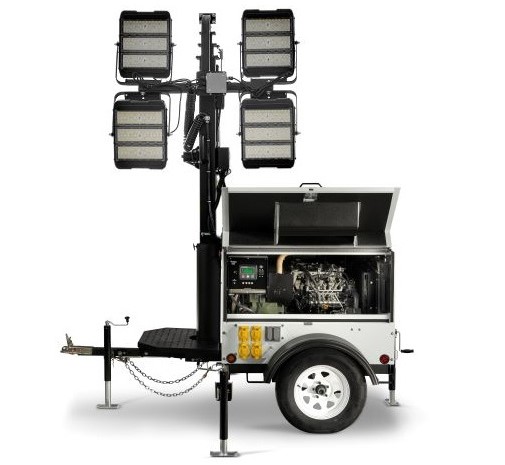
One of the first decisions when choosing a light tower generator is the type of lamp it uses. This choice significantly impacts both the operational cost and the long-term value of the equipment.
LED (Light Emitting Diode) lamps are the mainstream choice in modern light tower generators due to their efficiency, longevity, and durability. Their key advantages include:
- Energy Efficiency: LED lights consume up to 80% less energy than traditional lamps, reducing fuel or electricity costs dramatically. This is particularly important for projects with extended operational hours or continuous night shifts.
- Extended Lifespan: LEDs can operate for 30,000 to 50,000 hours, compared to roughly 2,000 hours for incandescent or metal halide lamps. Fewer replacements mean lower maintenance costs and less disruption to operations.
- Durability: LEDs lack fragile filaments, making them resistant to shock and vibration. They can withstand transportation, rough handling, and harsh working conditions better than traditional lamps.
- High-Quality Illumination: LEDs provide stable light with wide coverage, delivering uniform illumination across the work area. This reduces shadows and glare, enhancing worker comfort and productivity.
For projects that require long-term, high-frequency use—such as mining operations, infrastructure construction, and large-scale industrial sites—LED light tower generators may have higher upfront costs, but the total cost of ownership over time is significantly lower than alternatives.
Metal halide lamps offer lower initial purchase or rental costs, making them suitable for short-term or one-off projects. Advantages and limitations include:
- Advantages: Lower upfront costs make metal halide light tower generators an economical choice for temporary events, emergency repairs, or short-duration projects covering small areas (typically under 4,000 m²).
- Limitations: Metal halide lamps contain mercury and other hazardous materials, posing environmental and safety risks. Their filament structure is fragile, increasing the likelihood of damage during transport or operation. Additionally, they consume more energy than LED lamps, making them more expensive to run over extended periods.
- Recommendation: Metal halide light tower generators are suitable for short-term, small-area lighting needs. For long-term, high-frequency, or large-area illumination, LED light tower generators are the preferred choice due to their durability, efficiency, and low operational costs.
After selecting the lamp type, the next key consideration is the power source. The power system determines the operational flexibility, running costs, and suitability for different environments. Light tower generators generally rely on diesel, electricity, solar, or hybrid configurations.
Diesel light tower generators come with an onboard generator, allowing them to operate independently of external power grids.
- Advantages: Completely independent, ideal for sites without electricity infrastructure. Large fuel tanks provide 60–100 hours of continuous operation. High-output models can reach up to 462,000 lumens, covering multiple acres efficiently.
- Applications: Remote construction sites, mining operations, emergency response, and roadwork projects that require frequent relocation or lack stable electrical supply.
Diesel-powered light tower generators are valued for their reliability and ability to deliver high-intensity lighting over extended periods, making them a workhorse for demanding industrial and field applications.
Electric light tower generators require connection to an external power source, such as a generator or standard electrical outlet. Some models include batteries for short-term operation in the absence of grid power.
- Advantages: Zero on-site emissions, meeting strict environmental regulations. Lower operational costs than diesel towers. Low noise levels, suitable for urban or noise-sensitive areas.
- Limitations: Dependent on external electricity supply; batteries must be recharged if depleted.
- Applications: Urban construction, indoor projects, and environmentally sensitive sites.
Electric light tower generators are particularly advantageous in cities or enclosed environments where emissions and noise are critical concerns.
Solar light tower generators use photovoltaic panels to charge batteries, providing nighttime illumination without consuming fuel.
- Advantages: Zero emissions, renewable energy source. Silent operation, suitable for noise-restricted areas. Low maintenance requirements.
- Limitations: Light output is dependent on sunlight; cloudy conditions or winter months may reduce effectiveness. Brightness typically lower than diesel or electric towers. Higher upfront investment.
- Applications: Long-term projects in sunny regions, environmentally sensitive sites, or where sustainability and low operating cost are priorities.
Hybrid light tower generators combine diesel engines with batteries or solar systems, using diesel to generate electricity and charge batteries. Once fully charged, the tower can switch to battery or solar power.
- Advantages: Reduces fuel consumption and emissions. Combines reliability of diesel with environmental benefits of electric/solar systems.
- Limitations: Higher upfront cost, requiring careful evaluation of total cost of ownership.
- Applications: Urban night construction, sites near residential areas, or projects with strict emission and noise restrictions requiring reliable operation.
Once lamp type and power source are determined, it is crucial to evaluate core specifications to ensure the light tower generator matches your project requirements.
- Mast Height: Taller masts increase coverage area, but excessive height may cause light dispersion. Selection should balance coverage and uniformity, considering site layout and work area distribution.
- Brightness (Lumens): Lumens indicate light intensity. Small outdoor gatherings may require 3,000–7,000 lumens, while large construction sites need higher outputs. Efficient designs achieve high brightness with lower power consumption.
- Run Time: Runtime measures continuous operation per fuel fill or battery charge. Diesel towers can operate 60–100 hours; electric and solar models depend on battery capacity and charging conditions. Runtime must align with project schedules and logistical support.
- Mobility and Portability: Projects requiring frequent relocation benefit from compact, lightweight light tower generators. Features like adjustable tow bars, trailer-compatible designs, or plug-and-play setups reduce deployment time.
- Environmental Performance: Compliance with local emissions and noise regulations is increasingly important. Electric, solar, and hybrid towers excel in environmental performance. Low-noise models (<60 dB) protect worker hearing and improve comfort.
- Maintenance Convenience: Efficient maintenance is vital for continuous operation. Towers with long service intervals (e.g., 600 hours between maintenance) reduce downtime. Features like single-handed pop-up hoods and 360° internal access streamline service, completing maintenance in about 40 minutes.
Light tower generators themselves present safety considerations. Selecting equipment with robust design and safety systems is essential.
The tower body should resist corrosion, cracks, and extreme weather conditions. Using materials like medium-density polyethylene for hoods instead of metal reduces weight and extends lifespan, preserving residual value and lowering total ownership cost.
High-quality light tower generators often include advanced safety features beyond regulatory requirements:
Wind speed detection with auto-lowering mast or alerts
Obstacle detection 300–500 mm above the mast
Ground stability monitoring
Collision response that automatically retracts the mast
These systems reduce the risk of tipping and protect workers and equipment.
Mobile equipment noise is increasingly regulated, particularly in urban environments. Models operating below 60 dB (some as low as 55 dB) comply with regulations and improve working conditions.
Fleet Management and Remote Monitoring
Modern light tower generators often feature smart connectivity:
Real-time GPS location tracking
Operational status monitoring and predictive maintenance alerts
Reduced unplanned downtime
Optimized maintenance planning and cost control
For organizations managing multiple units, these capabilities enhance fleet efficiency and reduce overall operating expenses.
Recommended Configurations by Scenario
Urban construction LED + Electric or Hybrid Low noise, low emissions, regulatory compliance
Remote mining LED + Diesel High brightness, long runtime, rugged durability
Night roadwork LED + Diesel or Hybrid High lumens, mobility, comprehensive safety systems
Temporary events/emergencies Metal Halide or LED + Diesel/Battery Rapid deployment, cost-effective short-term use
Environmentally sensitive areas LED + Solar or Electric Zero emissions, low noise, sustainable operation
Choosing a light tower generator involves more than comparing prices; it requires a comprehensive evaluation of project requirements:
- Define usage duration and frequency: Short-term work may suit metal halide lamps; long-term, high-frequency work favors LEDs.
- Assess site conditions: Is electricity available? Is frequent relocation required? Are emissions and noise restricted?
- Review technical specifications: Mast height, lumens, runtime, mobility, and maintenance convenience must align with operational needs.
- Prioritize safety and intelligent features: Verify safety systems, noise/emission compliance, and remote monitoring capability.
- Calculate total cost of ownership: Consider not just purchase or rental cost but also fuel, maintenance, and downtime.
By following these steps and consulting experienced suppliers, you can select a light tower generator that not only meets immediate project demands but also delivers long-term value. Reliable, well-chosen lighting ensures worker safety, operational efficiency, and the smooth progression of any project.
