13-24 of 391 results
Marine Diesel Generators: Selection and Usage Guide

Marine Diesel Generators: Selection and Usage Guide

Marine diesel generators are essential for ships, yachts, and offshore platforms, providing reliable power for navigation, communication, lighting, and critical systems. Designed for harsh marine environments, they feature corrosion-resistant materials, compact layouts, and specialized cooling systems, meeting certification standards from CCS, ABS, BV, or DNV. This guide covers key differences from land-based generators, working principles, applications across vessel types, and detailed selection criteria including power calculation, load type, engine matching, cooling methods, installation, and safety considerations. Proper operation, load management, and maintenance ensure long-term efficiency, stability, and safe onboard electricity supply.
Fuel-Efficient Generator Set Selection and Usage Guide

Fuel-Efficient Generator Set Selection and Usage Guide

This guide explores fuel-efficient generator sets, highlighting their advanced technologies such as EFI systems and inverter control that optimize fuel usage while maintaining stable power output. It explains their key advantages, including reduced fuel consumption, lower operating costs, decreased carbon emissions, extended equipment lifespan, improved noise control, and enhanced portability. The article also outlines working principles, common types, selection criteria, and practical methods to improve efficiency. Overall, fuel-efficient generator sets represent a reliable and cost-effective power solution for residential, industrial, and outdoor applications, supporting both economic savings and environmental sustainability.
How to Choose Between Propane and Gasoline Generators

How to Choose Between Propane and Gasoline Generators

This article provides a comprehensive comparison between propane and gasoline generators, highlighting their working principles, advantages, and limitations. It explains how propane offers cleaner combustion, safer long-term storage, and better emergency readiness, while gasoline provides higher energy density, easier fuel access, and lower initial cost. It also introduces dual-fuel generators, which combine both fuel types to enhance flexibility, efficiency, and reliability. By evaluating key factors such as fuel availability, usage environment, environmental impact, and power requirements, the article helps users make an informed decision when selecting the most suitable backup power solution for home, outdoor, or industrial applications.
Generator Rental vs. Generator Purchase: How to Choose

Generator Rental vs. Generator Purchase: How to Choose

This article provides a comprehensive comparison between generator rental and purchase, helping users choose the most suitable power solution based on cost, flexibility, usage duration, and operational needs. It explains the advantages of rental, such as low upfront cost, flexibility, and no maintenance burden, as well as the long-term benefits of purchasing, including ownership, reliability, and cost efficiency over time. By analyzing key factors like maintenance responsibility, break-even point, application scenarios, and hidden costs, the guide offers practical insights for businesses, contractors, and individuals to make informed decisions that ensure reliable and cost-effective power supply.
Analysis of Natural Gas Generator Operating Costs

Analysis of Natural Gas Generator Operating Costs

This article provides a comprehensive overview of natural gas generator operating costs, covering every major component from initial purchase and installation to long-term fuel consumption, maintenance, and hidden expenses. It explains how factors such as power demand, efficiency, usage frequency, and gas price fluctuations directly influence overall operating costs, and compares residential and commercial systems in terms of investment and lifecycle expenses. The guide also highlights cost differences between natural gas and other fuel types, while offering practical strategies to reduce total ownership costs through proper sizing, efficient operation, and smart fuel management.
How to Size a Generator Set: Understand kVA & kW

How to Size a Generator Set: Understand kVA & kW

This comprehensive guide explains the fundamental differences between kVA and kW in generator systems and highlights the critical role of power factor in accurate load calculation and equipment selection. It covers essential concepts, common sizing mistakes, and practical conversion methods, while also providing step-by-step guidance for selecting the right generator capacity across industrial, commercial, and residential applications. By understanding how engine limits, alternator capacity, starting currents, and safety margins interact, users can avoid under-sizing or over-sizing issues and ensure stable, efficient, and reliable power system performance.
An Introduction to Containerized Diesel Generator Sets

An Introduction to Containerized Diesel Generator Sets

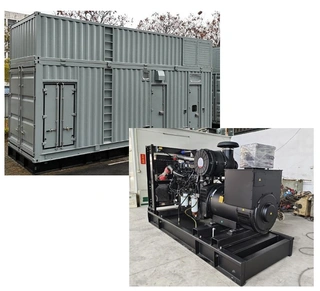
Containerized diesel generator sets are fully integrated, transportable power solutions that combine key components within a durable enclosure to deliver reliable, plug-and-play electricity in diverse environments. Their standardized design enables easy transportation and rapid deployment, while robust construction provides protection against harsh conditions, noise reduction, and enhanced security. Widely used in emergency backup, construction, mining, marine, and temporary power applications, these systems offer high scalability, operational flexibility, and efficient performance. With proper selection, installation, and maintenance, they ensure stable and continuous power supply across critical and remote operations.
Cost Comparison of Diesel Generator and Gas Generator

Cost Comparison of Diesel Generator and Gas Generator

This article provides a detailed comparison between diesel and gas generators, analyzing initial investment, fuel costs, efficiency, maintenance, lifespan, environmental compliance, and application suitability. It highlights diesel generators' advantages in upfront cost, storage flexibility, durability, and remote or mobile use, while gas generators excel in fuel economy, emissions control, and continuous operation efficiency. The analysis helps businesses make informed decisions based on runtime, local fuel supply, environmental regulations, and total ownership cost.
Propane vs. Gas Generators: Choosing Your Backup Power Source

Propane vs. Gas Generators: Choosing Your Backup Power Source

This guide compares propane and gasoline generators, highlighting their advantages, drawbacks, and ideal applications. It covers fuel storage, efficiency, environmental impact, portability, and cold-weather performance, helping homeowners, RV users, and industrial operators make informed decisions. Dual-fuel options are also discussed for flexible emergency power solutions, alongside key maintenance and safety tips to ensure reliable operation.
Can Solar Panels Be Connected to a Generator?

Can Solar Panels Be Connected to a Generator?

This article explains whether and how solar panels can be connected to generators, emphasizing that compatibility depends on generator type and proper system design. It outlines the fundamental difference between DC output from solar panels and AC output from traditional generators, requiring integration through components such as charge controllers, battery banks, and inverters. The article compares solar generators and conventional fuel generators, then details three practical integration methods: battery–inverter systems, hybrid generators, and automatic transfer switches. It also provides a comprehensive overview of key components, system sizing, voltage matching, winter operation considerations, and essential safety practices.
Complete Guide to Choosing a Light Tower Generator

Complete Guide to Choosing a Light Tower Generator

Choosing the right light tower generator is essential for safety, efficiency, and cost-effectiveness in construction, mining, roadwork, and emergency projects. This guide covers lamp types (LED vs. metal halide), power sources (diesel, electric, solar, hybrid), core specifications like mast height, lumens, runtime, mobility, and maintenance, as well as safety features and smart connectivity for fleet management. By systematically evaluating project duration, site conditions, technical requirements, environmental compliance, and total ownership cost, users can select a reliable light tower generator that ensures consistent illumination, operational efficiency, and long-term value.
Inverter Generator Buying Guide: Modified vs. Pure Sine Wave

Inverter Generator Buying Guide: Modified vs. Pure Sine Wave

This guide explains the differences between pure sine wave and modified sine wave inverter generators, detailing their impact on device performance, heat, noise, and compatibility. It provides practical recommendations for selecting the right waveform based on load type, including resistive, motor, variable frequency, PFC, and medical equipment, while highlighting the importance of THD, power quality, and UPS integration to ensure safe, stable, and efficient operation.

Total 391 Records, 12 records per page