
In today's fast-paced life, the importance of electricity is self-evident. Whether it is for home backup power, outdoor camping, or emergency rescue, portable generators play an indispensable role. However, faced with the wide variety of products on the market, how can one choose a portable generator that is cost-effective and meets their specific needs? This article will explain in detail from multiple perspectives to help you make an informed decision when choosing a portable generator.
Before choosing a portable generator, it is necessary to clarify your usage scenario and power requirements. Different scenarios have different demands for the generator's power and functions.
- Home Backup Power: For home backup power, the main purpose is to provide electricity to critical household appliances during a power outage. Generally, a home backup generator needs to meet the electricity requirements of basic appliances such as refrigerators, lighting equipment, and televisions. Typically, a generator with 3,000W–5,000W capacity can meet most household backup needs. For example, a 3,000W generator can power a refrigerator, television, and several lights at the same time, while a 5,000W generator can support more appliances, including high-power devices such as air conditioners.
- Camping and Outdoor Activities: In camping and outdoor activities, portable generators are mainly used to provide power for camping equipment such as tent lighting, portable refrigerators, and charging devices. Due to the special nature of outdoor environments, portability and low noise are particularly important. Generally, a generator with 1,000W–2,000W capacity is sufficient for basic power needs during camping or outdoor activities. For example, a 1,500W generator can supply power to camping lights, phone chargers, and small portable refrigerators without causing excessive noise disturbance in the outdoor environment.
- Field Work and Small-Scale Projects: For field work and small-scale projects, generators need to provide more stable power to meet the operational requirements of tools and equipment. For example, at construction sites or field operation sites, tools such as drills and saws may be used, which usually require higher power. Generally, generators with 5,000W–10,000W capacity are more suitable for such scenarios. For instance, an 8,000W generator can power multiple drills, saws, and lighting equipment simultaneously, ensuring smooth workflow.
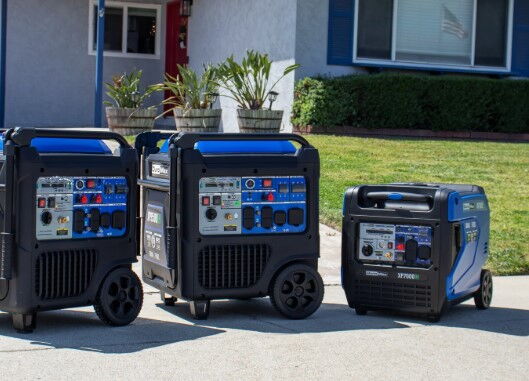
Portable generators mainly use gasoline, diesel, or natural gas as fuel. Each fuel type has its own advantages and disadvantages, and the choice should depend on the usage environment and requirements.
- Gasoline Generators: Gasoline generators are usually small in size and light in weight, making them easy to carry and move. They are suitable for outdoor use because gasoline is relatively easy to obtain. However, gasoline generators tend to be noisy, and their fuel efficiency is relatively low. For example, a small gasoline generator (such as 1,000W) may weigh about 10 kilograms, suitable for single-person carrying, but its noise level may be around 70 decibels, suitable for use in outdoor camping and similar scenarios.
- Diesel Generators: Diesel generators are larger and heavier, but they are quieter and suitable for long-term use. Diesel generators are more fuel-efficient and have relatively lower operating costs. For example, a 5,000W diesel generator may weigh about 50 kilograms, suitable for use at construction sites or field operation sites, with a noise level around 60 decibels, making it appropriate for scenarios requiring long-term stable power supply.
- Natural Gas Generators: Natural gas generators are suitable for indoor use because natural gas is relatively clean and odorless. However, natural gas generators require a connection to a natural gas pipeline, which limits their usage scenarios. For example, a 3,000W natural gas generator is suitable for home backup power scenarios, with a noise level around 55 decibels, making it appropriate for indoor use.
Noise is an important consideration when choosing a portable generator. Generally, the noise level is proportional to the generator's power. For generators used indoors or in quiet environments, models with lower noise levels should be selected. Additionally, some small generators are equipped with noise-reduction technology or silent designs to further reduce noise levels.
- Importance of Silent Design: Generators with silent designs usually adopt special casing structures and soundproof materials to reduce noise transmission. For example, some high-end gasoline generators use double-layer soundproof casings and special muffling technologies, reducing noise levels to around 50 decibels, suitable for use in camping or home backup scenarios.
- Comparison of Noise Levels: Noise levels also vary with different fuel types. Generally, gasoline generators are louder, diesel generators are quieter, and natural gas generators are the quietest. For example, a 1,500W gasoline generator may produce about 70 decibels, while a diesel generator of the same power may produce around 60 decibels, and a natural gas generator may produce about 55 decibels.
Brand is an important factor when choosing a portable generator. Reputable brands usually provide better quality assurance and after-sales service. In the market, many well-known brands of small generators perform better in terms of performance, durability, and reliability.
- Importance of Brand: Well-known brands of small generators usually undergo strict quality control and testing to ensure product performance and reliability. For example, some well-known brands use advanced technologies and materials during design and manufacturing to ensure stable operation under various environments.
- Advantages of After-Sales Service: Choosing a small generator from a reputable brand also provides access to comprehensive after-sales services. For example, some brands offer nationwide warranty services, allowing users to contact service points for maintenance and repairs at any time after purchase. Additionally, some brands provide free technical consultation and usage guidance, helping users better operate and maintain the generator.
Price is one of the factors to consider when choosing a portable generator. Prices vary significantly depending on brand, model, and configuration. When purchasing, do not focus solely on low prices; consider performance, quality, after-sales service, and price to select a product with high cost-effectiveness.
- Price Range and Influencing Factors: Portable generators have a wide price range, from a few hundred to tens of thousands of yuan. Prices are mainly influenced by brand, power, fuel type, and additional features. For example, a 1,000W gasoline generator may cost around 1,000 yuan, while a 5,000W diesel generator may cost around 5,000 yuan. High-end brands may be more expensive but usually offer better performance and additional features.
- Evaluating Cost-Effectiveness: Cost-effectiveness is an important consideration when selecting a portable generator. A generator with high cost-effectiveness not only has a reasonable price but also performs well in terms of performance, quality, and after-sales service. For example, a moderately priced small generator with good silent performance, stable operation, and comprehensive after-sales service offers high cost-effectiveness.
In addition to the main factors above, other configurations and features can improve the convenience and safety of the generator.
- Smart Control System: Some small generators are equipped with smart control systems that automatically adjust power output to ensure stable operation under varying loads. For example, when the power consumption of connected appliances changes, the smart control system can adjust the generator's output to prevent overload or underload.
- Overload Protection Function: Overload protection is an important safety feature of small generators. When the generator's load exceeds its rated power, the overload protection function can automatically cut off the power to protect both the generator and connected appliances. For example, a generator with overload protection will automatically shut off power within seconds if the load exceeds its rated capacity, ensuring equipment safety.
- Voltage Stabilization Function: Voltage stabilization ensures the generator maintains a stable output voltage, preventing damage to appliances caused by voltage fluctuations. For instance, some small generators feature an Automatic Voltage Regulator (AVR) to keep the output within ±5% of the rated voltage, suitable for electronics and sensitive devices.
- Portable Design: Portable generators typically include handles, wheels, or backpack-style designs to facilitate transport. For example, some small gasoline generators have foldable handles and wheels, allowing users to easily move them outdoors or to the desired location.
- Vehicle-Mounted Design: Vehicle-mounted generators are designed for use in vehicles, typically with vehicle chargers and adapters. For example, some small generators can connect to a vehicle's 12V power interface to supply electricity to onboard devices, suitable for long trips or outdoor activities.
Many first-time users of portable generators fall into common misconceptions. Here are some typical mistakes and how to avoid them.
- Focusing Only on Maximum Output Power: Some users only consider maximum output power when choosing a generator, neglecting noise levels and maintenance costs. Excessive power output may cause high noise and increased maintenance costs. For example, a 10,000W gasoline generator has high power but can produce around 80 decibels of noise, with higher fuel consumption and maintenance costs. Therefore, when choosing a generator, select a power level suitable for your actual needs instead of blindly pursuing high power.
- Over-Relying on Brand Reputation: While brand reputation is an important factor, it is not the only one. Some users rely too heavily on brand recognition and ignore the actual performance and technical support. For example, some well-known brands may have high market recognition, but their performance and technical support may not match some emerging brands. Therefore, when choosing a generator, consider brand, performance, technical support, and after-sales service comprehensively to select the product that best suits your needs.
Choosing the right portable generator requires considering multiple factors, including usage scenarios, power requirements, fuel type, noise level, brand, price, and additional features. By clarifying your usage scenario and power needs, selecting the appropriate fuel type, paying attention to noise levels, choosing a reputable brand, considering price and cost-effectiveness, and evaluating other features, you can ensure that you select a portable generator that is cost-effective and reliable. Additionally, avoiding common misconceptions will help you make better decisions to meet your actual needs. We hope this guide has been helpful. If you have any further questions or need additional advice, feel free to consult at any time.
